

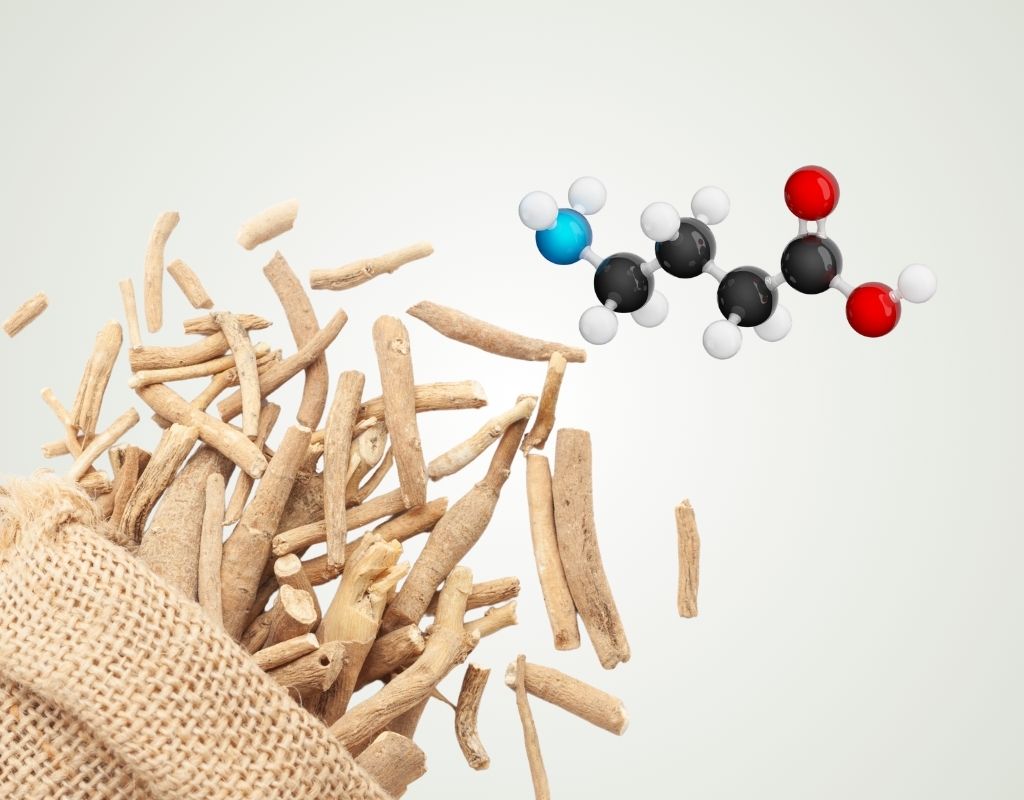
Ashwagandha Vs Gaba for Anxiety: Can You Take Them Together?
Choosing between Ashwagandha and GABA for anxiety can be confusing. One is a long-used adaptogenic herb in Ayurvedic medicine, while the other is the brain’s primary neurotransmitter responsible for calming the nervous system.
Which one should you use? Or is combining the two the key to freeing your mind from stress?
Before exploring further, please read the disclaimer located at the end of this webpage.
Key Takeaways
- Ashwagandha: Reduces cortisol levels and helps the body adapt to long-term stress.
- GABA: Calms the nervous system immediately and supports faster sleep onset.
- Absorption: Supplemental GABA may be limited by the blood–brain barrier, while Ashwagandha supports the body’s natural GABA system.
- Combination: They can be used together, but proper dosage is important and medical advice should be sought before use.
Ashwagandha Overview

Ashwagandha Origin
Ashwagandha, or Withania, is an evergreen shrub from the nightshade family. It is native to India, Africa, and the Middle East.
Traditionally used in Indian Ayurveda, this herb is appreciated for its role in supporting general well-being, including nervous system function [1].
Ashwagandha Benefits for Health
-
Enhances cognitive function: Ashwagandha supports memory and mental clarity, helping to maintain long-term neurological health and protecting brain cells from oxidative stress.
-
This function is attributed to compounds like Glycowithanolide withaferin-A and sitoindosides VII–X isolated from Ashwagandha roots that help mitigate cognitive impairments caused by neurological diseases [4].
-
Supports emotional balance: Ashwagandha may help regulate brain biomarkers associated with emotional tension, potentially acting as a natural mood stabilizer to promote a sense of calm and relaxation [5].
-
Antioxidant properties: Ashwagandha isolates antioxidant compounds, showing antibacterial, anti-tumor, immunomodulatory, and promising antioxidant properties [6].
-
Improves insomnia: Ashwagandha enhances sleep quality in users by addressing stress-related issues. A study comparing sleep quality between Ashwagandha users and placebo found significant improvements with Ashwagandha [10].
Ashwagandha Side Effects on Health
While Ashwagandha is considered safe for most people, it is essential to be aware of potential side effects, especially when used long-term or in combination with other medications.
Common Mild Effects: When taken orally for up to 3 months, Ashwagandha is generally well-tolerated.
However, some users may experience mild digestive issues, including stomach upset, nausea, or diarrhea. Due to its calming nature, slight drowsiness may also occur [7].
Liver Health Concerns: Rare but serious cases of liver dysfunction have been reported. One notable case involved a young male who experienced elevated bilirubin levels, though this occurred while combining Ashwagandha with multiple pharmaceutical anti-anxiety medications [8].
This highlights the importance of monitoring liver enzymes if you have pre-existing conditions.
Thyroid Interactions: Ashwagandha may stimulate thyroid hormone production. Research has shown that a daily dose of 500mg can increase thyroxine levels [9].
While this might benefit those with an underactive thyroid, individuals with hyperthyroidism or those on thyroid replacement therapy should consult a doctor to avoid hormonal imbalances.
Note: Evidence on the long-term safety of Ashwagandha use beyond three months needs to be included.
Gaba Overview

The Origin of Gaba
GABA is gamma-aminobutyric acid, the primary inhibitory neurotransmitter in the central nervous system. It plays a crucial role in reducing neuronal excitability, promoting relaxation, and regulating functions like anxiety, sleep, and muscle control (Jewett & Sharma, 2023).
While it remains a subject of debate whether GABA can cross the blood-brain barrier, recent research focuses on the 'Gut-Brain Axis,' where GABA acts on receptors in the digestive tract to send relaxation signals to the brain (Conn et al., 2024).
The Benefits of Gaba for Health
-
Improves sleep quality: GABA helps relax the body and mind, making it easier to fall into deeper sleep [11].
-
Reduces stress: GABA may alleviate anxiety by supporting blood flow to the brain or by affecting gut microbiota. Additionally, GABA can enhance the immune system in individuals experiencing mental stress [11].
- Lowers blood pressure: GABA naturally helps reduce blood pressure. A study on fermented milk containing γ-aminobutyric acid (GABA) showed significant blood pressure reduction after 2-4 weeks of use in individuals with mild hypertension [12].
Side Effects of Gaba
Gaba in supplement form is considered safe when ingested orally. However, users may experience side effects such as nausea, upset stomach, decreased appetite, sore throat, drowsiness, fatigue, muscle weakness, or difficulty breathing when consumed in high doses.
Furthermore, Gaba found in lady's slipper orchids may interact with medications such as hypertension drugs or antidepressants; therefore, it is advisable to consult a doctor before incorporating Gaba into one's diet.
Ashwagandha Vs Gaba: Similarities and Differences

Similarities: Both Ashwagandha and GABA serve as natural compounds that support the nervous system. They are widely used to improve sleep quality, reduce anxiety, and promote overall mental well-being.
Differences:
|
Feature |
Ashwagandha |
GABA |
|
Mechanism |
Reduces cortisol, increases GABA receptor sensitivity |
Inhibits excessive neurotransmission |
|
Preferred Use |
Stress, fatigue |
Stress, difficulty falling asleep |
|
Special Notes |
Caution for people with thyroid conditions |
Caution when used with sedative medications |
Ashwagandha vs GABA: Which is Better for Stress?
Ashwagandha is generally considered more effective than GABA for stress support, as it is backed by a larger body of evidence from human clinical trials. In contrast, GABA is primarily known for its biological role in the nervous system and has fewer direct studies evaluating its effectiveness as a supplement.
Ashwagandha is an adaptogenic herb that has been widely studied and shown to help reduce stress and anxiety, while also supporting the regulation of cortisol, the body’s primary stress hormone [17].
GABA (gamma-aminobutyric acid) is a neurotransmitter that helps calm the nervous system. GABA supplementation may promote short-term relaxation, but current clinical evidence is more limited compared to Ashwagandha [18].
In addition to its combination with GABA, there is a wealth of useful information about pairing Ashwagandha with horny goat weed, as well as comparisons between Ashwagandha and Viagra.
Can You Combine Ashwagandha vs GABA Capsules for Anxiety?
Yes. Ashwagandha and GABA can generally be taken together, and the combination may support relaxation, stress reduction, and mild anxiety relief (Raj et al., 2022).
How they work together:
-
GABA (gamma-aminobutyric acid) is the brain’s primary inhibitory neurotransmitter. It helps calm excessive neural activity and promotes relaxation and sleep.
-
Ashwagandha supports the brain indirectly through the GABAergic system, which regulates emotional balance and stress response.
-
Ashwagandha contains withanolides, compounds believed to enhance GABA receptor sensitivity, support natural GABA activity, and promote long-term nervous system balance.
Potential benefits:
-
May enhance calming effects compared to using either supplement alone
-
Often used for mild anxiety, stress, and sleep support
-
Ashwagandha may provide longer-term adaptogenic support, while GABA offers more immediate calming effects
Important notes:
-
Effects vary by individual
-
Best suited for mild anxiety, not a replacement for medical treatment
-
Consult a healthcare professional if pregnant, on medication, or managing a health condition
The community believes that ashwagandha and GABA can be combined, typically by taking ashwagandha during the day and GABA at night, and that they may be helpful for mild anxiety, though their effectiveness varies from person to person.*
Understanding the GABAergic Mechanism
The GABAergic system plays a central role in managing stress and anxiety by controlling how easily neurons are excited.
While GABA supplements aim to raise GABA levels directly, Ashwagandha strengthens the system by enhancing GABA receptor function and offering antioxidant and anti-inflammatory protection for the nervous system.
This creates a complementary dynamic: GABA provides fast-acting calm, while Ashwagandha builds long-term neurological resilience.
Combining the two may result in a synergistic effect—supporting immediate relaxation and sustained mental clarity. However, because both compounds affect the same neurochemical pathways, it’s best to start with low doses and watch for side effects like drowsiness or fatigue.
As with any supplement plan, especially those that affect the nervous system, it’s wise to consult a healthcare provider to determine the right dosage and avoid interactions.
Frequently Asked Questions
1. Does Ashwagandha Improve GABA?
Ashwagandha has been shown in multiple studies to support GABA-like activity, potentially boosting both the availability and effectiveness of GABA in the brain to enhance its calming effects.
2. Who Cannot Take GABA?
GABA is not recommended for those who are pregnant or breastfeeding, as safety data is lacking. Its interactions with medications, foods, or other supplements are not well understood, so caution is advised—especially if you're taking blood pressure medications.
3. Does Ashwagandha Stress the Liver?
Ashwagandha is generally safe for most individuals. However, rare reports suggest that liver injury may occur due to excessive dosage or poor-quality supplements. It is recommended to adhere to a daily dosage of 300–600 mg (Lubarska et al., 2023).
4. How Long Does It Take for Ashwagandha to Work?
Ashwagandha typically starts working within 4 to 12 weeks, with noticeable improvements in calmness and sleep. Long-term use beyond a year isn't well studied, so taking breaks and consulting your healthcare provider is recommended [14].
Conclusion
In conclusion, the answer to "Ashwagandha Vs Gaba: Can You Take Them Together?" is affirmative. When used appropriately, they can significantly benefit sleep quality, cognitive function, and mental health.
However, due to differing mechanisms of action, careful monitoring is necessary to avoid unwanted side effects. Seek expert advice before deciding to use or combine any dietary supplements.
References
- [1] Singh, N, et al. “An Overview on Ashwagandha: A Rasayana (Rejuvenator) of Ayurveda.” African Journal of Traditional, Complementary and Alternative Medicines, vol. 8, no. 5S, 15 July 2011, www.ncbi.nlm.nih.gov/pmc/articles/PMC3252722/, https://doi.org/10.4314/ajtcam.v8i5s.9.
- [4] Bhattacharya, Salil K., et al. “Effects of Glycowithanolides From Withania Somnifera on an Animal Model of Alzheimer’s Disease and Perturbed Central Cholinergic Markers of Cognition in Rats.” Phytotherapy Research, vol. 9, no. 2, Mar. 1995, pp. 110–113, https://doi.org/10.1002/ptr.2650090206.
- [5] Abdel-Magied, E.M., et al. “The Effect of Aqueous Extracts of Cynomorium Coccineum and Withania Somnifera on Testicular Development in Immature Wistar Rats.” Journal of Ethnopharmacology, vol. 75, no. 1, Apr. 2001, pp. 1–4, https://doi.org/10.1016/s0378-8741(00)00348-2. Accessed 28 Apr. 2022.
- [6] R. D, Budhiraja. “Review of Biological Activity of Withanolides.” Cabidigitallibrary.org, 25 Oct. 1988, www.cabidigitallibrary.org/doi/full/10.5555/19880352798. Accessed 15 July 2024.
- [7] Lopresti, Adrian L., and Stephen J. Smith. “Ashwagandha (Withania Somnifera) for the Treatment and Enhancement of Mental and Physical Conditions: A Systematic Review of Human Trials.” Journal of Herbal Medicine, vol. 28, Aug. 2021, p. 100434, https://doi.org/10.1016/j.hermed.2021.100434.
- [8] Inagaki, Katsuaki, et al. “A Case of Drug-Induced Liver Injury with Prolonged Severe Intrahepatic Cholestasis Induced by Ashwagandha.” Kanzo, vol. 58, no. 8, 2017, pp. 448–454, www.jstage.jst.go.jp/article/kanzo/58/8/58_448/_article/-char/en, https://doi.org/10.2957/kanzo.58.448.
- [9] Gannon, Jessica M., et al. “Subtle Changes in Thyroid Indices during a Placebo-Controlled Study of an Extract of Withania Somnifera in Persons with Bipolar Disorder.” Journal of Ayurveda and Integrative Medicine, vol. 5, no. 4, 2014, pp. 241–245, www.ncbi.nlm.nih.gov/pmc/articles/PMC4296437/, https://doi.org/10.4103/0975-9476.146566.
- [10] Langade, Deepak, et al. “Clinical Evaluation of the Pharmacological Impact of Ashwagandha Root Extract on Sleep in Healthy Volunteers and Insomnia Patients: A Double-Blind, Randomized, Parallel-Group, Placebo-Controlled Study.” Journal of Ethnopharmacology, vol. 264, Jan. 2021, p. 113276, https://doi.org/10.1016/j.jep.2020.113276. Accessed 10 Sept. 2020.
- [11] Breus, Michael. Find a Therapist (City or Zip).
- [12] Inoue, K, et al. “Blood-Pressure-Lowering Effect of a Novel Fermented Milk Containing γ-Aminobutyric Acid (GABA) in Mild Hypertensives.” European Journal of Clinical Nutrition, vol. 57, no. 3, 1 Mar. 2003, pp. 490–495, https://doi.org/10.1038/sj.ejcn.1601555. Accessed 11 Aug. 2022.
- [13] Lubarska, M., Hałasiński, P., Hryhorowicz, S., Mahadea, D. S., Łykowska-Szuber, L., Eder, P., Dobrowolska, A., & Krela-Kaźmierczak, I. (2023). Liver Dangers of Herbal Products: A Case Report of Ashwagandha-Induced Liver Injury. International Journal of Environmental Research and Public Health, 20(5), 3921. https://doi.org/10.3390/ijerph20053921.
- [14] APRN-CNP, J. H. (2024, August 28). Does ashwagandha reduce anxiety? Osu.edu; The Ohio State University. https://health.osu.edu/wellness/exercise-and-nutrition/ashwagandha-and-anxiety
- [15] Jewett, B. E., & Sharma, S. (2023, July 24). Physiology, GABA. Nih.gov; StatPearls Publishing. https://www.ncbi.nlm.nih.gov/books/NBK513311/
- [16] Conn, K. A., Borsom, E. M., & Cope, E. K. (2024). Implications of microbe-derived ɣ-aminobutyric acid (GABA) in gut and brain barrier integrity and GABAergic signaling in Alzheimer’s disease. Gut Microbes, 16(1). https://doi.org/10.1080/19490976.2024.2371950
- [17] Jaysing Salve, Pate, S., Debnath, K., & Deepak Langade. (2019). Adaptogenic and Anxiolytic Effects of Ashwagandha Root Extract in Healthy Adults: A Double-blind, Randomized, Placebo-controlled Clinical Study. Cureus, 11(12), e6466–e6466. https://doi.org/10.7759/cureus.6466
- [18] Smith, S. J., Lopresti, A. L., & Fairchild, T. J. (2023). Exploring the efficacy and safety of a novel standardized ashwagandha (Withania somnifera) root extract (Witholytin®) in adults experiencing high stress and fatigue in a randomized, double-blind, placebo-controlled trial. Journal of Psychopharmacology, 37(11), 1091–1104. https://doi.org/10.1177/02698811231200023
- [19] Raj, Dr. R., Kumar, Dr. H., & Murad, Dr. A. (2022). A Double Blind, Randomized, Placebo-Controlled Clinical Study of the Nutraceutical Ashwagandha in the Form of Vedaan Ashwagandha KSM 66 Capsules as an Antioxidant, Energy Booster, Nervine Tonic, Anti-Stress and Aphrodisiac in General and Specific Chronic Ailments. International Journal of Research in Medical Sciences and Technology, 14(01), 96–112. https://doi.org/10.37648/ijrmst.v14i01.013
Testimonial Disclaimer
*The testimonials presented on this website are provided by individuals based on their personal experiences with our products. These testimonials represent individual opinions and experiences, which may not be typical or applicable to all users of our products. Results may vary depending on a variety of factors, including individual health, lifestyle, and adherence to product usage instructions.Author
Product Disclaimer
Including an ingredient or study does not evaluate, endorse, or recommend any Vinatura product or any third-party product. Some ingredients discussed may not be used in any Vinatura product.
The content of the articles has not been evaluated by the Food and Drug Administration (FDA) and is not intended to promote or endorse any specific product. Any products sold on this website are not intended to diagnose, treat, cure, or prevent any disease.
Opinions and Endorsements
Any claims, statements, or opinions expressed in the articles are those of the author(s) and do not necessarily reflect the views or opinions of the manufacturers of the dietary supplement products. The products sold on this website are separate from the content of the articles and are not directly endorsed or associated with the information presented here.
Liability Disclaimer
The author(s) of the articles, website, and manufacturers of the dietary supplement products do not assume any liability for any potential consequences arising from the use of the information provided in the articles. Ingredient effects, dosages, and safety vary by individual, formulation, and context; some ingredients interact with medications or may be unsuitable during pregnancy or lactation. It is recommended that individuals consult with a qualified healthcare professional before making any dietary or lifestyle changes, including the use of dietary supplements.
Product Usage
Please refer to the product labels and packaging for specific usage instructions and guidelines for the dietary supplement products sold on this website.
Customer Support
For any concerns or questions regarding the dietary supplement products, please contact our customer support team, who will be more than happy to assist you.


Leave a Comment
Be the first to comment.
What do you think?