

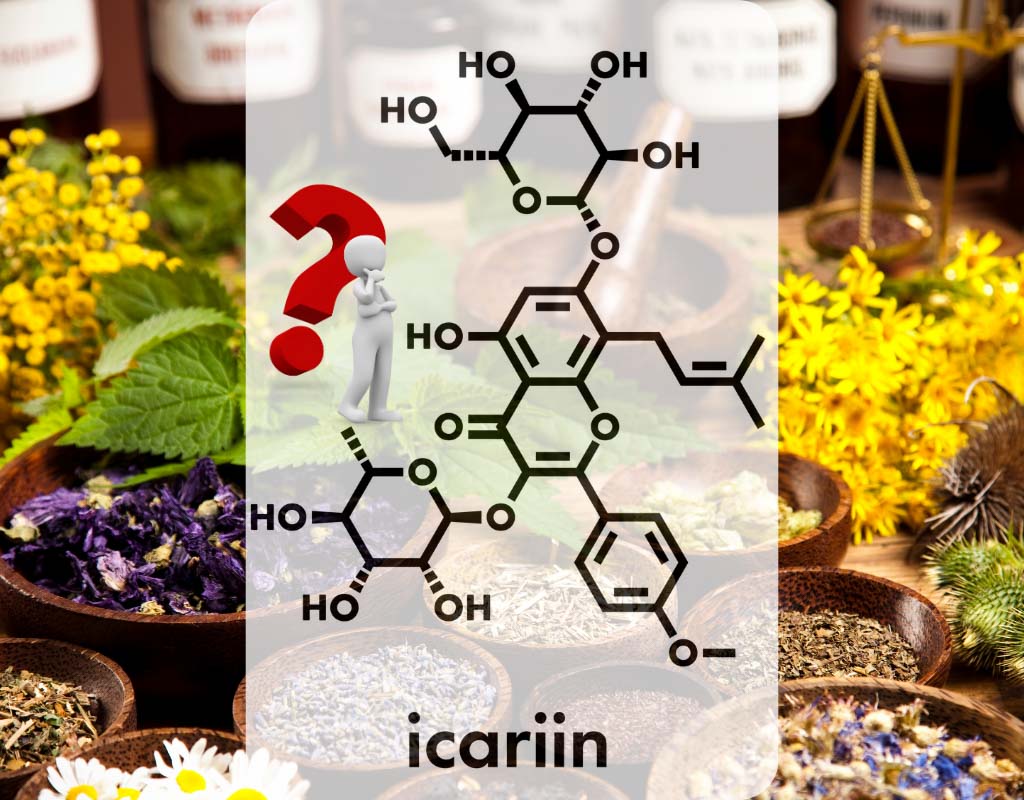
What Foods Contain Icariin? Horny Goat Weed as a Natural Source
Scrolling through Reddit, you’ll often find heated debates about the best Icariin supplements. Some users swear by 90% or even 98% Icariin extracts, claiming they work wonders for energy, libido, and overall health. Others argue that anything over 60% loses effectiveness, as the flavonoids break down at higher concentrations.*
One particular thread caught our attention: A user was debating whether to buy a 98% Icariin extract but was hesitant after reading that 60% was the ideal concentration. This sparked a conversation about where high-potency Icariin actually comes from. Some users assumed there must be a natural food source containing 80-90% Icariin, fueling misinformation about its origins.
But here’s the truth: No natural food contains such a high level of Icariin. In reality, the best-known source of this compound is Horny Goat Weed (Epimedium)—but how much does it naturally contain? And is it enough to provide real health benefits without supplementation?
Let’s dive into the real numbers and uncover the actual Icariin content in natural foods. Spoiler alert: You won’t find 90% Icariin in any plant—but there is one food that stands out.
Before exploring further, please read the disclaimer located at the end of this webpage.
Key Takeaways
- Horny Goat Weed (Epimedium) is a recognized natural source of icariin, although reported concentrations vary by species and plant material.
- Horny Goat Weed extract can contain up to 60% Icariin, making it easier for the body to absorb compared to consuming raw food sources.
- Other foods like rye, grapevines, and jujube fruit contain only very small amounts of Icariin, making them suboptimal sources.
- Standardized extracts can provide a more defined amount of icariin than raw plant material, although the clinical effects of icariin depend on the specific formulation, dose, and available evidence.
What Foods Contain Icariin?

After debunking the myth that natural foods contain 80-90% Icariin, the next logical question is: Which foods actually contain Icariin, and in what amounts?
Icariin is a powerful flavonoid known for its anti-aging properties, joint support, and enhancement of sexual function.
While it has gained popularity as a supplement, the reality is that its natural presence in foods is significantly lower than what many assume. This is why Horny Goat Weed (Epimedium) remains the most potent natural source of this compound.
However, even within Horny Goat Weed, the concentration of Icariin varies by species. Epimedium koreanum boasts the highest amount, with 1.55–3.69% Icariin, whereas other species like Epimedium sagittatum or Epimedium brevicornum contain only 0.4–1.34%.
To put this in perspective, even the best natural form of Horny Goat Weed contains nowhere near the 60-90% Icariin seen in extracts—that’s purely a result of concentrated processing.
Aside from Horny Goat Weed, a few other plants contain trace amounts of Icariin, but their levels are so low that they’re not considered practical sources:
- Rye (Secale cereale): Contains only 0.3–0.5% Icariin, primarily in pollen.
- Grapevine (Vitis vinifera): Some Icariin is found in the stems and leaves, but in insignificant amounts.
- Jujube (Ziziphus jujube): Icariin levels are extremely low, making it an unreliable source.
- Passionflower (Passiflora spp.): Some species contain small traces, but nothing substantial.
|
Food Source |
Icariin Content (%) |
Effectiveness Rating |
|
Horny Goat Weed (Epimedium koreanum) |
1.55 - 3.69% (up to 60% in extract form) |
Best Source |
|
Rye (Secale cereale) |
0.3 - 0.5% |
Very Low |
|
Grapevine (Vitis vinifera) |
Extremely low |
Negligible |
|
Jujube (Ziziphus jujuba) |
Very low |
Not Effective |
Icariin content in various food sources
Horny Goat Weed – The Best Natural Source of Icariin

Among all natural sources of Icariin, Horny Goat Weed (Epimedium) stands out as the most potent and well-researched option. This ancient herb, widely used in traditional Chinese medicine, is packed with bioactive flavonoids, with Epimedium koreanum containing the highest concentration of Icariin (1.55–3.69%) [1].
Icariin, the key active compound in Horny Goat Weed, works by:
- Stimulating nitric oxide (NO) production, which improves blood circulation. [1]
- Inhibiting the PDE5 enzyme, supporting sexual health and overall physiological function.
- Acting as a powerful antioxidant, protecting cells from damage and slowing down aging.
- Because of these mechanisms, Icariin has been linked to several health benefits, including (Ma et al., 2011):
- Enhancing sexual function for both men and women.
- Supporting the treatment of erectile dysfunction.
- Maintaining bone density and promoting joint health.
- Boosting blood circulation, improving heart and brain function.
- Offering neuroprotective benefits, which may enhance memory and cognitive performance.
However, while Icariin may offer potential benefits, dosage matters. Excessive intake of Horny Goat Weed or Icariin supplements may cause adverse effects such as low blood pressure, dizziness, rapid heartbeat (palpitations), digestive discomfort, and feelings of overstimulation or irritability in some individuals.
Therefore, supplementation should be used cautiously and according to product directions or healthcare professional guidance. The appropriate dosage may vary depending on individual factors and product formulation.
Why Does Horny Goat Weed Stand Out?
Compared to these foods, Horny Goat Weed is the only viable natural source of Icariin. However, even at its peak potency, raw Horny Goat Weed doesn’t provide a high enough dose for significant health benefits.
That’s why Icariin supplements, often standardized at 40-60% Icariin, are preferred—they ensure that the body receives an effective amount without needing to consume excessive plant material.
So, if you’re wondering whether you can get 90% Icariin directly from nature, the answer is a definite no. But if you're looking for the best natural source, Horny Goat Weed is unmatched—just keep in mind that its raw form contains only a fraction of what concentrated extracts provide.
Many people also wonder: Does Icariin increase testosterone?

How Do Icariin Extracts Enhance Absorption and Effectiveness Compared to Natural Sources?
The answer lies in absorption efficiency, concentration, and bioavailability. Here’s why extracts outperform natural sources in delivering the health benefits of Icariin:
1. Higher Concentration, More Potency
Raw Horny Goat Weed contains only 1.55–3.69% Icariin in its best form. That means you’d have to consume large amounts of dried leaves just to get a minimal dose of Icariin.
Extracts, on the other hand, are highly concentrated. Standardized formulas range from 40% to 60% Icariin, while some commercial products claim up to 90% purity. This means you get a significantly higher dose in a much smaller amount, making supplementation more practical and effective.
2. Enhanced Absorption & Bioavailability
Icariin in its natural state is poorly absorbed by the body. The digestive system breaks it down quickly, limiting the amount that reaches the bloodstream.
Extraction can increase the concentration of icariin per unit of material, while specific formulation technologies have also been investigated for improving icariin bioavailability.
- Micronization – Breaking Icariin into smaller particles for better absorption.
- Combination with other compounds – Some supplements pair Icariin with bioenhancers like black pepper extract (piperine), Cistanche Tubulosa to improve uptake.
Icariin faces challenges in absorption due to its poor water solubility. This can limit its bioavailability in the body.
To address this issue, researchers have explored various techniques to enhance Icariin's absorption. These methods include leveraging pharmaceutical technologies, modifying the compound's structure, and utilizing bioavailability enhancers (Róbert Szabó et al., 2022) [3].
The goal of these approaches is to increase the amount of Icariin in the body, allowing it to exert its effects more effectively.
Some specific strategies involve:
- Micronization: Breaking down Icariin into smaller particles to increase surface area and improve absorption.
- Combination with other compounds: Pairing Icariin with bioavailability enhancers like black pepper extract (piperine) or Cistanche Tubulosa to boost uptake.
- Nano-encapsulation: Applying nanotechnology to create Nano Icariin, which significantly enhances absorption by reducing particle size to 20-30 nm, making it fully soluble in water and maximizing bioavailability.
The study suggests that there are still opportunities to further improve Icariin's absorption. The use of advanced technologies like nanotechnology has shown promising results, increasing the efficacy of Icariin by up to 35-40 times compared to traditional forms.
3. More Predictable Dosage
When consuming raw Horny Goat Weed, the actual amount of Icariin varies based on plant species, growing conditions, and preparation methods. This makes it difficult to determine how much you’re actually getting.
With standardized extracts, the Icariin percentage is consistent, allowing for precise dosing. This is especially important for those using Icariin for specific health benefits like sexual enhancement, bone health, or cognitive support.
4. Faster & Stronger Effects
Since extracts provide higher purity and better absorption, they work faster and more efficiently compared to raw plant material. Users report experiencing benefits like:
- Improved blood circulation (supporting sexual health and energy levels)
- Increased nitric oxide production (enhancing muscle recovery and performance)
- Better joint and bone support (due to its flavonoid properties)
User testimonials further support these claims. Roman from the U.S., who recently tried a Cistanche and Horny Goat Weed supplement, shared his experience:
"I recently started using the Cistanche and Horny Goat Weed supplement, and I'm genuinely impressed with the results. This product has significantly boosted my energy levels, making my workouts more effective and reducing fatigue during the day. I also noticed improvements in my focus and mental clarity, which have been beneficial for both work and daily tasks."*
Are High-Purity Extracts (90%+) Always Better?
Interestingly, some discussions on Reddit and supplement forums suggest that Icariin extracts over 60% may actually be less effective. This is because flavonoids in extremely high concentrations can degrade or lose their synergistic benefits.
Many experts recommend a sweet spot of 40-60% Icariin for optimal effectiveness. Extracts in this range maintain both potency and stability, delivering the best results without diminishing Icariin’s natural properties.
If you want to naturally support your health, Horny Goat Weed is the best dietary source—but for true effectiveness, extracts offer a more powerful, bioavailable, and controlled option.
Conclusion
While Icariin is a powerful compound with numerous health benefits, no natural food contains it in ultra-high concentrations like 80-90%—those levels are only achieved through extraction. Among natural sources, Horny Goat Weed (Epimedium) is the best option, but even its highest Icariin content (1.55–3.69%) is far lower than supplement extracts.
For those seeking effective results, standardized extracts (40-60%) offer better potency, absorption, and dosage control. If you're looking to maximize the benefits of Icariin, Horny Goat Weed extract remains the most reliable choice.
Safety Considerations:
Although Horny Goat Weed and Icariin supplements are generally well tolerated when used as directed, some individuals may experience side effects, including rapid heartbeat, low blood pressure, dizziness, restlessness, or overstimulation.
People with cardiovascular conditions, those taking blood pressure medications, or individuals using medications that affect blood flow should consult a healthcare professional before using Icariin-containing products.
References
- [1] Ma, H., He, X., Yang, Y., Li, M., Hao, D., & Jia, Z. (2011). The genus Epimedium: An ethnopharmacological and phytochemical review. Journal of Ethnopharmacology, 134(3), 519–541. https://doi.org/10.1016/j.jep.2011.01.001
- [2] Wang, J., Wen, L., Jiang, Y., Zhu, H., Sun, W., Dai, G., & Yang, B. (2023). Structure, bioavailability and physicochemical properties of icariin-soymilk nanoparticle. Food Science and Human Wellness, 13(2), 972–981. https://doi.org/10.26599/FSHW.2022.9250083
- [3[ Róbert Szabó, Csaba Pál Rácz, & Francisc Vasile Dulf. (2022). Bioavailability Improvement Strategies for Icariin and Its Derivates: A Review. International Journal of Molecular Sciences, 23(14), 7519–7519. https://doi.org/10.3390/ijms23147519
Testimonial Disclaimer
*The testimonials presented on this website are provided by individuals based on their personal experiences with our products. These testimonials represent individual opinions and experiences, which may not be typical or applicable to all users of our products. Results may vary depending on a variety of factors, including individual health, lifestyle, and adherence to product usage instructions.Author
Product Disclaimer
Including an ingredient or study does not evaluate, endorse, or recommend any Vinatura product or any third-party product. Some ingredients discussed may not be used in any Vinatura product.
The content of the articles has not been evaluated by the Food and Drug Administration (FDA) and is not intended to promote or endorse any specific product. Any products sold on this website are not intended to diagnose, treat, cure, or prevent any disease.
Opinions and Endorsements
Any claims, statements, or opinions expressed in the articles are those of the author(s) and do not necessarily reflect the views or opinions of the manufacturers of the dietary supplement products. The products sold on this website are separate from the content of the articles and are not directly endorsed or associated with the information presented here.
Liability Disclaimer
The author(s) of the articles, website, and manufacturers of the dietary supplement products do not assume any liability for any potential consequences arising from the use of the information provided in the articles. Ingredient effects, dosages, and safety vary by individual, formulation, and context; some ingredients interact with medications or may be unsuitable during pregnancy or lactation. It is recommended that individuals consult with a qualified healthcare professional before making any dietary or lifestyle changes, including the use of dietary supplements.
Product Usage
Please refer to the product labels and packaging for specific usage instructions and guidelines for the dietary supplement products sold on this website.
Customer Support
For any concerns or questions regarding the dietary supplement products, please contact our customer support team, who will be more than happy to assist you.


Leave a Comment
Be the first to comment.
What do you think?