

Milk Thistle (Silymarin): What Human Trials Show for the Liver
Quick answer. Milk thistle (Silybum marianum) is a daisy-family plant whose seed extract, silymarin, is a mix of compounds led by silybin. In people with liver disease, results are mixed: a Cochrane review of 18 trials in alcohol- or hepatitis-related liver disease found no effect on deaths, complications or liver tissue, and two U.S. trials at three to five times the usual dose found no benefit in hepatitis C or in fatty liver inflammation (NASH). A 2025 Cochrane review found that silymarin alone may lower the liver enzyme ALT by about 7 U/L in fatty liver disease, on very uncertain evidence. Silymarin is poorly absorbed, and the most common side effects in trials were mild stomach complaints; people allergic to ragweed-family plants, pregnant or breastfeeding women, and anyone taking medicines should ask a healthcare professional first.
What milk thistle is
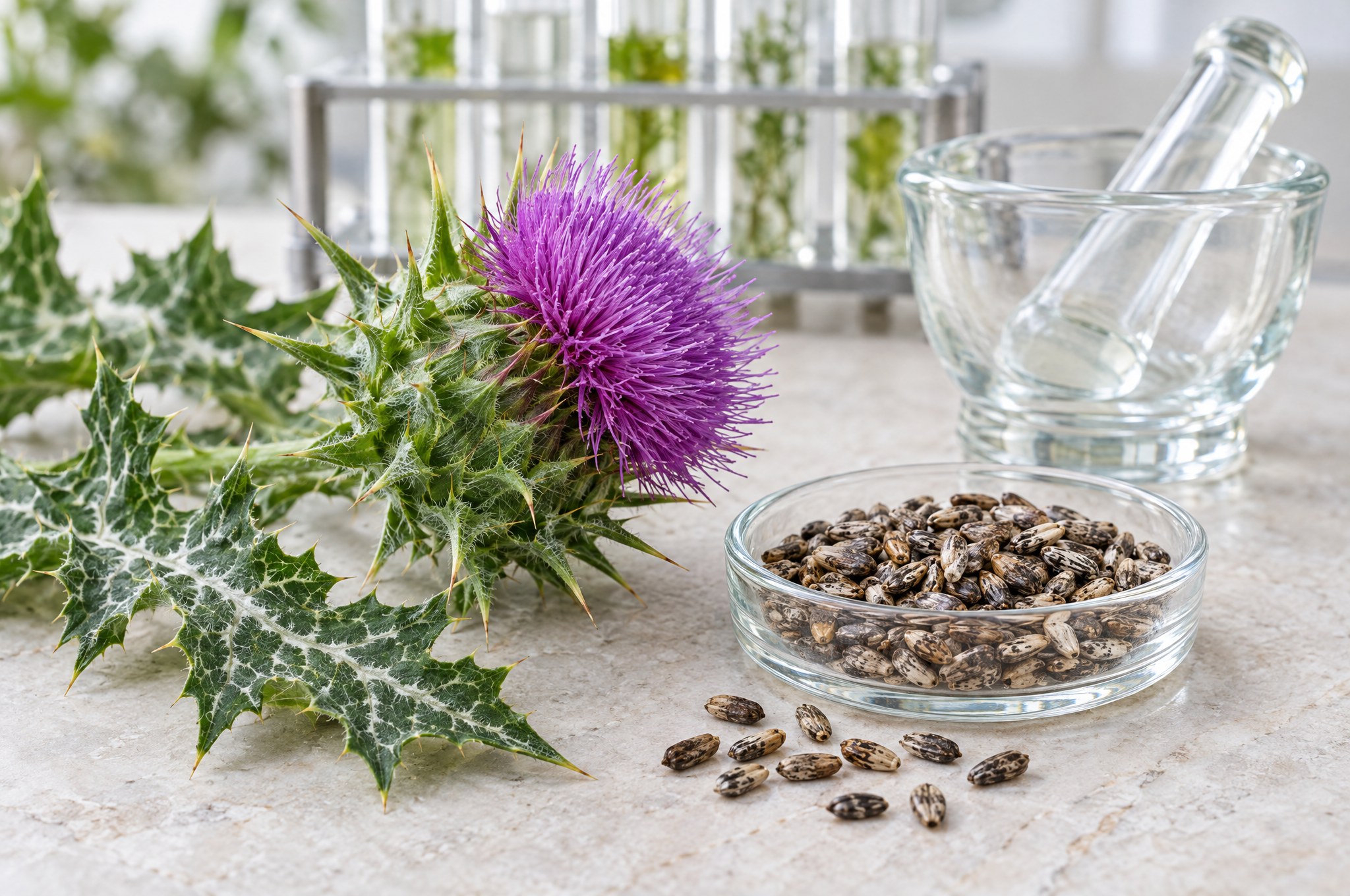
Milk thistle, Silybum marianum (L.) Gaertn., is a Mediterranean herb in the aster (daisy) family, Asteraceae. Silymarin, the extract of its seeds (botanically, small fruits), is a mix of at least seven flavonolignans, led by silybin A and B, plus the flavonoid taxifolin; it makes up about 1.5% to 3% of the fruit, according to the European Medicines Agency (EMA). Silybin (silibinin) is a partly purified 1:1 mix of silybin A and B.
Labels may list ground seed, an extract or a silymarin percentage, and these are different amounts: the EU herbal monograph lists single doses of 300 to 600 mg for powdered fruit but 70 to 250 mg for dry extracts. A "phytosome" form binds silybin to phosphatidylcholine, a fat-like molecule.
A standardized extract, Legalon, is a prescription drug for liver disorders in several European and Asian countries, according to the U.S. hepatitis C trial report. The EU herbal monograph accepts oral milk thistle only as a traditional medicine for indigestion and "to support the liver function" once a doctor has ruled out serious disease; EMA says poor study design prevented firm conclusions from clinical studies. In the United States, the FDA does not approve supplements for safety or effectiveness.
Silymarin is poorly absorbed. In 24 people with hepatitis C given 140 to 700 mg every 8 hours for 7 days, a 5-fold dose increase raised blood silybin A 11-fold and silybin B 38-fold, which the authors read as low absorption at usual doses. The phytosome form raised blood silybin in healthy volunteers.
What human studies have tested
| Study | Who took part | Form and daily amount | Duration | What was measured | Result |
|---|---|---|---|---|---|
| Rambaldi et al., 2007 (Cochrane review) | 18 randomized trials, 1,088 people with alcohol-related and/or hepatitis B or C liver disease | Milk thistle extracts, various doses | Varied | Deaths, complications, liver tissue | No effect on deaths (RR 0.78; 95% CI 0.53–1.15), complications or tissue. Fewer liver-related deaths across all trials (RR 0.50), but not in high-quality trials (RR 0.57; 0.28–1.19) |
| Ferenci et al., 1989 (randomized, double-blind; Austria) | 170 adults with cirrhosis, 91 alcohol-related | Silymarin 420 mg (140 mg 3 times) vs placebo | Mean 41 months | Survival | 4-year survival 58% vs 39% (P=0.036); in subgroups, the benefit was seen in alcohol-related and early-stage cirrhosis |
| Parés et al., 1998 (randomized, double-blind, multicenter; Spain) | 200 adults with alcohol-related cirrhosis | Silymarin 450 mg (150 mg 3 times) vs placebo | 2 years | Survival, progression of liver failure | No difference in survival or course of disease |
| Trinchet et al., 1989 (randomized, double-blind; France; English abstract only) | 116 adults with biopsy-proven alcoholic hepatitis | Silymarin 420 mg vs placebo | 3 months | Biopsy scores, liver enzymes | Both groups improved; no difference |
| Fried et al., 2012 (randomized, double-blind; U.S., NIH-funded) | 154 adults with chronic hepatitis C not cured by interferon | Legalon 1,260 or 2,100 mg (420 or 700 mg 3 times) vs placebo | 24 weeks | ALT normalization, virus levels, quality of life | 2 people per group (about 4%) met the ALT goal; no differences in ALT, virus levels or quality of life |
| Wang et al., 2025 (Cochrane review) | 17 randomized trials, 2,069 adults with fatty liver disease (MASLD) | Silymarin alone (9 trials) or complexes with phosphatidylcholine or vitamin E (8 trials) | 4 to 48 weeks | Serious side effects, deaths, quality of life, liver enzymes | Silymarin alone: ALT −7.21 U/L vs placebo or no treatment (6 trials, 409 people; very low certainty). Complexes: −1.10 U/L, not significant (4 trials, 309 people). No trial reported deaths or quality of life |
| Wah Kheong et al., 2017 (randomized, double-blind; Malaysia) | 99 adults with biopsy-proven NASH | Silymarin 2,100 mg (700 mg 3 times) vs placebo | 48 weeks | 30% or greater drop in NAFLD activity score on biopsy | 32.7% vs 26.0%, not significant. Fibrosis improved by 1 stage or more in 22.4% vs 6.0% (a secondary result) |
| Navarro et al., 2019 (randomized, double-blind, phase 2; U.S.; NIH-funded at first, then by the extract's maker) | 78 adults with NASH without cirrhosis | Legalon 1,260 or 2,100 mg vs placebo | 48 weeks | 2-point or greater improvement in NAFLD activity score | 19% and 15% vs 12% (P=0.79). On central review, 63% did not meet biopsy entry criteria |
| Jin et al., 2024 (randomized, double-blind; China) | 83 adults with MASLD | Silymarin tablets supplying 103.2 mg silybin vs placebo | 24 weeks | Liver stiffness and fat (FibroScan), blood tests | Stiffness −0.21 vs +0.41 kPa (P=0.015); GGT fell; liver fat, ALT and AST unchanged. Tablets came from a supplement company; two authors worked at its institute |
| Luangchosiri et al., 2015 (randomized, double-blind; Thailand) | 55 adults starting TB drugs (70 planned; stopped early) | Silymarin 420 mg (140 mg 3 times) vs placebo | 4 weeks | Peak ALT (main outcome); drug-induced liver injury | Peak ALT did not differ; liver injury 3.7% vs 32.1% (a secondary outcome) |
| Zhang et al., 2016 (randomized, open-label; China) | 370 people over 12 starting TB drugs (analyzed) | Milk thistle capsule 400 mg (200 mg twice) vs vitamin C | About 2 months (most patients) | Drug-induced liver injury | No reduction (RR 1.23; 0.94–1.54); under a stricter definition, higher risk with milk thistle (adjusted RR 1.76) |
| Heo et al., 2017 (randomized, double-blind; South Korea) | 121 adults starting TB drugs (600 registered) | Silymarin 280 mg (140 mg twice) vs placebo | First 8 weeks of TB treatment (the abstract also says 4) | Liver enzymes over 3 times normal | No difference (8.7% vs 10.8% at week 8); high bilirubin less common (0% vs 8.7%) |
| Ladas et al., 2010 (randomized, double-blind pilot; U.S.) | 50 children with leukemia (ALL) and chemotherapy-related liver toxicity | Silybin–phosphatidylcholine, 80 to 320 mg silybin by weight, vs placebo | 28 days | Liver tests | No difference at day 28; AST lower at day 56 (P=0.05). A supplement company donated the product |
| El-Kamary et al., 2009 (randomized, placebo-controlled; Egypt) | 105 people aged 13 or older with acute hepatitis | Legalon 420 mg vs vitamin placebo | 4 weeks | Symptoms, liver tests | Dark urine and jaundice cleared faster; ALT and AST did not differ |
What the findings suggest
Survival in cirrhosis and alcohol-related liver disease. One 1989 trial reported better survival; a larger 1998 trial and a 72-person trial (280 mg a day for about 15 months) did not. Evidence strength: does not show a benefit.
Hepatitis C. High doses did not lower ALT or virus levels more than placebo, and a 12-month trial of 177 villagers in Egypt (420 mg a day, according to a 2013 review) found no effect on ALT, virus levels or fibrosis markers. Evidence strength: consistently null.
Fatty liver disease. Plain silymarin lowered ALT by about 7 U/L more than placebo or no treatment, with very low certainty; a 2017 meta-analysis across liver diseases judged similar enzyme drops statistically significant but not clinically relevant. A 2024 meta-analysis of 26 trials reported larger effects, including less fat on biopsy, pending confirmation. Neither 48-week biopsy trial met its main goal; one found less scarring (fibrosis) as a secondary result, and in the other, fibrosis improved most with placebo. Evidence strength: low to very low.
Liver injury from medicines. In people starting tuberculosis (TB) drugs, a small Thai trial found less liver injury on a secondary measure (its main outcome, peak ALT, did not differ); larger Chinese and Korean trials found no benefit. A 2019 meta-analysis of five trials (1,198 people) found lower risk at week 4 only, and a 2020 network meta-analysis found no clear benefit. Evidence strength: conflicting.
Where the evidence is limited or conflicting
- Who and what was studied. Nearly every trial enrolled people with liver disease or on liver-straining drugs and mostly measured liver enzymes, not deaths, complications or biopsies.
- Product and dose. In five commercial extracts from three suppliers, the eight main compounds made up 47% to 70%, varying even between batches; NCCIH notes that some products contain silymarin amounts "substantially different" from their labels.
- Better absorption, not better results. Phosphatidylcholine complexes raise blood silybin, yet in the 2025 Cochrane review, complexes (some with vitamin E) did not lower ALT more than placebo in 4 trials, while plain silymarin did in 6 others (very low certainty).
- Funding. Both U.S. trials used Legalon. The hepatitis C trial was NIH-sponsored; the NASH trial began with NIH funding, but from May 2009 the extract's maker, Rottapharm|Madaus, funded it, and one co-author worked for Rottapharm Biotech. Madaus also supplied the silymarin for the Egyptian acute hepatitis trial, and company staff co-wrote a 2019 absorption study and the breast cancer study described below.
- Unreported trials. On October 25, 2026, ClinicalTrials.gov listed 135 studies naming silymarin, silybin or milk thistle as an intervention. A Brazilian fatty liver trial due to end in 2022 (we found only its protocol in PubMed) and a German dose-finding trial run with a herbal-medicine company, which ended in December 2024 with 19 participants, have no posted results.
- Lab research. Proposed antioxidant and anti-inflammatory effects come from animal and cell studies; cell studies cited by the U.S. hepatitis C trial used silybin A at 20 to 50 μg/mL, at least 10 times the highest blood level in that trial.
What buyers say, and what the research shows
Our team analyzed 4,309 public Amazon reviews of 20 products, collected in September 2026: 11 milk thistle products (2,898 reviews; some with other herbs), 8 TUDCA products and Vinatura's own TUDCA–milk thistle listing (90 reviews). Counts below are for the 11 milk thistle products; TUDCA beliefs are covered in our TUDCA review. Reviews show what buyers believe or report, not whether a product caused any change. A theme counts as common on a product when it made up at least 10% of weighted mentions in its positive or critical reviews.
Belief: milk thistle protects the liver from alcohol, medicines or steroid cycles. This was a common positive theme on 3 of the 11 products. Trials in alcohol-related liver disease showed no fewer deaths or complications, and TB-drug trials conflict. We found no study in people who use anabolic steroids, or in healthy people who drink.
Belief: milk thistle brings more energy or well-being. This was a common positive theme on 5 of the 11 products. In the U.S. hepatitis C trial, quality-of-life scores did not change; in the Egyptian village trial, almost everyone felt better after 12 months, but symptom and quality-of-life scores matched the multivitamin group.
Belief: the number on the label tells you how much silymarin you get. On 2 of the 11 products, the most-upvoted critical review was about label math or a change in the stated silymarin strength. Seed, extract and silymarin amounts are different measures (see above), and content can differ from labels. Nor does a label show what you absorb: in a children's trial, phytosome capsules labeled 80 mg silybin held 97 mg, yet none was detected in the blood of the 9 children tested, though the assay was near its limit and blood draws were loosely timed.
Belief: milk thistle acts like estrogen and is unsafe with hormone-sensitive conditions. A hormone warning was the most-upvoted critical review on 1 of the 11 products, and 1 review of Vinatura's listing raised the same concern. Silymarin binds estrogen receptor beta in lab studies, and in rats without ovaries it acted like estrogen in bone but not in the uterus. In 70 Iranian women with endometriosis, all also on the hormone drug dienogest, cysts and pain decreased within the silymarin group (280 mg a day, 12 weeks), but the paper does not clearly compare this with placebo; no side effects were reported. A 4-week presurgical study in 12 women with early breast cancer found no toxicity at 2.8 g a day of silybin–phosphatidylcholine, too few to establish safety. We found no human study showing that milk thistle worsens a hormone-sensitive condition, but the data are thin; ask your doctor.
Stomach upset was a common complaint on 3 of the 11 products, and allergic or other serious reactions on 2 (see Safety).
Safety
Side effects in trials. The most common were stomach and gut symptoms: 12% with silymarin vs 5% with placebo in the U.S. hepatitis C trial, where serious events did not differ significantly (7 of 102 vs 1 of 52). The 2007 and 2025 Cochrane reviews found no clear increase in adverse events (2025: very low certainty), but a 2025 meta-analysis of 25 fatty liver studies, some combining silymarin with diet or drugs, found them about twice as common (RR 1.98), mostly stomach problems. LiverTox says milk thistle has not been linked to liver injury. EMA lists dry mouth, nausea, upset stomach, diarrhea, headache and allergic reactions, frequency unknown.
Allergy. EMA says not to use milk thistle with a known allergy to Asteraceae plants; NCCIH names ragweed, chrysanthemum, marigold and daisy. EMA lists anaphylaxis among possible reactions, and case reports describe work-related allergy to milk thistle dust and, in 2025, anaphylaxis in a woman who drank a milk thistle seed infusion.
Who should be careful. EMA does not recommend use in pregnancy or breastfeeding because data are insufficient, and says use under 18 has not been established; Health Canada supports cautions for the same groups. Because a few studies, mostly from Middle Eastern countries, suggest milk thistle may help control blood sugar in type 2 diabetes (NCCIH), people on diabetes medicines should ask their doctor.
Medicines. In healthy volunteers, milk thistle did not meaningfully change the drug-processing enzymes CYP1A2, CYP2C9, CYP2D6 or CYP3A4, or overall exposure to midazolam, digoxin, rosuvastatin or nifedipine. Small studies (12 to 18 people each) found higher losartan levels in one genetic group, 36% higher talinolol exposure and faster metronidazole clearance. A lab model predicted milk thistle could raise levels of raloxifene, a breast cancer prevention drug, 4- to 5-fold; no human study has tested this. Health Canada judged interactions not substantive at oral intakes. Tell your pharmacist if you take milk thistle.
Upper limits. No official tolerable upper intake level has been set. For foods with added milk thistle extract, Health Canada set a recommended maximum of 600 mg silymarin a day and 200 mg per serving, which it says matches the maximum doses in its natural health product monograph.
What research does not establish
- That milk thistle prolongs life or prevents complications in cirrhosis, hepatitis or alcohol-related liver disease.
- That it protects the liver of healthy people from alcohol, medicines or anabolic steroids.
- That small drops in liver enzymes in fatty liver disease lead to less scarring or better health.
- That higher doses or "better absorbed" forms work better.
- That it is safe in pregnancy, breastfeeding, childhood or hormone-sensitive conditions.
How we reviewed the evidence
On October 25, 2026, we searched PubMed for randomized trials of silymarin, silybin and milk thistle in liver disease (85 records, all screened), then ran targeted searches (reviews, TB drugs, absorption, interactions, product content, allergy, estrogen effects, steroids, alcohol), screening about 300 records with overlap. We included randomized trials, meta-analyses, absorption and interaction studies and case reports, used animal and lab studies only for mechanisms, and excluded multi-herb products and skin creams. We read full texts of 12 key papers (one a case report) and abstracts of the rest (English abstracts for a French and a Spanish trial), plus NCCIH, LiverTox, EMA, Health Canada and FDA pages and ClinicalTrials.gov records; every reference was then rechecked against its source. Buyer beliefs come from our team's September 2026 analysis of Amazon reviews. Vinatura did not run any trials.
Vinatura Research Perspective
We asked of each study which preparation was used (seed, standardized extract, silybin or phytosome), how much silymarin a day, in whom, and whether the outcome was a lab value or something patients notice, such as survival or scarring. The most rigorous trials were negative: the high-quality Cochrane subgroup and two U.S. multicenter trials (one NIH-sponsored, one funded mostly by the extract's maker) that gave 3 to 5 times the customary dose of a prescription-drug extract. Positive results come mostly from small trials, secondary outcomes or liver enzymes, and the one positive survival trial was not confirmed by a larger one. Absorption remains unsolved: better-absorbed complexes did not lower enzymes more than placebo in the 2025 Cochrane review. Labels add a gap: the European Pharmacopoeia's extract is set at 30% to 65% silymarin, Health Canada's assessment covers 65% to 80%, two products in our review sample state 80%, and one lab study measured 47% to 70% for the eight main compounds in commercial extracts. These figures cannot be compared without knowing the test method.
Our assessment: mostly low-quality evidence does not show a benefit for survival or complications in alcohol- or hepatitis-related liver disease; consistent evidence shows no benefit in chronic hepatitis C; very low-certainty evidence shows small enzyme drops in fatty liver disease, of unknown meaning; evidence on TB-drug liver injury conflicts; and evidence is lacking for healthy people, protection from alcohol or steroids, and energy. A large, independently funded, placebo-controlled trial of at least a year in fatty liver disease, using a product with verified content and measured blood levels and judged by biopsy or validated fibrosis tests, would change this assessment, as would results from registered trials and a human interaction study with raloxifene.
Where this ingredient appears in Vinatura products
TUDCA Milk Thistle 1250mg contains a 1,250 mg TUDCA–milk thistle blend per serving (2 capsules; 45 servings), with milk thistle extract standardized to 80% silymarin flavonoids (30% silybin and isosilybin). The label does not list the milk thistle amount separately, so it cannot be compared with the study amounts above, and it does not state the test method for the silymarin percentage. The studies above did not test this product, and none of them combined milk thistle with TUDCA.
Frequently asked questions
Is silymarin the same as silybin? No. Silymarin is the whole seed-extract mix; silybin (silibinin) is its largest part, a 1:1 mix of silybin A and B.
How much did studies use? Most trials used 280 to 2,100 mg of silymarin a day in 2 or 3 doses; the U.S. hepatitis C trial called 1,260 and 2,100 mg a day 3 and 5 times the customary dose. These are study amounts, not recommendations; follow your product label and ask a healthcare professional, especially if you have liver disease or take medicines.
Is milk thistle safe if I am allergic to ragweed? EMA says not to use it if you are allergic to daisy-family plants, which include ragweed. Ask your doctor first.
References
- Rambaldi A, Jacobs BP, Gluud C. Milk thistle for alcoholic and/or hepatitis B or C virus liver diseases. Cochrane Database Syst Rev. 2007;(4):CD003620. doi:10.1002/14651858.CD003620.pub3
- Ferenci P, et al. Randomized controlled trial of silymarin treatment in patients with cirrhosis of the liver. J Hepatol. 1989;9(1):105–113. doi:10.1016/0168-8278(89)90083-4
- Parés A, et al. Effects of silymarin in alcoholic patients with cirrhosis of the liver: results of a controlled, double-blind, randomized and multicenter trial. J Hepatol. 1998;28(4):615–621. doi:10.1016/s0168-8278(98)80285-7
- Trinchet JC, et al. Treatment of alcoholic hepatitis with silymarin. A double-blind comparative study in 116 patients [in French]. Gastroenterol Clin Biol. 1989;13(2):120–124. PubMed 2707520
- Bunout D, et al. Controlled study of the effect of silymarin on alcoholic liver disease [in Spanish]. Rev Med Chil. 1992;120(12):1370–1375. PubMed 1343377
- Fried MW, et al. Effect of silymarin (milk thistle) on liver disease in patients with chronic hepatitis C unsuccessfully treated with interferon therapy: a randomized controlled trial. JAMA. 2012;308(3):274–282. doi:10.1001/jama.2012.8265
- Tanamly MD, et al. Randomised double-blinded trial evaluating silymarin for chronic hepatitis C in an Egyptian village: study description and 12-month results. Dig Liver Dis. 2004;36(11):752–759. doi:10.1016/j.dld.2004.06.015
- Polyak SJ, Ferenci P, Pawlotsky JM. Hepatoprotective and antiviral functions of silymarin components in hepatitis C virus infection. Hepatology. 2013;57(3):1262–1271. doi:10.1002/hep.26179
- Wang C, et al. Silymarin for adults with metabolic dysfunction-associated steatotic liver disease. Cochrane Database Syst Rev. 2025;6(6):CD015524. doi:10.1002/14651858.CD015524.pub2
- Wah Kheong C, et al. A randomized trial of silymarin for the treatment of nonalcoholic steatohepatitis. Clin Gastroenterol Hepatol. 2017;15(12):1940–1949.e8. doi:10.1016/j.cgh.2017.04.016
- Navarro VJ, et al. Silymarin in non-cirrhotics with non-alcoholic steatohepatitis: a randomized, double-blind, placebo controlled trial. PLoS One. 2019;14(9):e0221683. doi:10.1371/journal.pone.0221683
- Jin Y, et al. Silymarin decreases liver stiffness associated with gut microbiota in patients with metabolic dysfunction-associated steatotic liver disease: a randomized, double-blind, placebo-controlled trial. Lipids Health Dis. 2024;23(1):239. doi:10.1186/s12944-024-02220-y
- de Avelar CR, et al. Effect of silymarin on biochemical indicators in patients with liver disease: systematic review with meta-analysis. World J Gastroenterol. 2017;23(27):5004–5017. doi:10.3748/wjg.v23.i27.5004
- Li S, et al. Administration of silymarin in NAFLD/NASH: a systematic review and meta-analysis. Ann Hepatol. 2024;29(2):101174. doi:10.1016/j.aohep.2023.101174
- Zhang Z, Li S, Sun J. Efficacy of different interventions for nonalcoholic fatty liver disease: a meta-analysis of lifestyle modifications, silymarin, and medications. Asia Pac J Clin Nutr. 2025;34(4):516–530. doi:10.6133/apjcn.202508_34(4).0003
- Luangchosiri C, et al. A double-blinded randomized controlled trial of silymarin for the prevention of antituberculosis drug-induced liver injury. BMC Complement Altern Med. 2015;15:334. doi:10.1186/s12906-015-0861-7
- Zhang S, et al. Preventive use of a hepatoprotectant against anti-tuberculosis drug-induced liver injury: a randomized controlled trial. J Gastroenterol Hepatol. 2016;31(2):409–416. doi:10.1111/jgh.13070
- Heo E, et al. Effect of prophylactic use of silymarin on anti-tuberculosis drugs induced hepatotoxicity. Tuberc Respir Dis (Seoul). 2017;80(3):265–269. doi:10.4046/trd.2017.80.3.265
- Tao L, et al. Prophylactic therapy of silymarin (milk thistle) on antituberculosis drug-induced liver injury: a meta-analysis of randomized controlled trials. Can J Gastroenterol Hepatol. 2019;2019:3192351. doi:10.1155/2019/3192351
- Singh AK, et al. Appropriate chemopreventive strategy for anti-tubercular therapy related liver injury is unsettled: results from a systematic review and network meta-analysis. Expert Rev Clin Pharmacol. 2020;13(11):1253–1262. doi:10.1080/17512433.2020.1835468
- Ladas EJ, et al. A randomized, controlled, double-blind, pilot study of milk thistle for the treatment of hepatotoxicity in childhood acute lymphoblastic leukemia (ALL). Cancer. 2010;116(2):506–513. doi:10.1002/cncr.24723
- El-Kamary SS, et al. A randomized controlled trial to assess the safety and efficacy of silymarin on symptoms, signs and biomarkers of acute hepatitis. Phytomedicine. 2009;16(5):391–400. doi:10.1016/j.phymed.2009.02.002
- Kroll DJ, Shaw HS, Oberlies NH. Milk thistle nomenclature: why it matters in cancer research and pharmacokinetic studies. Integr Cancer Ther. 2007;6(2):110–119. doi:10.1177/1534735407301825
- Graf TN, et al. A validated UHPLC-tandem mass spectrometry method for quantitative analysis of flavonolignans in milk thistle (Silybum marianum) extracts. J Pharm Biomed Anal. 2016;126:26–33. doi:10.1016/j.jpba.2016.04.028
- Hawke RL, et al. Silymarin ascending multiple oral dosing phase I study in noncirrhotic patients with chronic hepatitis C. J Clin Pharmacol. 2010;50(4):434–449. doi:10.1177/0091270009347475
- Barzaghi N, et al. Pharmacokinetic studies on IdB 1016, a silybin-phosphatidylcholine complex, in healthy human subjects. Eur J Drug Metab Pharmacokinet. 1990;15(4):333–338. doi:10.1007/BF03190223
- Méndez-Sánchez N, et al. Superior silybin bioavailability of silybin-phosphatidylcholine complex in oily-medium soft-gel capsules versus conventional silymarin tablets in healthy volunteers. BMC Pharmacol Toxicol. 2019;20(1):5. doi:10.1186/s40360-018-0280-8
- Seidlová-Wuttke D, et al. Silymarin is a selective estrogen receptor beta (ERbeta) agonist and has estrogenic effects in the metaphysis of the femur but no or antiestrogenic effects in the uterus of ovariectomized (ovx) rats. J Steroid Biochem Mol Biol. 2003;86(2):179–188. doi:10.1016/s0960-0760(03)00270-x
- Mirzaei N, et al. A randomized trial assessing the efficacy of silymarin on endometrioma-related manifestations. Sci Rep. 2022;12(1):17549. doi:10.1038/s41598-022-22073-8
- Lazzeroni M, et al. A presurgical study of oral silybin-phosphatidylcholine in patients with early breast cancer. Cancer Prev Res (Phila). 2016;9(1):89–95. doi:10.1158/1940-6207.CAPR-15-0123
- Gufford BT, et al. Milk thistle constituents inhibit raloxifene intestinal glucuronidation: a potential clinically relevant natural product-drug interaction. Drug Metab Dispos. 2015;43(9):1353–1359. doi:10.1124/dmd.115.065086
- Gurley BJ, et al. In vivo assessment of botanical supplementation on human cytochrome P450 phenotypes: Citrus aurantium, Echinacea purpurea, milk thistle, and saw palmetto. Clin Pharmacol Ther. 2004;76(5):428–440. doi:10.1016/j.clpt.2004.07.007
- Gurley BJ, et al. Effect of milk thistle (Silybum marianum) and black cohosh (Cimicifuga racemosa) supplementation on digoxin pharmacokinetics in humans. Drug Metab Dispos. 2006;34(1):69–74. doi:10.1124/dmd.105.006312
- Gurley B, et al. Assessing the clinical significance of botanical supplementation on human cytochrome P450 3A activity: comparison of a milk thistle and black cohosh product to rifampin and clarithromycin. J Clin Pharmacol. 2006;46(2):201–213. doi:10.1177/0091270005284854
- Kawaguchi-Suzuki M, et al. The effects of milk thistle (Silybum marianum) on human cytochrome P450 activity. Drug Metab Dispos. 2014;42(10):1611–1616. doi:10.1124/dmd.114.057232
- Fuhr U, et al. The effect of silymarin on oral nifedipine pharmacokinetics. Planta Med. 2007;73(14):1429–1435. doi:10.1055/s-2007-990256
- Deng JW, et al. Effect of silymarin supplement on the pharmacokinetics of rosuvastatin. Pharm Res. 2008;25(8):1807–1814. doi:10.1007/s11095-007-9492-0
- Han Y, et al. Effect of silymarin on the pharmacokinetics of losartan and its active metabolite E-3174 in healthy Chinese volunteers. Eur J Clin Pharmacol. 2009;65(6):585–591. doi:10.1007/s00228-009-0624-9
- Han Y, et al. Effect of continuous silymarin administration on oral talinolol pharmacokinetics in healthy volunteers. Xenobiotica. 2009;39(9):694–699. doi:10.1080/00498250903060077
- Rajnarayana K, et al. Study on the influence of silymarin pretreatment on metabolism and disposition of metronidazole. Arzneimittelforschung. 2004;54(2):109–113. doi:10.1055/s-0031-1296944
- Wojas O, et al. A case of allergy to Silybum marianum (milk thistle) and Eragrostis tef (teff). Allergy Asthma Clin Immunol. 2020;16:23. doi:10.1186/s13223-020-00421-5
- Planas-Vinos M, et al. Anaphylaxis induced by milk thistle (Silybum marianum) seed ingestion: a case report. J Investig Allergol Clin Immunol. 2025;35(3):235–236. doi:10.18176/jiaci.1057
- de Avelar CR, et al. Efficacy of silymarin in patients with non-alcoholic fatty liver disease – the Siliver trial: a study protocol for a randomized controlled clinical trial. Trials. 2023;24(1):177. doi:10.1186/s13063-023-07210-6
- ClinicalTrials.gov. A Multicenter, Randomized, Placebo Controlled Study to Assess the Safety and Efficacy of Orally Administered Silymarin Preparation (Legalon®) for the Treatment of Non-Cirrhotic Patients With Non-Alcoholic Steatohepatitis, NCT00680407. Accessed October 25, 2026. clinicaltrials.gov
- ClinicalTrials.gov. Efficacy of Silymarin in Patients With Non-alcoholic Fatty Liver Disease – The SILIVER Trial, NCT03749070. Accessed October 25, 2026. clinicaltrials.gov
- ClinicalTrials.gov. Impact of Silymarin Dosages to Decrease Drug-induced Elevated Liver Enzymes (SILVER), NCT05144217. Accessed October 25, 2026. clinicaltrials.gov
- National Center for Complementary and Integrative Health. Milk Thistle. Last updated February 2025. nccih.nih.gov
- National Institutes of Health, LiverTox. Milk Thistle. Last updated January 21, 2020. ncbi.nlm.nih.gov
- European Medicines Agency, Committee on Herbal Medicinal Products. European Union herbal monograph on Silybum marianum (L.) Gaertn., fructus. Adopted June 5, 2018. ema.europa.eu
- European Medicines Agency, Committee on Herbal Medicinal Products. Assessment report on Silybum marianum (L.) Gaertn., fructus (final; EMA/HMPC/294188/2013). June 5, 2018. ema.europa.eu
- European Medicines Agency. Silybi mariani fructus: herbal medicinal product summary. Last updated March 5, 2024. ema.europa.eu
- Health Canada. Summary of Health Canada's safety assessment of milk thistle seed extract for use as a supplemental ingredient. January 30, 2025. canada.ca
- U.S. Food and Drug Administration. FDA 101: Dietary Supplements. Content current as of June 2, 2022. fda.gov
Editorial note: This article reviews published research for educational purposes. It does not establish the effects or safety of any specific supplement, including Vinatura products, and is not medical advice. Written by Vinatura Editorial Team. Last reviewed October 2026.
Author
Product Disclaimer
Including an ingredient or study does not evaluate, endorse, or recommend any Vinatura product or any third-party product. Some ingredients discussed may not be used in any Vinatura product.
The content of the articles has not been evaluated by the Food and Drug Administration (FDA) and is not intended to promote or endorse any specific product. Any products sold on this website are not intended to diagnose, treat, cure, or prevent any disease.
Opinions and Endorsements
Any claims, statements, or opinions expressed in the articles are those of the author(s) and do not necessarily reflect the views or opinions of the manufacturers of the dietary supplement products. The products sold on this website are separate from the content of the articles and are not directly endorsed or associated with the information presented here.
Liability Disclaimer
The author(s) of the articles, website, and manufacturers of the dietary supplement products do not assume any liability for any potential consequences arising from the use of the information provided in the articles. Ingredient effects, dosages, and safety vary by individual, formulation, and context; some ingredients interact with medications or may be unsuitable during pregnancy or lactation. It is recommended that individuals consult with a qualified healthcare professional before making any dietary or lifestyle changes, including the use of dietary supplements.
Product Usage
Please refer to the product labels and packaging for specific usage instructions and guidelines for the dietary supplement products sold on this website.
Customer Support
For any concerns or questions regarding the dietary supplement products, please contact our customer support team, who will be more than happy to assist you.


Leave a Comment
Be the first to comment.
What do you think?