

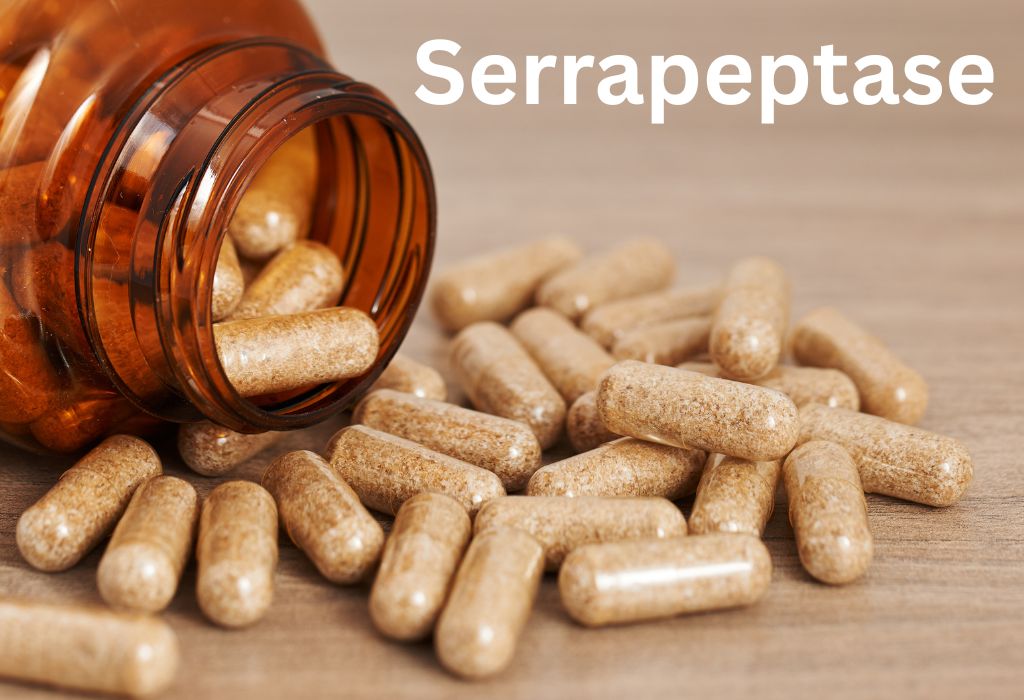
Is Serrapeptase a Waste? Read User Reviews
Serrapeptase (also called Serratiopeptidase) is a protein-breaking enzyme derived from bacteria living in silkworm cocoons.
It has been used for decades in Japan and Europe for various health-related purposes [1]. In recent years, it has attracted widespread attention as an ingredient in many supplements.
This article explores what people actually experience by compiling user feedback and real-world discussions available across the internet.
Before exploring further, please read the disclaimer located at the end of this webpage.
Key Takeaways
- Many users report clear benefits such as reduced inflammation, less menstrual discomfort, better blood circulation, faster recovery after injuries, and an overall increase in energy (Jadhav et al., 2020) [2].*
- A large portion of users notice no improvement, while some experience side effects including nausea, stomach discomfort, or changes in menstrual flow.*
- Common dosing ranges from 40,000–120,000 IU per day on an empty stomach.*
Why Serrapeptase Has Become So Popular
Serrapeptase spreads quickly across online communities. People believe it may help with inflammation, scar tissue breakdown, and even support the reduction of blood clots [3].
This comes from its ability to break down fibrin, a protein involved in clot formation, scar tissue, and accumulations inside injured areas or blood vessels (Gupte & Luthra, 2017) [4].
Because of these perceived potentials, serrapeptase is now widely included in supplement formulas and actively discussed on social platforms. Users talk extensively about what the enzyme actually feels like in real use.*
At the same time, many others raise questions or doubts about it. To clarify the picture, this article examines what real users have shared.
How We Collected These User Experiences
To achieve this goal, this article compiles hundreds of authentic user comments from open-access sources.
The platforms reviewed include public forums (Reddit), customer product reviews on e-commerce sites (Amazon/iHerb), and various content platforms (YouTube, TikTok…).
From there, the article identifies recurring patterns that users commonly report when trying this enzyme.
Note: This article does not provide medical advice.
Reported Benefits from Real Serrapeptase Users

Read more: 10 Best Serrapeptase Supplements For Circulation Health
General Wellness Support During Recovery
One of the most frequently mentioned points is that Serrapeptase seems to help with overall post-surgery discomfort, including less pain, reduced swelling, and gradual improvement in scar appearance.*
Users say older scars begin to show slow and steady changes after continued use. Fatigue, soreness, and the sense of fogginess or sluggishness after surgery also appear to lessen for some people.*
Many also mention that this enzyme helps reduce mucus buildup, promote clearer breathing, and support sinus health — one of several effects of serrapeptase (Y. Majima et al., 1988).
Increased Energy and Reduced Fatigue
A widely repeated benefit is feeling more energetic after using Serrapeptase. Many users say they feel less sluggish, more clear-headed during the day, and able to move past the sensation of brain fog.*
Buyer P. Hayes on Amazon also said that: “After using Serrapeptase supplement I’ve been feeling less fatigue and sleep better at night too. I probably need more time to see if it’s really effective but a great experience so far.”*
Improved Blood Flow
Many users report feeling changes in their blood pressure after using serrapeptase for a period of time. Some try different dosage levels with the hope of supporting cardiovascular well-being and observe changes over several days to a few weeks.*
However, these experiences may stem from various factors and are not necessarily linked directly to serrapeptase. Currently, no scientific research has confirmed a clear effect of serrapeptase on blood pressure or blood clots.
Among female users, some say they experience a more comfortable menstrual cycle, such as reduced discomfort or noticing changes in menstrual flow.*
These accounts are subjective and have not been supported by clinical studies.
Reported Side Effects and User Complaints about Serrapeptase
Mild Side Effects
Many users report mild reactions, usually appearing during the early stages or when increasing the dosage too quickly. The most common symptoms include nausea, mild stomach discomfort, bloating, burping, and indigestion.*
Some users say they only experience “stomach discomfort” when taking Serrapeptase at the wrong time (for example, immediately after meals), and the issue usually resolves once they adjust the timing or take it on an empty stomach or lower the dose.*
Serious or Long-term Effects
There are, although very rare and not frequently documented, notable reports of more intense or prolonged reactions. Some people describe experiences such as high fever, vomiting, sudden shortness of breath, or sharp nerve-like sensations…*
Another case was reported in the history of serrapeptase use in 1989 with symptoms such as common cold, then fever, nonproductive cough and dyspnea developed [5].
There are also comments about changes in menstrual patterns: heavier flow or unexpected bleeding, believed by some to be related to the enzyme’s blood-thinning effect.
Users who take anticoagulant medications, have clotting issues, are preparing for surgery, or are pregnant/breastfeeding are frequently mentioned as needing extra caution due to a higher bleeding risk.*
No Effect
A smaller portion of users say they “do not notice any clear effect” after taking this supplement for a period of time.
Common explanations shared within communities include: individual physiological differences, unsuitable dosage, or variations in formulation and absorption among different products. This group often ends up discontinuing use and switching to other approaches.*
Related article: Can Serrapeptase Cause Liver Damage?
Common Dosages and How People Use Serrapeptase
Most Serrapeptase users follow the guideline of taking it on an empty stomach and increasing the dose gradually.
Across reviews, the most common dosage is 1–2 capsules per day, typically ranging from 40,000–120,000 SPU (each capsule usually contains around 40.000, 80.000, or 120.000 SPU).
Many beginners start with 40,000 SPU to observe how their body responds, then increase to 120,000 SPU if they want stronger results, sometimes going up to 360.000.*
Regarding timing, most reviews recommend taking Serrapeptase in the morning on an empty stomach or at least 30 minutes before meals so that the enzyme is not broken down by stomach acid.*
Who Might Benefit the Most (and Who Should Be Cautious)
Based on personal accounts from users, some groups say they feel that serrapeptase aligns well with their needs.*
This includes people interested in supporting circulation, women experiencing menstrual discomfort, those who often deal with mucus buildup, or individuals looking to address scar-related concerns. These groups commonly note certain positive experiences while using serrapeptase.*
On the other hand, groups that users frequently mention as needing extra caution include individuals taking blood-thinning medications or those with clotting disorders.*
Pregnant or breastfeeding women, as well as people with a history of severe allergies, are also often highlighted as requiring more care.*
These observations are anecdotal and not medical advice. Anyone considering Serrapeptase should consult a healthcare professional to determine whether the supplement is appropriate and safe for their situation.
Overall User Sentiment: The Big Picture
Looking at the overall landscape, most comments across online communities indicate that a large portion of users observe at least some level of improvement.
This group accounts for roughly 70–80% of shared opinions. However, a smaller group of about 10–15% say the supplement does not offer any noticeable benefits.*
The remaining 5% includes users who report severe unwanted reactions and discontinue use.*
These numbers are only general observations from user discussions and should not be considered medical statistics.
Conclusion
Overall, Serrapeptase is an enzyme that receives many positive user reports across various personal goals.
However, users often begin with a low dose, adjust gradually, pay attention to interactions with other medications (especially anticoagulants), and stop immediately if serious reactions occur.
Consulting a healthcare professional is a prudent step, especially for those with underlying conditions or who are taking other substances that may interact with Serrapeptase.
Testimonial Disclaimer
*The testimonials presented on this website are provided by individuals based on their personal experiences with our products. These testimonials represent individual opinions and experiences, which may not be typical or applicable to all users of our products. Results may vary depending on a variety of factors, including individual health, lifestyle, and adherence to product usage instructions.References
- [1] Serrapeptase: Overview, Uses, Side Effects, Precautions, Interactions, Dosing and Reviews. (2020). Webmd.com. https://www.webmd.com/vitamins/ai/ingredientmono-1115/serrapeptase
- [2] Serrapeptase: Overview, Uses, Side Effects, Precautions, Interactions, Dosing and Reviews. Jadhav, S. B., Shah, N., Rathi, A., Rathi, V., & Rathi, A. (2020). Serratiopeptidase: Insights into the therapeutic applications. Biotechnology Reports, 28, e00544–e00544. https://doi.org/10.1016/j.btre.2020.e00544
- [3] ---. Analytical Techniques for Serratiopeptidase: A Review. Journal of Pharmaceutical Analysis/Journal of Pharmaceutical Analysis, vol. 7, no. 4, Aug. 2017, pp. 203–07. https://doi.org/10.1016/j.jpha.2017.03.005.
- [4] Y. Majima, Inagaki, M., Hirata, K., Takeuchi, K., Morishita, A., & Y. Sakakura. (1988). The effect of an orally administered proteolytic enzyme on the elasticity and viscosity of nasal mucus. European Archives of Oto-Rhino-Laryngology, 244(6), 355–359. https://doi.org/10.1007/bf00497464
- [5] Hirahara. (1989). A case of pneumonitis due to serrapeptase. Nihon Kyobu Shikkan Gakkai Zasshi, 27(10). https://pubmed.ncbi.nlm.nih.gov/2693781/
Author
Product Disclaimer
Including an ingredient or study does not evaluate, endorse, or recommend any Vinatura product or any third-party product. Some ingredients discussed may not be used in any Vinatura product.
The content of the articles has not been evaluated by the Food and Drug Administration (FDA) and is not intended to promote or endorse any specific product. Any products sold on this website are not intended to diagnose, treat, cure, or prevent any disease.
Opinions and Endorsements
Any claims, statements, or opinions expressed in the articles are those of the author(s) and do not necessarily reflect the views or opinions of the manufacturers of the dietary supplement products. The products sold on this website are separate from the content of the articles and are not directly endorsed or associated with the information presented here.
Liability Disclaimer
The author(s) of the articles, website, and manufacturers of the dietary supplement products do not assume any liability for any potential consequences arising from the use of the information provided in the articles. Ingredient effects, dosages, and safety vary by individual, formulation, and context; some ingredients interact with medications or may be unsuitable during pregnancy or lactation. It is recommended that individuals consult with a qualified healthcare professional before making any dietary or lifestyle changes, including the use of dietary supplements.
Product Usage
Please refer to the product labels and packaging for specific usage instructions and guidelines for the dietary supplement products sold on this website.
Customer Support
For any concerns or questions regarding the dietary supplement products, please contact our customer support team, who will be more than happy to assist you.


Leave a Comment
Be the first to comment.
What do you think?