

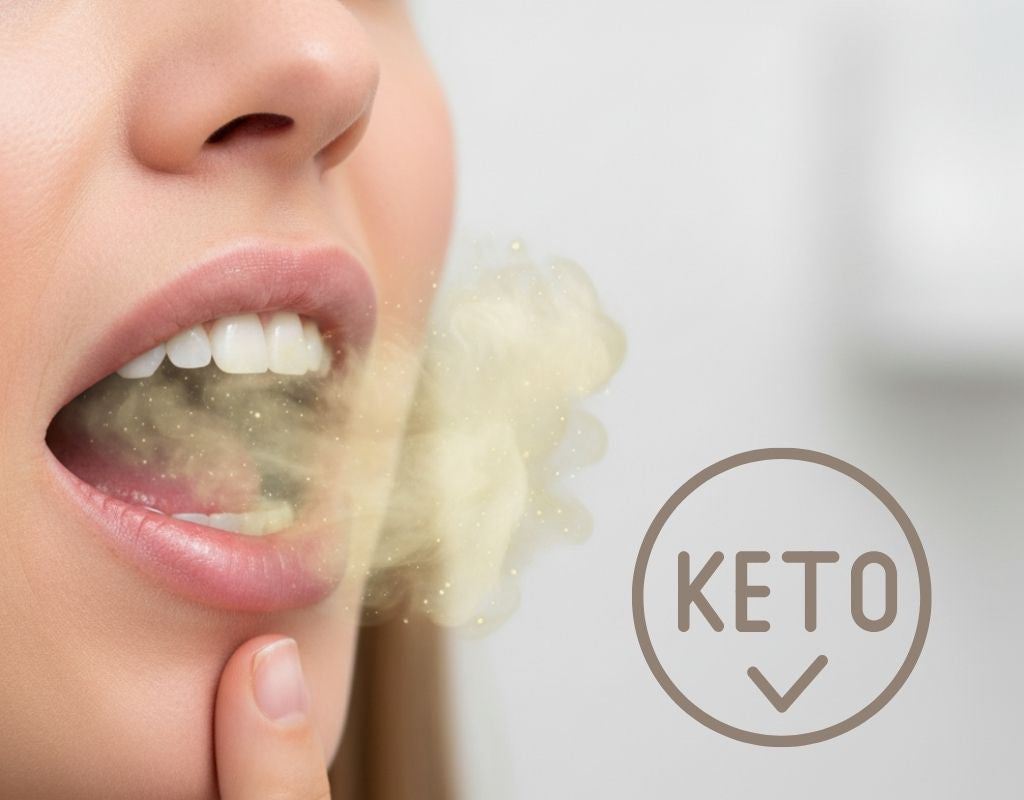
Why Does Ketosis Cause Bad Breath?
Bad breath during the ketogenic diet, commonly known as “keto breath,” is an unwanted side effect of the ketosis state. The main cause of keto breath is the metabolic shift to fat burning, which leads to the release of ketones.
Before exploring further, please read the disclaimer located at the end of this webpage.
Key Takeaways
- Keto breath is caused mainly by acetone (a ketone) and ammonia (from protein breakdown), creating a distinct odor.
- Acetone is exhaled through the lungs during ketosis, producing a fruity or nail polish–like smell.
- Ammonia adds a sharp chemical scent, especially when protein intake is high.
- Managing keto breath involves hydration, balanced protein, oral hygiene, and patience as the body adapts.
Why Does Ketosis Cause Bad Breath?
Bad breath during ketosis, often referred to as “keto breath”, is mainly caused by chemical byproducts produced during fat metabolism.
Two key compounds are involved: acetone, a type of ketone released through the breath, and ammonia, a byproduct of increased protein breakdown. Both contribute to the distinct odor associated with low-carb, high-fat diets.
The Release of Ketone (Acetone)
When the body enters ketosis, it switches from burning carbohydrates to burning fat for energy. This metabolic shift leads to the production of ketone bodies, mainly acetoacetate, β-hydroxybutyrate, and acetone. Among these, acetone is a volatile compound that forms when acetoacetate naturally breaks down.
Unlike other ketones, acetone isn’t used efficiently by the body. Instead, it’s released through your breath, giving rise to a distinct fruity or “nail polish remover” smell, commonly known as keto breath.
Studies show that breath acetone levels rise significantly during ketosis and are closely linked to blood levels of β-hydroxybutyrate [2,3].
People following ketogenic diets or fasting often experience this change, though the intensity of bad breath varies depending on the depth of ketosis and individual metabolism [1,2,4].
Ammonia
Ammonia is a secondary contributor to bad breath during ketosis. When carb intake drops, people often increase protein consumption.
As the body breaks down more protein for energy, it generates ammonia as a metabolic byproduct.
This ammonia is typically processed by the kidneys and eliminated through urine, but a small portion may also be exhaled, giving the breath a sharp, sometimes chemical-like odor.
Interestingly, ketone bodies themselves may affect how much ammonia the kidneys release.
Research in animal models shows that infusion of β-hydroxybutyrate or acetoacetate can reduce renal ammonia production by up to 60%, likely through their inhibitory effect on glutamine metabolism in renal cells [5,6]. However, additional clinical trials in humans are still needed.
In contrast, during severe metabolic states such as diabetic ketoacidosis, ammonia levels may paradoxically rise due to the combined effects of acidosis and ketone overload—overriding the usual suppressive effect of ketones [7].
Table: Effects of Ketone Bodies on Renal Ammonia Production
|
Condition |
Effect on Ammonia Production |
Mechanism / Notes |
|
Ketone infusion in normal or acidotic dogs |
Decrease by 50–60% |
Suppresses glutamine metabolism in renal tubules [5,6] |
|
Diabetic ketoacidosis (rats) |
Increase up to 7-fold |
Driven by severe acidosis, overrides ketone inhibition [7] |
Keto Bad Breath: Common Symptoms and Characteristics

Keto bad breath is a unique and often noticeable side effect of entering nutritional ketosis.
Unlike typical halitosis caused by oral hygiene or digestion, this breath change is linked to chemical byproducts produced during fat metabolism—especially acetone, a volatile ketone exhaled through the lungs [3,8,9].
1. Taste: Many individuals on a ketogenic diet report an unusual or metallic taste in the mouth. This sensation is often persistent and may feel dry or "coated," especially in the early phase of ketosis [8,10,11].
2. Odor: The most defining symptom is a distinct chemical-like smell. Some describe it as fruity—similar to overripe or fermented fruit—while others compare it to nail polish remover, reflecting the presence of acetone [3,8,9]. MedlinePlus notes that this scent may resemble “fruity, but not in a good way” [9].
3. Onset and duration: This breath change typically begins within the first few days of carbohydrate restriction and may persist for as long as ketosis is maintained. The intensity varies based on metabolism, hydration, and protein intake [8,10].
4. Related symptoms: Keto breath often appears alongside other “keto-induction” effects like headache, muscle cramps, constipation, or fatigue—commonly grouped as the “keto flu” [10,11].
While keto breath is harmless, it can be socially noticeable and may prompt individuals to monitor their hydration, protein levels, or consider strategies to mask the odor if needed.
Table: Common Symptoms and Characteristics of Keto Bad Breath
|
Symptom/Characteristic |
Description/Notes |
|
Fruity/acetone-like odor |
Most common, linked to breath acetone [3,8,9,11] |
|
Onset within days of ketosis |
Appears early, may persist with ongoing ketosis [8,10] |
|
Intensity varies by individual |
Influenced by metabolism and diet adherence [8,9,10] |
|
Associated "keto flu" symptoms |
Headache, constipation, muscle cramps, weakness (Cliff et al., 2018) |
Practical Home Remedies for Keto Breath

Keto breath is temporary for most people, but it can feel uncomfortable in daily life. While the root cause is metabolic, several practical strategies may help manage or reduce the odor.
1. Stay Hydrated
Drinking plenty of water throughout the day helps dilute ketones and supports their excretion through urine, which may reduce the intensity of breath odor.
2. Sugar-Free Mints & Gum
Using sugar-free gum or mints can temporarily mask the smell while also stimulating saliva production, which helps clear residual ketones in the mouth [12].
3. Moderate Protein Intake
Excess protein can lead to higher ammonia production, contributing to bad breath. Reducing protein slightly and replacing it with healthy fats—like avocado, nuts, or olive oil—may help balance your macros and minimize odor [12].
4. Adjust Carb Intake
Slightly increasing carb intake (within ketogenic limits) may reduce the depth of ketosis and breath acetone levels. Some users find breath odor eases with a more moderate approach [11].
5. Oral Hygiene
Consistent brushing, flossing, and tongue cleaning can help reduce bacterial buildup and mask odor. While it doesn't eliminate keto breath, it improves overall mouth freshness [12].
6. Patience
For most people, keto breath peaks during the first week of ketosis. As the body adapts and becomes more efficient at using ketones, the smell often fades without intervention [12].
Some Important Notes About Keto Breath

While keto breath is harmless, it can be surprising, especially for those new to the ketogenic diet. Understanding why it happens, how long it lasts, and what it says about your metabolic state can help ease concerns and guide adjustments.
Keto breath typically appears within the first few days of cutting carbs, as the body enters ketosis and begins producing ketones. The odor is most noticeable during this early “adaptation phase”, when ketone levels are rising rapidly and the body is still learning to use them efficiently.
The distinct smell comes primarily from acetone, a volatile ketone body exhaled through the lungs. Many people describe it as fruity, chemical, or similar to nail polish remover. This is different from regular halitosis and serves as a sign that fat metabolism is underway [8,13].
For most individuals, the intensity of keto breath fades over time. As the body becomes more adapted to low-carb living, it tends to produce fewer excess ketones, especially acetone. This process of adjustment can take several weeks, depending on the person’s metabolism and diet consistency.
Interestingly, breath acetone is not just a symptom - it’s a tool. Studies show that breath acetone levels closely reflect blood ketone concentrations, making it a non-invasive way to monitor ketosis. Many people use portable breath sensors to track their metabolic state and ensure they’re staying within their ketogenic range [8,11,13,14].
It’s also important to note that responses to ketosis vary widely. Some people develop noticeable breath changes quickly, while others may have minimal symptoms. Factors like hydration, protein intake, insulin sensitivity, and overall metabolic rate all play a role [8,14].
Finally, reintroducing carbs can reduce or reset ketosis, causing breath acetone levels to drop. After a high-carb meal, it may take several days to return to stable ketosis and experience the associated breath changes again, especially for individuals with higher insulin resistance (Kempf & Martin, 2024).
In clinical settings, monitoring breath acetone is increasingly used to support therapeutic ketogenic diets. It offers an easy, trackable marker for metabolic adaptation and dietary compliance [8,2,15].
Frequently Asked Questions
1. Does Keto Breath Mean You're Burning Fat?
Yes, keto breath usually means your body is in ketosis—burning fat for energy instead of carbs. The smell comes from acetone, a byproduct of fat breakdown, which is released through your breath.
2. Can Ketosis Breath Indicate a Health Issue?
Keto breath is common when starting the diet and usually fades over time. If it lasts long, smells unusually strong, or comes with other symptoms, it may help to adjust your diet, improve oral hygiene, or stay better hydrated.
3. Does Drinking Water Reduce Ketones?
Drinking water doesn't stop ketone production, but it helps dilute ketones in urine and may reduce breath odor. Staying hydrated also supports overall metabolism and reduces dry mouth.
4. How Long Does Bad Breath Last on Keto?
Keto breath often starts within the first week and may last a few weeks to a few months. It usually fades as your body adapts to using fat for fuel, but it may return if you restart the diet.
5. What Is the Best Way to Get Rid of Keto Breath?
The best ways to manage keto breath are drinking plenty of water, keeping good oral hygiene, and using sugar-free gum or mints. If the odor persists, slightly increasing carb intake (e.g., from 50g to 100g/day) can help reduce ketosis and improve breath.
Conclusion
Keto bad breath is a common and harmless sign that your body has entered ketosis. It’s mainly caused by the release of acetone, a byproduct of fat metabolism, through your breath.
Understanding why ketosis causes bad breath can help you manage it more effectively with simple adjustments like hydration, oral hygiene, and dietary balance. For most people, the odor fades as the body adapts to using ketones more efficiently.
Testimonial Disclaimer
*The testimonials presented on this website are provided by individuals based on their personal experiences with our products. These testimonials represent individual opinions and experiences, which may not be typical or applicable to all users of our products. Results may vary depending on a variety of factors, including individual health, lifestyle, and adherence to product usage instructions.References
- [1] Suntrup, D. J., Ratto, T. V., Ratto, M., & McCarter, J. P. (2020). Characterization of a high-resolution breath acetone meter for ketosis monitoring. https://doi.org/10.1101/2020.04.20.20072975
- [2] Musa-Veloso, K., Likhodii, S. S., & Cunnane, S. C. (2002). Breath acetone is a reliable indicator of ketosis in adults consuming ketogenic meals. American Journal of Clinical Nutrition, 76(1), 65–70. https://doi.org/10.1093/ajcn/76.1.65
- [3] Alkedeh, O., & Priefer, R. (2021). The Ketogenic Diet: Breath Acetone Sensing Technology. Biosensors, 11(1), 26. https://doi.org/10.3390/bios11010026
- [4] Anderson, J. C. (2015). Measuring breath acetone for monitoring fat loss: Review. Obesity, 23(12), 2327–2334. https://doi.org/10.1002/oby.21242
- [5] Lemieux, G., Vinay, P., Robitaille, P., Plante, G. E., Lussier, Y., & Martin, P. (1971). The effect of ketone bodies on renal ammoniogenesis. Journal of Clinical Investigation, 50(9), 1781–1791. https://doi.org/10.1172/jci106668
- [6] Lemieux. (2025). Relationship between the renal metabolism of glutamine, fatty acids and ketone bodies. Current Problems in Clinical Biochemistry, 8. https://pubmed.ncbi.nlm.nih.gov/616372/
- [7] Goldstein, L., Boylan, J. M., & Helmut Schröck. (1980). Adaptation of renal ammonia production in the diabetic ketoacidotic rat. Kidney International, 17(1), 57–65. https://doi.org/10.1038/ki.1980.7
- [8] Güntner, A. T., Kompalla, J. F., Landis, H., Theodore, S. J., Geidl, B., Sievi, N. A., Kohler, M., Pratsinis, S. E., & Gerber, P. A. (2018). Guiding Ketogenic Diet with Breath Acetone Sensors. Sensors, 18(11), 3655–3655. https://doi.org/10.3390/s18113655
- [9] Ruzsányi, V., Kalapos, M. P., Schmidl, C., Karall, D., Scholl-Bürgi, S., & Baumann, M. (2018). Breath profiles of children on ketogenic therapy. Journal of Breath Research, 12(3), 036021–036021. https://doi.org/10.1088/1752-7163/aac4ab
- [10] Cliff, Schofield, G. M., & Micalla Williden. (2018). The use of nutritional supplements to induce ketosis and reduce symptoms associated with keto-induction: a narrative review. PeerJ, 6, e4488–e4488. https://doi.org/10.7717/peerj.4488
- [11] Nakamura, K., Hagihara, K., Nagai, N., Ryuichiro Egashira, Takeuchi, M., Nakano, M., Saito, H., Moriguchi, M., Satoko Tonari, Fujii, H., Miyake, A., Yusuke Omae, & Ashida, K. (2023). Ketogenic effects of medium chain triglycerides containing formula and its correlation to breath acetone in healthy volunteers: a randomized, double-blinded, placebo-controlled, single dose-response study. Frontiers in Nutrition, 10. https://doi.org/10.3389/fnut.2023.1224740
- [12] Bostock, S., Kirkby, K. C., Taylor, B. V., & Hawrelak, J. A. (2020). Consumer Reports of “Keto Flu” Associated With the Ketogenic Diet. Frontiers in Nutrition, 7. https://doi.org/10.3389/fnut.2020.00020
- [14] Kempf, K., & Martin, S. (2024). Effects of a Carbohydrate Meal on Lipolysis. Nutrients, 16(20), 3531–3531. https://doi.org/10.3390/nu16203531
- [15] Mo Awchi, Singh, K. D., Brenner, S. B., Burckhardt, M.-A., Hess, M., Zeng, J., Datta, A. N., Frey, U., Zumsteg, U., Gabor Szinnai, & Sinues, P. (2024). Metabolic trajectories of diabetic ketoacidosis onset described by breath analysis. Frontiers in Endocrinology, 15. https://doi.org/10.3389/fendo.2024.1360989
Author

Product Disclaimer
Including an ingredient or study does not evaluate, endorse, or recommend any Vinatura product or any third-party product. Some ingredients discussed may not be used in any Vinatura product.
The content of the articles has not been evaluated by the Food and Drug Administration (FDA) and is not intended to promote or endorse any specific product. Any products sold on this website are not intended to diagnose, treat, cure, or prevent any disease.
Opinions and Endorsements
Any claims, statements, or opinions expressed in the articles are those of the author(s) and do not necessarily reflect the views or opinions of the manufacturers of the dietary supplement products. The products sold on this website are separate from the content of the articles and are not directly endorsed or associated with the information presented here.
Liability Disclaimer
The author(s) of the articles, website, and manufacturers of the dietary supplement products do not assume any liability for any potential consequences arising from the use of the information provided in the articles. Ingredient effects, dosages, and safety vary by individual, formulation, and context; some ingredients interact with medications or may be unsuitable during pregnancy or lactation. It is recommended that individuals consult with a qualified healthcare professional before making any dietary or lifestyle changes, including the use of dietary supplements.
Product Usage
Please refer to the product labels and packaging for specific usage instructions and guidelines for the dietary supplement products sold on this website.
Customer Support
For any concerns or questions regarding the dietary supplement products, please contact our customer support team, who will be more than happy to assist you.



Leave a Comment
Be the first to comment.
What do you think?