

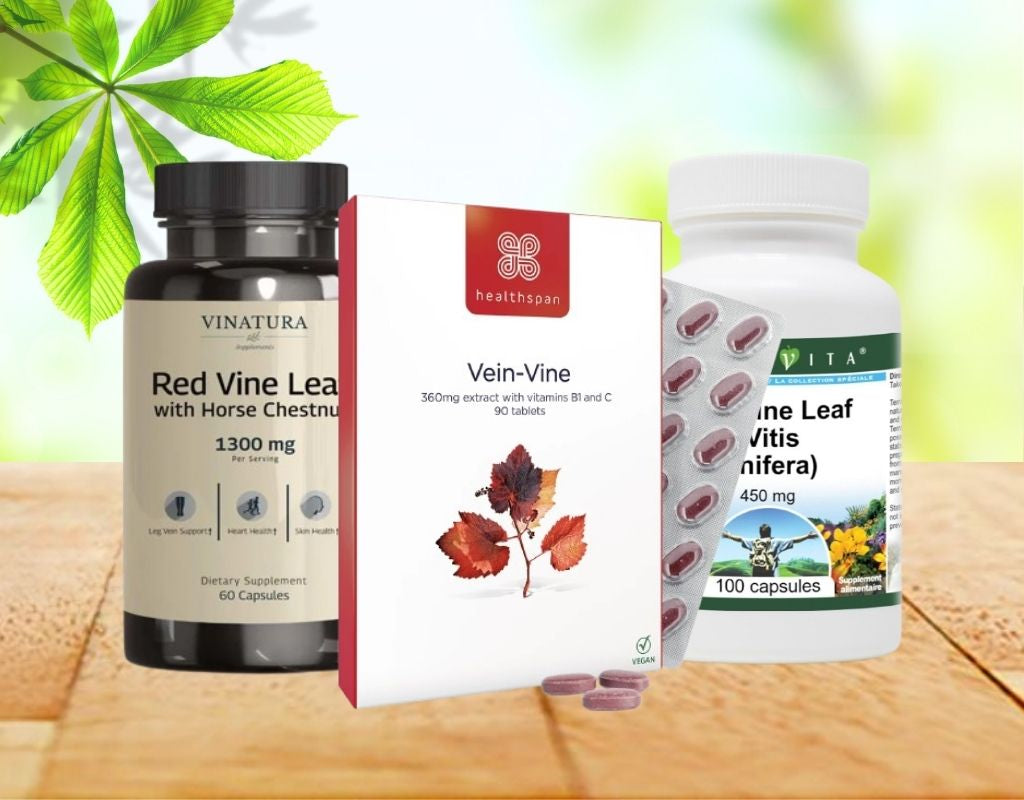
3 Best Red Vine Leaf Extract for Legs Care and Circulation
For individuals who spend long hours on their feet or place consistent physical demand on their lower limbs, Red Vine Leaf extract has emerged as a well-recognized botanical option for supporting healthy circulatory function.
These supplements are rich in naturally occurring antioxidants, specifically polyphenols and anthocyanins, which are known to support vascular integrity and promote the feeling of light, energized legs.
However, because the potency of herbal extracts can vary significantly between brands, finding a high-quality formula requires careful discernment.
In this guide, we evaluate the best Red Vine Leaf supplements for 2026, focusing on standardized potency, ingredient transparency, and adherence to rigorous manufacturing standards.
Before exploring further, please read the disclaimer located at the end of this webpage.
Key Takeaways
- Most Transparent Brand: Healthspan
- Most Reasonable Dosage: Healthspan
- Advanced Formula: Vinatura Supplements
- Focus on Testing & Purity: Vinatura Supplements
- Lowest Price: TerraVita
- Best Price-to-Performance: Healthspan
- Best for Beginners: Healthspan
- Best for Strong Needs: Vinatura Supplements
- Best for Low Budget: TerraVita
Comparison Table – Red Vine Leaf Extract Supplements
|
Criteria |
Healthspan Red Vine Leaf |
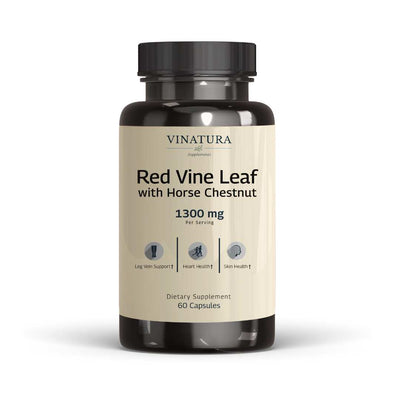
Vinatura Red Vine Leaf Extract Horse Chestnut 1300 mg |
TerraVita Red Vine Leaf |
|
Brand’s Insight |
20+ Years Trusted UK Wellness Brand |
Transparency and Commitment to Quality |
Budget Herb Brand |
|
Transparency & Commitment to Quality |
Very High – Clear active mg, VEGAN, published testing |
Extremely High – Clean Label Project, Eurofins, Ellipse |
Low – Limited product documentation |
|
Segment |
Balanced & Evidence-Based |
Premium Potency (2-in-1) |
Budget-Friendly |
|
Red Vine Leaf Extract per Capsule |
360 mg (Standardized 15:1) |
550 mg per capsule (1,100 mg/day) |
450 mg (Leaf powder, not standardized) |
|
Additional Ingredients |
Vitamin C + Vitamin B1 |
200 mg Horse Chestnut |
None (but lacks extract clarification) |
|
Transparency (COA) |
High – Consistent third-party testing |
Very High – COA public, multi-lab verification |
Low – COA not provided |
|
Size & Price |
90 tabs / ~$24.50 |
60 caps / ~$26.00 |
100 caps / ~$15.95 |
|
Cost per Serving |
~$0.27/day (Best overall value) |
~$0.86/day (Premium tier) |
~$0.15–$0.47/day (dose-dependent) |
|
Key Certifications |
Vegan, GMP UK |
Clean Label Project, Eurofins, cGMP |
GMP (no advanced certifications) |
|
Money-Back Guarantee |
30 days |
90 days (Longest) |
30 days |
|
Best For |
Users wanting a balanced, research-backed daily dose |
People seeking a stronger 2-in-1 formula with high purity |
Budget-conscious buyers or casual users |
How Do We Choose the Best Red Vine Leaf Extract Supplements?
Choosing a supplement can be confusing, especially in an industry where marketing claims often outweigh clear explanations. To help readers make more informed decisions, we apply a consistent evaluation framework focused on transparency, practicality, and consumer trust.
We do not purchase or independently test every product. Instead, our assessments are based on publicly available information from product labels, brand websites, third-party platforms, scientific references, and independent consumer feedback.
The same evaluation principles are applied across all products to ensure fair and comparable reviews.
Below is an overview of the key criteria we use and how each one contributes to our selection process.
Read more: Red Vine Leaf Benefits - The Comprehensive Overview
Ingredient Identity & Label Transparency
How we evaluate
We review Supplement Facts panels and product labels from official brand websites and major retailers. This includes checking whether active ingredients are clearly named, whether amounts per serving are disclosed, and whether proprietary blends are used for primary ingredients.
We also look for consistency across different listings and consider third-party commentary regarding label clarity.
What consumers should know
A transparent label should clearly state the active ingredient, its form, and its dosage per serving. Products that obscure key information or rely heavily on generalized blends can make it difficult to assess value or suitability.
Ingredient-specific considerations
Depending on the type of supplement, additional factors—such as ingredient form, extract ratios, or standardization—may be relevant. These aspects are addressed within each specific product category.
|
Product |
Ingredients (per serving) |
Dosage Form |
Transparency Level |
Highlights / Warnings |
|
TerraVita |
450 mg Red Vine Leaf |
Capsule |
Medium |
Only lists “Leaf” — unclear whether it is raw leaf powder or a standardized extract. |
|
Vinatura Supplements |
1300 mg (Red Vine Leaf and Horse Chestnut extract) |
Capsule |
High |
The 1300 mg represents a blend of 1100 mg Red Vine Leaf extract and 200 mg Horse Chestnut extract. |
|
Healthspan |
360 mg Red Vine Leaf extract |
Tablet |
Very High |
Fully transparent about supporting vitamins (B1, C) and provides a vegan guarantee. |

When comparing these formulas by ingredient identity and label transparency, TerraVita remains the least detailed. The product uses 450 mg of dried Red Vine Leaf powder but provides no extraction ratio or active compound content, making potency difficult to interpret.
Its label stays minimal, offering little clarity about ingredient quality or sourcing.
Healthspan stands out by clearly listing its ingredients and explaining the purpose behind adding Vitamin C, which supports collagen formation in blood vessels.
Vinatura shows full disclosure within its 1,300 mg serving, specifying 1,100 mg Red Vine Leaf extract and 200 mg Horse Chestnut extract. With concentrated extracts and explicit breakdowns, Vinatura provides both a more advanced formula and a transparent label that makes evaluation straightforward.
Dosage Relevance & Practical Use
How we evaluate
We reference commonly reported dosing ranges from scientific literature and compare them with manufacturer-recommended servings.
We also assess how dosing is delivered in practice, including the number of capsules required per day and the form of the supplement (such as capsules or powder).
What consumers should know
More is not always better, and a higher dose does not automatically mean greater benefit. Practical dosing—especially for daily or long-term use—can make a meaningful difference in consistency and user experience.
Ingredient-specific considerations
Optimal dosing varies by ingredient, and we adjust this evaluation based on how each supplement is typically used and studied.
A daily dosage of 360 mg to 720 mg of dried Red Vine Leaf extract is commonly used to support venous health and circulation. This dosage is believed to provide noticeable benefits in these areas.
Dosage Correlation Analysis
TerraVita (450 mg): This dosage is slightly above the basic standard. However, some retailer guidelines recommend taking it three times per day (totaling 1350 mg). This creates a discrepancy:
-
If it is a standardized extract, 1350 mg is unnecessarily high.
-
If it is raw leaf powder, that amount may still be insufficient in active compounds.
Vinatura Supplements (1300 mg): This is a relatively high total dosage but can be misleading. The 1300 mg per two capsules (605 mg per capsule) includes both Red Vine Leaf and Horse Chestnut.
While this combination may provide a synergistic effect, it reduces the user’s ability to control the Red Vine Leaf dosage independently.
Healthspan (360 mg extract): Healthspan provides 360 mg of extract - aligned with the standard effective dosage - making it easy for users to customize or gradually increase their intake. This makes Healthspan particularly suitable for beginners.
|
Feature |
Healthspan |
Vinatura Supplements |
TerraVita |
|
mg per capsule/tablet |
360 mg |
650 mg |
450 mg |
|
Daily serving |
1 tablet |
1-2 capsules |
1-3 capsules |
|
Dosage form |
Tablet (Vegan) |
Capsule (Plant-based shell) |
Capsule |
Manufacturing Standards & Quality Control
How we evaluate
We examine publicly stated manufacturing practices, such as cGMP compliance or FDA facility registration, and note whether brands provide batch-level documentation like Certificates of Analysis (COAs) or details about third-party testing.
Certifications and standards are reviewed based on what they actually represent, not how they are marketed.
Helping consumers understand certifications
Not all certifications carry the same weight. Some relate to manufacturing processes, others to product testing, and some simply reflect dietary or lifestyle preferences.
Understanding these distinctions can help consumers better interpret quality claims rather than assuming all certifications imply superior safety or effectiveness.
Use-case considerations
Certain quality markers may be more relevant for specific users, such as those with dietary restrictions or competitive athletes. We consider how manufacturing and quality signals align with different consumer needs.
|
Group |
Meaning |
Typical Certifications |
Reliability Level |
|
Group 1: Foundational |
Ensures clean, compliant manufacturing processes. |
GMP, NSF (Facility), FDA Registered |
Medium (Mandatory baseline) |
|
Group 2: Specialized |
Meets dietary/allergy-related needs. |
Vegan, Non-GMO, Gluten-Free |
High (For specific customer groups) |
|
Group 3: Verified |
Independent evidence of ingredient identity and purity. |
3rd Party Tested, COA (Lab report) |
Very High (Most valuable) |
Healthspan stands out in technical rigor and transparency, clearly detailing its extraction process that preserves 40% polyphenols, holding an official Vegan certification, and publishing more than 700 verified customer reviews.
Vinatura Supplements demonstrates the highest level of testing, with every batch analyzed by Eurofins and Ellipse Analytics, and earning the Clean Label Project certification—an uncommon guarantee of purity.
In contrast, TerraVita maintains manufacturing in a GMP-certified facility but does not publish COAs or independent certifications, making its transparency significantly lower than the other three brands.
Brand Transparency & Consumer Trust
How we evaluate
We review publicly available brand information, including company history, contact details, customer support options, and return policies. We also examine independent feedback from third-party platforms, consumer communities, and any publicly reported regulatory actions or recalls.
What consumers should know
Consistent patterns in customer feedback can be more informative than individual reviews. Transparency, responsiveness, and a clear company presence are often indicators of a brand’s long-term reliability.
In the Brand Transparency & Consumer Trust category, Healthspan remains the most prominent brand: over 20 years of operation without scandals, consistently winning the Feefo Platinum Trusted Service award, and always responding publicly to customer concerns.
A limitation, however, is that the brand is based in the UK; direct shipping to the U.S. or Canada typically incurs an additional cost of $4–$20. If purchasing through third-party sellers, buyers should be cautious about credibility and authenticity.
Vinatura, on the other hand, excels in radical transparency by publicly disclosing its Clean Label Project certification and making its COA accessible for users to view.
It is also manufactured in the United States, which is an advantage for U.S. consumers compared with the other two products. However, as a younger brand, its long-term stability still needs more time to be fully validated.
In contrast, TerraVita is a choice that requires more caution. Reports of difficult-to-reach customer service, inconsistent product descriptions, and unclear contact information make its transparency significantly lower than the other brands.
Price-to-Value
How we evaluate
We calculate cost per serving—and, when relevant, cost per unit of active ingredient—and compare products within the same category and usage context. Pricing is then considered alongside formulation quality, manufacturing transparency, and brand support.
What consumers should know
Evaluating value requires looking beyond the sticker price. Comparing products on a per-serving basis can provide a clearer picture of overall cost-effectiveness.
|
Product |
Average Retail Price |
Packaging |
Daily Dosage (caps/day) |
Days of Use |
Cost per Day (Serving) |
Cost per Capsule |
|
Healthspan |
$24.50 (£18.99) |
90 tablets |
1 tablet |
90 days |
~$0.27 |
~$0.27 per 360 mg tablet |
|
TerraVita |
$15.95 |
100 capsules |
1–3 capsules |
33–100 days |
~$0.15 – $0.47 |
~$0.15 per 450 mg capsule |
|
Vinatura Supplements |
$26.00 |
60 capsules |
2 capsules |
30 days |
~$0.86 |
~$0.43 per 650 mg capsule |
At approximately $0.27 per day, users receive 360 mg of a standardized 15:1 extract from Healthspan—a level of performance that is difficult to match at this price point.
However, U.S. customers should be aware of potential shipping costs when purchasing the original product.
Vinatura, priced at around $0.86 per day, falls into the premium segment. This reflects the cost of its dual-extract formula (Red Vine Leaf and Horse Chestnut) as well as rigorous third-party testing through the Clean Label Project.
For users without budget constraints and who prioritize purity and transparency, this pricing is fully justified.
TerraVita is currently the most affordable option at roughly $0.15 per capsule. However, this advantage should be evaluated carefully: if you only take one capsule per day ($0.15/day) for light maintenance, the price is exceptionally good.
But if you aim to achieve an effect comparable to stronger extracts, you may need up to three capsules. In that case, the actual daily cost rises to about $0.47/day—still cheaper than Vinatura, but notably higher than Healthspan’s $0.27/day.
Testimonial Disclaimer
*The testimonials presented on this website are provided by individuals based on their personal experiences with our products. These testimonials represent individual opinions and experiences, which may not be typical or applicable to all users of our products. Results may vary depending on a variety of factors, including individual health, lifestyle, and adherence to product usage instructions.3 Best Red Vine Leaf Extract For Legs Care and Circulation
Healthspan Vein-Vine

1. About Healthspan Vein-Vine
|
Criteria |
Information |
|
Product Name |
Vein-Vine Leg Vein Support |
|
Brand |
Healthspan |
|
Year Founded |
1996 |
|
Origin |
United Kingdom (Guernsey) |
|
Manufacturing Standards |
GMP (UK Standards), pharmaceutical grade extraction |
|
Form |
Tablets |
|
Strength |
360 mg Red Vine Leaf extract (Equivalent to 5,400 mg fresh leaf) |
|
Recommended Dosage |
1 tablet/day (up to 2 if needed) |
|
Capsules per Bottle |
90 tablets |
|
Ingredients |
Red Vine Leaf extract, Vitamin C, Vitamin B1 |
|
Made without |
Gelatin (Vegan), Gluten, Dairy, Artificial colors/flavors |
|
Testing |
Independent third-party verified (Feefo Platinum Trusted) |
|
Listed Price |
~24.50 USD (£18.99) |
|
Key Highlight |
Suitable dosage with added Vitamin C for collagen and vessel support. |
2. Comprehensive Review about Healthspan Vein-Vine
Healthspan Red Vine Leaf (Vein-Vine 360 mg) is formulated to support comfort in the legs, especially for individuals who often feel heaviness after long periods of sitting or standing.*
Some users find that with consistent use over time, their legs feel more comfortable toward the end of the day.*
With continued daily consistency, some individuals describe a general sense of lightness and better day-to-day comfort. While this product is not intended to address or correct visible vein concerns, users often feel that their legs are more relaxed and less tired.*
The tablets are easy to swallow and have no unpleasant odor. The formula features Red Vine Leaf extract together with vitamins B1 and C, making it suitable for ongoing circulatory support as part of a daily routine.
The experience may vary from person to person, and some individuals may require a period of consistent use to notice meaningful changes. Taking the product after meals and maintaining a steady routine is typically recommended for best results.*
3. Service, Delivery & Policy Information
|
Item |
Details |
|
Retail Price |
24.50 USD per box (90 tablets) |
|
Shipping |
Not free for single standard box |
|
Shipping Fee |
~3.50 USD (Free on orders over 32.00 USD) |
|
Subscription |
15% - 20% discount (Subscribe & Save) |
|
Delivery Frequency |
Every 1, 2, 3, or 4 months |
|
Cost per 360 mg extract |
0.27 USD |
|
Refund Policy |
30 days (Satisfaction Guarantee) |
|
Refund Conditions |
Contact support; may require returning unused portion |
4. Pros & Cons
|
Pros |
Cons |
|
Transparent formula: 360 mg of standardized extract with clearly stated active constituents. |
Not distributed directly in the U.S./Canada → must purchase through third parties, which carries a risk of non-authentic products. |
|
Includes Vitamin C & B1, which support vascular collagen and overall energy. |
Tablet form, not capsules → may not suit users who prefer capsules. |
|
Easy, practical dosage: 1 tablet per day, supporting long-term consistency. |
Effects may take time to notice, not ideal for those expecting quick results. |
|
Excellent price-to-performance value (~$0.27/day). |
Shipping fees are not waived for single-item orders. |
|
Over 20 years in the market with multiple Feefo Platinum Trusted Service awards. |
|
|
Pharmaceutical-grade extraction process, UK standards, and clear Vegan labeling. |
Vinatura Red Vine Leaf Extract 1300 mg, 30 Servings

1. About Vinatura Red Vine Leaf Extract with Horse Chestnut 1300 mg
|
Criteria |
Information |
|
Product Name |
Red Vine Leaf Extract with Horse Chestnut |
|
Brand |
Vinatura Supplements |
|
Year Founded |
2023 |
|
Origin |
United States (USA) |
|
Manufacturing Standards |
cGMP facility in the USA |
|
Form |
Capsules |
|
Strength |
1,300 mg (1100 mg Red Vine Leaf and 200 mg Horse Chestnut extract per serving) |
|
Recommended Dosage |
1,300 mg/day (2 capsules) |
|
Capsules per Bottle |
60 capsules |
|
Ingredients |
Red Vine Leaf Extract, Horse Chestnut Extract |
|
Made without |
GMO, Soy, Tree Nut, Wheat, Dairy, Vegan |
|
Testing |
Third-party tested (Clean Label Project, Eurofins/Ellipse) |
|
Listed Price |
~26.00 USD |
|
Key Highlight |
High potency dual-action formula with rigorous heavy metal testing. |
2. Comprehensive Review about Vinatura Red Vine Leaf Extract Horse Chestnut
The first thing that stands out about Vinatura Red Vine Leaf Horse Chestnut is its relatively high serving amount (1300 mg per serving) and the inclusion of Horse Chestnut in the formula.
Because of this combination, some users anticipate more noticeable leg-comfort support compared with products that use Red Vine Leaf alone.*
In practice, some individuals report feeling less heaviness or tension in their legs after establishing a steady routine of consistent use, especially toward the end of the day.*
The product comes in capsule form, is easy to take, and—when used after meals—did not cause stomach discomfort in my experience. The effects tend to build gradually rather than immediately, but they may feel steady over time with consistent use.
User experiences can vary. Some individuals report subtle changes in overall comfort or daily ease, while others notice minimal differences or mention mild, temporary reactions such as headaches or light dizziness.*
As one Amazon reviewer, Tryingtohelp, shares:
“The ingredients in this have been used for a long time, which is what first caught my attention. Personally, I notice a difference in how I feel day to day when I take it compared to when I don’t. It fits well into my routine, and I haven’t had any side effects.”*
Additionally, the price is somewhat higher compared with other options on the market, and the use of ingredients like maltodextrin may be a drawback for individuals who are sensitive to certain additives or who prefer extremely minimalist formulas.

3. Service, Delivery & Policy Information
|
Item |
Details |
|
Retail Price |
26.00 USD per bottle (60 capsules) |
|
Shipping |
Calculated at checkout |
|
Shipping Fee |
Based on order size (Free on orders $50+) |
|
Shipping Method |
USPS (U.S. domestic shipping) |
|
Subscription |
10% – 15% discount |
|
Delivery Frequency |
Every 30, 60, or 90 days |
|
Cost per 1300 mg Blend |
0.86 USD |
|
Refund Policy |
90-day money-back guarantee |
|
Refund Conditions |
No product return required; limited to 1 unit per product per customer |
4. Pros & Cons
|
Pros |
Cons |
|
Strong dual-action formula: Red Vine Leaf + Horse Chestnut (aescin) for complementary circulatory support. |
Some user feedback mentions mild dizziness/headaches or limited noticeable change.* |
|
Made in the USA with transparent batch-specific COAs — highly suitable for U.S. consumers. |
Contains maltodextrin — a drawback for those sensitive to excipients. |
|
Friendly formulation: Vegan, Non-GMO, soy-free, gluten-free. |
Newer brand (established 2023) — long-term consistency is still developing. |
|
Easy-to-swallow capsules with a stable 2-capsule daily serving. |
TerraVita Red Vine Leaf 450 mg

1. About TerraVita Red Vine Leaf
|
Criteria |
Information |
|
Product Name |
Red Vine Leaf (Vitis vinifera) 450 mg |
|
Brand |
TerraVita (distributed by ZooScape) |
|
Year Founded |
~2000s (ZooScape has operated for decades in the USA) |
|
Origin |
United States (USA) |
|
Manufacturing Standards |
Packaged in a cGMP certified facility in the USA |
|
Form |
Capsules |
|
Strength |
450 mg Red Vine Leaf (Note: Often listed as leaf, not extract) |
|
Recommended Dosage |
1 capsule, 1-3 times daily |
|
Capsules per Bottle |
100 capsules |
|
Ingredients |
Red Vine Leaf, Gelatin (capsule), Water |
|
Made without |
Unnecessary fillers, artificial colors (Natural Herb focus) |
|
Testing |
Standard internal QC, California Prop 65 compliant |
|
Listed Price |
~15.95 USD (Amazon) (Price varies by retailer) |
|
Key Highlight |
High capsule count (100 caps) with a focus on traditional raw herbal leaf. |
2. Comprehensive Review about TerraVita Red Vine Leaf
Before looking closely at the product itself, it’s helpful to understand that TerraVita is a brand owned by ZooScape (USA)—a long-established company known more for traditional herbs and teas than for highly specialized dietary supplement formulations.
Their philosophy focuses on minimal excipients and straightforward, raw ingredients. As a result, their products are typically very affordable and come in a wide range of varieties.
However, because they operate under a more traditional retail model with a very large catalog, they sometimes face limitations in maintaining fully updated label details across e-commerce platforms. Their customer service also tends to be less streamlined compared with newer supplement brands.
From my experience, the 450 mg per capsule format is convenient for daily use, and some individuals may notice a general sense of comfort when the product aligns with their needs.*
That said, there are a few important considerations: some users report headaches or mild stomach discomfort. For individuals with sensitive digestion, it may be best to take the product after meals and to start with a lower amount to monitor personal response.*
There are also various customer comments regarding issues such as the Prop 65 warning label (chemicals known to the State of California to potentially cause cancer or reproductive harm) not being clearly shown before purchase, or concerns about batch consistency and partially filled capsules.*
While these points do not necessarily reflect the product’s intended function, they can significantly influence trust and the overall purchasing experience.
3. Service, Delivery & Policy Information
|
Item |
Details |
|
Retail Price |
15.95 USD per bottle (100 capsules) (Amazon) |
|
Shipping Fee |
~5.99 - 7.99 USD (Varies by retailer like Kmart/Amazon) |
|
Subscription |
Not typically offered (Depends on retailer) |
|
Cost per 450 mg Leaf |
0.16 USD (1 cap) to 0.47 USD (3 caps) |
|
Refund Policy |
14 - 30 days (Depends on seller) |
|
Refund Conditions |
Depends on seller |
4. Pros & Cons
|
Pros |
Cons |
|
Lowest cost if taking 1 capsule per day (~$0.16). |
No stated extract ratio or polyphenol data → difficult to anticipate potency. |
|
100 capsules per bottle → long usage period and flexible dosing. |
May require 2–3 capsules per day for stronger support → increases cost (~$0.63/day). |
|
Suitable for those who prefer a more “traditional herb” style product. |
No published COA and no third-party testing. |
|
Manufactured in a GMP-certified facility. |
Customer support is not strong; brand information is scattered due to ZooScape’s distribution model. |
|
Gelatin capsules, not suitable for vegetarians or vegans. |
What is Red Vine Leaf extract?
Red Vine Leaf extract is a natural extract sourced from the leaves of the Vitis vinifera plant (commonly known as the grapevine).
This extract contains bioactive compounds, such as polyphenols and flavonoids, including anthocyanins and quercetin derivatives, which are known for their antioxidant properties.
Red Vine Leaf extract has been traditionally used in herbal practices in Europe, and it is often included in dietary supplements for its potential antioxidant benefits. It is typically standardized for its polyphenol content and is available in various forms like capsules, tablets, and powders.
Several studies have focused on the antioxidant potential of Red Vine Leaf extract.
Research suggests that the polyphenolic compounds found in the extract may help protect cells from oxidative stress and promote overall vascular health by supporting the body's natural antioxidant defenses (Paczkowska-Walendowska et al., 2023) [1].
These compounds are commonly studied for their protective effects against free radicals and general support for blood vessel function.
How Does Red Vine Leaf Work?
The most notable feature of Red Vine Leaf extract is its rich polyphenol profile, which includes key groups such as flavonoids (particularly quercetin-3-O-beta-glucuronide and isoquercitrin), anthocyanins, and stilbenes like resveratrol (Grau et al., 2016; Singh et al., 2023) [3].
These compounds are widely recognized in scientific literature for their antioxidant capacity, which may help protect cells from free-radical exposure and contribute to reduced oxidative stress (Acero et al., 2025).
From a pharmacological research perspective, studies suggest that Red Vine Leaf extract may exert its effects through three primary mechanisms:
1. Support for endothelial function and microcirculatory flow
Experimental findings indicate that the extract may influence nitric oxide synthase activity, which in turn can support nitric oxide (NO) production.
NO plays a well-documented role in vascular relaxation and microcirculatory dynamics, and these mechanisms have been associated with improved skin oxygenation and general circulatory comfort in research settings (Acero et al., 2025; Grau et al., 2016).
2. Support for vascular integrity and fluid balance
Certain constituents in Red Vine Leaf have been observed to help maintain capillary resistance and reduce capillary permeability in laboratory and models.
These effects are associated with supporting normal tissue fluid balance and promoting healthy vascular elasticity (Grau et al., 2016).
3. Cellular protection and modulation of antioxidant pathways
In addition to its benefits for blood vessels, studies have shown that Red Vine Leaf extract has great potential in protecting skin cells from harmful environmental effects, such as oxidative damage caused by UV rays.
The natural bioactive compounds in red vine leaves (especially resveratrol and other polyphenol groups) act as a defense system, helping the body better cope with external stressors.
Rather than working individually, these compounds combine to create a 'synergy,' enhancing the body's ability to recover and protect cells more comprehensively.
This not only supports healthy aging but also helps maintain cellular health in the face of adverse environmental changes" ( Paczkowska-Walendowska et al., 2023) [1].
What are the Benefits of Red Vine Leaf Supplements?
Red Vine Leaf extract—particularly standardized forms such as AS 195—has become a well-recognized ingredient in the fields of nutraceuticals and pharmaceuticals due to its well-documented effects on circulation and cellular support. Below are key areas where research has shown meaningful physiological activity:
1. Supports the maintenance of healthy vein function
This is the most frequently studied aspect of Red Vine Leaf extract. Systematic reviews report that the extract helps support vein health by assisting the strength of vascular walls and helping maintain normal capillary permeability (Nees et al., 2011) [4].
Research participants have commonly reported improvements in sensations associated with lower-leg comfort, including:
-
Supports healthy fluid balance: such as decreases in calf and ankle circumference.
-
Improved daily comfort: helps ease leg discomfort.
-
General vein support: support the integrity of vascular walls, reduce leg fatigue and venous discomfort.
2. Promotes healthy circulation and microcirculation
Flavonoids found in Red Vine Leaf—such as quercetin and kaempferol—are noted for their ability to influence nitric oxide pathways, which play a role in vascular relaxation and flow.
A study on Red Vine Leaf extract (AS 195), which contains flavonoids like quercetin and isoquercitrin, showed that it can protect the venular endothelium from damage caused by activated platelet and white blood cell components.
The research also found that this extract helps support endothelial health, potentially improving circulation and oxygen delivery to tissues [4].
These mechanisms may help keep the legs feeling more agile while supporting nutrient delivery and waste-removal processes within tissues.
3. Provides antioxidant support for overall cellular well-being
Red Vine Leaf is naturally rich in polyphenols and anthocyanidins, which are known for their strong antioxidant capacity.
-
Cardiovascular context: Research highlights its ability to help protect lipids from oxidative processes (Nassiri-Asl & Hosseinzadeh, 2016) [5].
-
Skin health: Studies note that the extract helps defend skin cells from UV-related oxidative exposure and supports collagen-related pathways, which is why it is often featured in premium skincare formulations and products targeting the appearance of cellulite.
4. Helps modulate the body’s response to physical stress and supports fluid balance
Red Vine Leaf extract has been shown to influence biological pathways associated with the body’s natural response to physical stress in the circulatory system and joints.
Additionally, some studies note its role in supporting healthy fluid balance within tissues, which may be particularly helpful for individuals who sit or stand for long periods (Grau et al., 2016) [2].

How Much Red Vine Leaf Extract Should You Take?
The appropriate intake of Red Vine Leaf extract can vary depending on individual goals and the concentration of polyphenols in the formulation.
However, for the standardized AS 195 extract, commonly studied daily amounts for adults range from 360 mg to 720 mg.
Most experts suggest beginning with the lower end of the studied range—360 mg once daily, preferably taken in the morning before meals to support absorption.
Intake may be adjusted gradually, but it is recommended not to exceed the manufacturer’s suggested use or guidance from a healthcare professional to ensure long-term safety.
Who Should and Shouldn’t Use Red Vine Leaf?
Although Red Vine Leaf is a natural botanical ingredient, there are still important considerations regarding who may or may not use it:
Who may consider using it: Individuals whose daily routines involve prolonged standing or sitting, as well as those looking to support general microvascular health.
Who should avoid or use with caution
-
Pregnant or breastfeeding individuals: Current evidence is insufficient to confirm safety for these groups; use should be avoided unless directed by a healthcare professional.
-
Individuals under 18 years of age: Safety and efficacy have not been established in minors.
-
Individuals with allergies: Those with known sensitivities to grapes or members of the Vitaceae family should avoid use.
-
Individuals preparing for surgery: Because the extract may influence flow and has been associated with mild effects on platelet activity, it is generally recommended to discontinue use as directed by your healthcare provider before a scheduled procedure.
Are There Any Side Effects of Red Vine Leaf?
Red Vine Leaf extract is generally well-tolerated and has been associated with a low incidence of adverse effects. Mild and infrequent effects that have been reported include:
-
Digestive discomfort: Occasional nausea, stomach unease, or mild diarrhea.
-
Skin reactions: Rash, itching, or hives in individuals with sensitivities.
-
Headache or lightheadedness: Reported at a very low frequency.
For individuals with a sensitive stomach, taking the product with water after a meal may help support comfort.
Conclusion
The best Red Vine Leaf supplements balance purity, potency, and credibility. By focusing on trusted brands and well-standardized extracts, you can choose a product that truly supports long-term vascular comfort.
References
- [1] Paczkowska-Walendowska, M., Miklaszewski, A., Michniak-Kohn, B., & Cielecka-Piontek, J. (2023). The Antioxidant Potential of Resveratrol from Red Vine Leaves Delivered in an Electrospun Nanofiber System. Antioxidants, 12(9), 1777. https://doi.org/10.3390/antiox12091777
- [2] Grau, M., Bölck, B., Bizjak, D. A., Stabenow, C. J. A., & Bloch, W. (2016). The red-vine-leaf extract AS195 increases nitric oxide synthase–dependent nitric oxide generation and decreases oxidative stress in endothelial and red blood cells. Pharmacology Research & Perspectives, 4(4). https://doi.org/10.1002/prp2.213
- [3] Singh, J., Rasane, P., Kaur, R., Kaur, H., Garg, R., Kaur, S., et al. (2023). Valorization of grape (Vitis vinifera) leaves for bioactive compounds: novel green extraction technologies and food-pharma applications. Frontiers in Chemistry, 11. https://doi.org/10.3389/fchem.2023.1290619
- [4] Nees, S., Weiss, D., Ekkehard Reichenbach-Klinke, Florian Rampp, Bernhard Heilmeier, Jürgen Kanbach, & Anke Esperester. (2011). Protective Effects of Flavonoids Contained in the Red Vine Leaf on Venular Endothelium against the Attack of Activated Blood Components in vitro. Arzneimittelforschung, 53(05), 330–341. https://doi.org/10.1055/s-0031-1297117
- [5] Nassiri-Asl, M., & Hosseinzadeh, H. (2016). Review of the Pharmacological Effects of Vitis vinifera (Grape) and its Bioactive Compounds. Phytotherapy Research, 30(9), 1392–1403. https://doi.org/10.1002/ptr.5644
Author
Product Disclaimer
Including an ingredient or study does not evaluate, endorse, or recommend any Vinatura product or any third-party product. Some ingredients discussed may not be used in any Vinatura product.
The content of the articles has not been evaluated by the Food and Drug Administration (FDA) and is not intended to promote or endorse any specific product. Any products sold on this website are not intended to diagnose, treat, cure, or prevent any disease.
Opinions and Endorsements
Any claims, statements, or opinions expressed in the articles are those of the author(s) and do not necessarily reflect the views or opinions of the manufacturers of the dietary supplement products. The products sold on this website are separate from the content of the articles and are not directly endorsed or associated with the information presented here.
Liability Disclaimer
The author(s) of the articles, website, and manufacturers of the dietary supplement products do not assume any liability for any potential consequences arising from the use of the information provided in the articles. Ingredient effects, dosages, and safety vary by individual, formulation, and context; some ingredients interact with medications or may be unsuitable during pregnancy or lactation. It is recommended that individuals consult with a qualified healthcare professional before making any dietary or lifestyle changes, including the use of dietary supplements.
Product Usage
Please refer to the product labels and packaging for specific usage instructions and guidelines for the dietary supplement products sold on this website.
Customer Support
For any concerns or questions regarding the dietary supplement products, please contact our customer support team, who will be more than happy to assist you.


Leave a Comment
Be the first to comment.
What do you think?