

DihydroBerberine Vs Berberine: Which is Better?
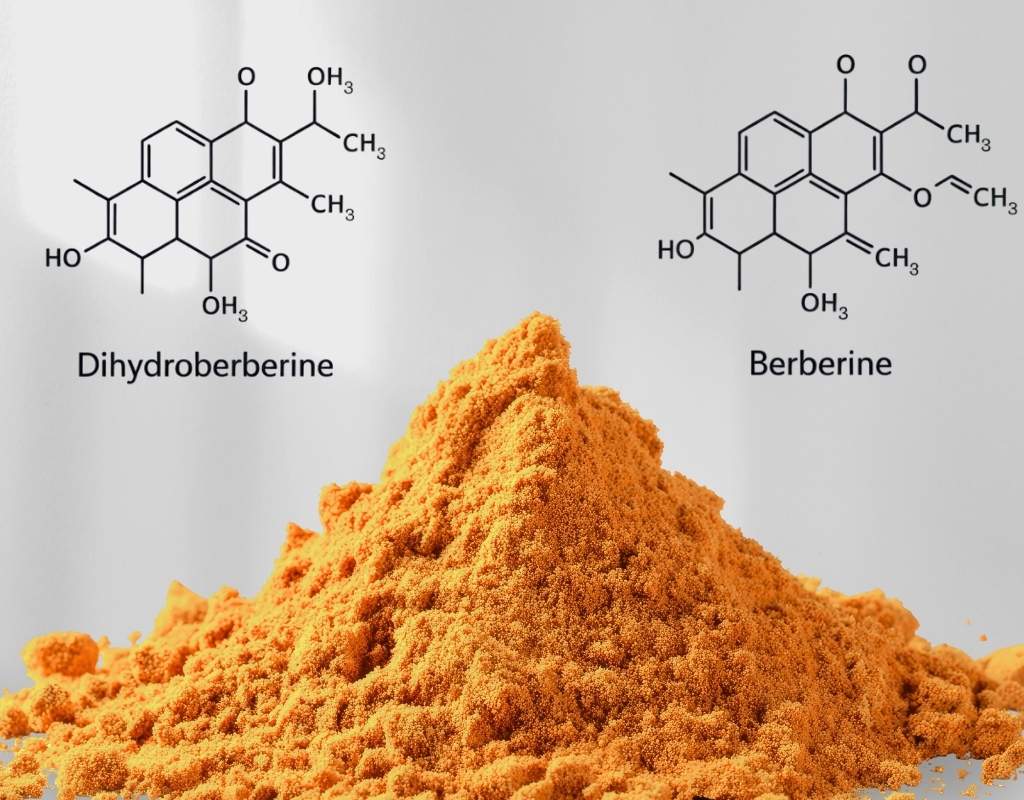
DihydroBerberine and regular Berberine are not exactly the same as many people assume. In fact, DihydroBerberine represents a significant breakthrough in biotechnology.
By optimizing bioavailability, this active compound overcomes the limitations of the traditional version, allowing users to achieve desired health outcomes with lower, more efficient dosages.
Before exploring further, please read the disclaimer located at the end of this webpage.
Key Takeaways
- Superior Absorption: Absorbs 5x better into the bloodstream than standard Berberine.
- Fewer Side Effects: Optimized structure eliminates digestive issues like bloating and cramps.
- Enhanced Metabolic Support: More effective at activating AMPK to manage blood sugar, fat, and heart health.
- Optimal Dosage: A "Super Berberine" that delivers better results with smaller, stomach-friendly doses.
DihydroBerberine Vs Berberine: Which is Better?
Overall, DihydroBerberine is far superior due to its excellent absorption into the bloodstream. Its biggest advantage is that it eliminates the digestive side effects, like stomach pain or bloating, commonly caused by regular Berberine [6].
With regular Berberine, you need to take high doses for it to work because of poor absorption, which can be tough on those with sensitive stomachs. DihydroBerberine is the gentler and more effective alternative [11].
Why is Dihydroberberine Better Absorbed than Berberine?
Standard Berberine is naturally difficult for the body to absorb directly. When you take it, your body has to go through an extra step of converting it into Dihydroberberine in the gut before it can pass through the intestinal wall and enter the bloodstream [6].
Berberine: Definition, Mechanism, and Benefits

Berberine is a bioactive alkaloid compound extracted from several plants, including goldenseal, Oregon grape, and barberry. Used for centuries in Traditional Chinese Medicine and Ayurveda, it is now widely recognized for its ability to regulate metabolism and support overall health.
How Berberine Works
The primary mechanism of Berberine involves the activation of AMP-activated protein kinase (AMPK). Often referred to as a "metabolic master switch," this enzyme plays a critical role in [1]:
-
Energy Regulation: Balancing how the body produces and uses energy.
-
Cellular Metabolism: Improving the efficiency of glucose and lipid processing.
Key Health Benefits
By interacting with various biological pathways, Berberine provides several evidence-based benefits:
-
Weight Management: Supports fat burning and metabolic health [2].
-
Cardiovascular Support: Helps maintain healthy cholesterol and blood pressure levels.
-
Blood Sugar Control: Enhances insulin sensitivity, making it a popular natural alternative for glucose management.
Dihydroberberine: Definition, Mechanism, and Benefits
Dihydroberberine is a bioactive metabolite of Berberine, produced through a reduction reaction by gut bacteria. Known as a "super-berberine," it offers significantly higher bioavailability and fewer side effects compared to its parent compound.
Key Mechanism: Enhanced Absorption
-
Superior Bioavailability: Dihydroberberine has an absorption capacity 5 times higher than standard Berberine [3].
-
Digestive Comfort: Due to its improved structure, it is less likely to degrade in the digestive tract, which reduces common gastrointestinal side effects associated with Berberine.
-
Metabolic Activation: It functions primarily by activating the AMPK enzyme, which stimulates fat breakdown and helps deplete cellular energy [4].
-
DihydroBerberine is one of the 17 active metabolites of Berberine, essentially a form of Berberine. It is created when gut bacteria digest Berberine through a reduction reaction.
Health Benefits of Dihydroberberine
As a highly absorbable form of Berberine, Dihydroberberine provides several evidence-based health advantages:
-
Weight Management: Stimulates the lipolysis process (breaking down stored fat) and enhances overall energy metabolism [6].
-
Blood Sugar Regulation: Highly effective in improving glucose metabolism and insulin sensitivity [5].
-
Appetite Control: Helps reduce hunger and cravings, making it easier to manage daily caloric intake.
-
Cardiovascular & Anti-inflammatory Support: Promotes heart health and reduces systemic inflammation [5].
DihydroBerberine Vs Berberine: Which Is Best For Weight Loss?

Both DihydroBerberine (DHB) and Berberine support weight management, but DihydroBerberine is generally considered more effective for weight loss due to its superior bioavailability and digestive tolerance.
Key Differences at a Glance
|
Feature |
DihydroBerberine (DHB) |
Berberine |
|
Absorption |
High (Up to 5x more bioavailable) |
Low (Poorly absorbed by the gut) |
|
Dosage |
Effective at lower doses |
Requires higher doses for results |
|
Weight Loss |
Faster fat burning & less fat storage |
Steady but slower results |
|
Side Effects |
Gentle on the stomach |
May cause GI upset at high doses [3][6] |
DihydroBerberine vs Berberine: Which Is Better For Diabetes And Blood Sugar?

Both DihydroBerberine and Berberine are known for their blood sugar control and diabetes management benefits [7].
DihydroBerberine enhances insulin sensitivity more effectively, helping improve insulin resistance and allowing better blood sugar control. Additionally, when using DihydroBerberine, blood sugar levels gradually decrease and stabilize without sudden drops, supporting better diabetes management [8].
Berberine also helps regulate blood sugar. However, due to its slower absorption, this compound requires more time and higher doses than DihydroBerberine for visible results.
FAQs
How Does DihydroBerberineWork?
DihydroBerberine works similarly to Berberine but is absorbed more efficiently. It primarily boosts the effects of Berberine through the gut, improving absorption and activating mechanisms that help regulate blood sugar, metabolize fat, and enhance insulin function more effectively.
Does DihydroBerberine Cause Symptoms?
Compared to Berberine, DihydroBerberine is known to cause fewer side effects, especially digestive issues. However, to avoid any unwanted effects, it’s recommended to use this compound at appropriate doses and consult healthcare professionals for advice.
Will DihydroBerberine Cause Hypoglycemia (Low Blood Sugar)?
DihydroBerberine helps gradually lower and stabilize blood sugar levels without causing sudden drops. However, it’s essential to monitor blood sugar carefully during use, especially for those already on diabetes medications.
Can DihydroBerberine Be Used In Patients With Hypothyroidism And Hashimoto’s?
DihydroBerberine is considered safe for patients with Hypothyroidism and Hashimoto's disease. However, patients should consult a doctor or follow medical prescriptions to ensure no adverse reactions to this compound.
Conclusion
Both DihydroBerberine and Berberine are highly regarded supplements for improving health, particularly in supporting weight loss.
However, the effects of these two compounds vary depending on use. We hope that through this article, you now understand the differences between DihydroBerberine and Berberine and can choose the product that best suits your needs.
References
- [1] Berberine. (n.d.). Retrieved from https://pubchem.ncbi.nlm.nih.gov/compound/2353
- [2] Utami, A. R., Maksum, I. P., & Deawati, Y. (2023). Berberine and Its Study as an Antidiabetic Compound. Retrieved from https://pmc.ncbi.nlm.nih.gov/articles/PMC10376565/
- [3] Feng R;Shou JW;Zhao ZX;He CY;Ma C;Huang M;Fu J;Tan XS;Li XY;Wen BY;Chen X;Yang XY;Ren G;Lin Y;Chen Y;You XF;Wang Y;Jiang JD; (n.d.). Transforming berberine into its intestine-absorbable form by the gut microbiota. Retrieved from https://pubmed.ncbi.nlm.nih.gov/26174047/
- [4] Turner N;Li JY;Gosby A;To SW;Cheng Z;Miyoshi H;Taketo MM;Cooney GJ;Kraegen EW;James DE;Hu LH;Li J;Ye JM; (n.d.). Berberine and its more biologically available derivative, dihydroberberine, inhibit mitochondrial respiratory complex I: a mechanism for the action of berberine to activate AMP-activated protein kinase and improve insulin action. Retrieved from https://pubmed.ncbi.nlm.nih.gov/18285556/
- [5] Author links open overlay panelLihua Tan a 1, a, 1, b, c, f, … Shi, H. (2019). Dihydroberberine, a hydrogenated derivative of berberine firstly identified in Phellodendri Chinese Cortex, exerts anti-inflammatory effect via dual modulation of NF-κB and MAPK signaling pathways. Retrieved from https://www.sciencedirect.com/science/article/abs/pii/S156757691930671X
- [6] Moon, J. M., Ratliff, K. M., Hagele, A. M., Stecker, R. A., Mumford, P. W., & Kerksick, C. M. (2021). Absorption Kinetics of Berberine and Dihydroberberine and Their Impact on Glycemia: A Randomized, Controlled, Crossover Pilot Trial. Retrieved from https://pmc.ncbi.nlm.nih.gov/articles/PMC8746601/
- [7] Cheng Z;Chen AF;Wu F;Sheng L;Zhang HK;Gu M;Li YY;Zhang LN;Hu LH;Li JY;Li J; (n.d.). 8,8-Dimethyldihydroberberine with improved bioavailability and oral efficacy on obese and diabetic mouse models. Retrieved from https://pubmed.ncbi.nlm.nih.gov/20663675/
- [8] Xu LJ;Lu FE;Yi P;Wang ZS;Wei SC;Chen G;Dong H;Zou X; (n.d.). [8-hydroxy-dihydroberberine ameliorated insulin resistance induced by high FFA and high glucose in 3T3-L1 adipocytes]. Retrieved from https://pubmed.ncbi.nlm.nih.gov/21355331/
- [9] Dihydroberberine Vs Berberine: Which Is Best For Weight Loss? (n.d.). Retrieved from https://www.webmd.com/obesity/berberine-health-benefits
- [10] Dihydroberberine vs Berberine. (n.d.). Retrieved from https://muscleinsider.com/features/dihydroberberine-vs-berberine
- [11] Buchanan, B., Meng, Q., Poulin, M.-M., Zuccolo, J., Chike Godwin Azike, Gabriele, J., & Baranowski, D. C. (2018). Comparative pharmacokinetics and safety assessment of transdermal berberine and dihydroberberine. PLoS ONE, 13(3), e0194979–e0194979. https://doi.org/10.1371/journal.pone.0194979
Author

Product Disclaimer
Including an ingredient or study does not evaluate, endorse, or recommend any Vinatura product or any third-party product. Some ingredients discussed may not be used in any Vinatura product.
The content of the articles has not been evaluated by the Food and Drug Administration (FDA) and is not intended to promote or endorse any specific product. Any products sold on this website are not intended to diagnose, treat, cure, or prevent any disease.
Opinions and Endorsements
Any claims, statements, or opinions expressed in the articles are those of the author(s) and do not necessarily reflect the views or opinions of the manufacturers of the dietary supplement products. The products sold on this website are separate from the content of the articles and are not directly endorsed or associated with the information presented here.
Liability Disclaimer
The author(s) of the articles, website, and manufacturers of the dietary supplement products do not assume any liability for any potential consequences arising from the use of the information provided in the articles. Ingredient effects, dosages, and safety vary by individual, formulation, and context; some ingredients interact with medications or may be unsuitable during pregnancy or lactation. It is recommended that individuals consult with a qualified healthcare professional before making any dietary or lifestyle changes, including the use of dietary supplements.
Product Usage
Please refer to the product labels and packaging for specific usage instructions and guidelines for the dietary supplement products sold on this website.
Customer Support
For any concerns or questions regarding the dietary supplement products, please contact our customer support team, who will be more than happy to assist you.



Leave a Comment
Be the first to comment.
What do you think?