

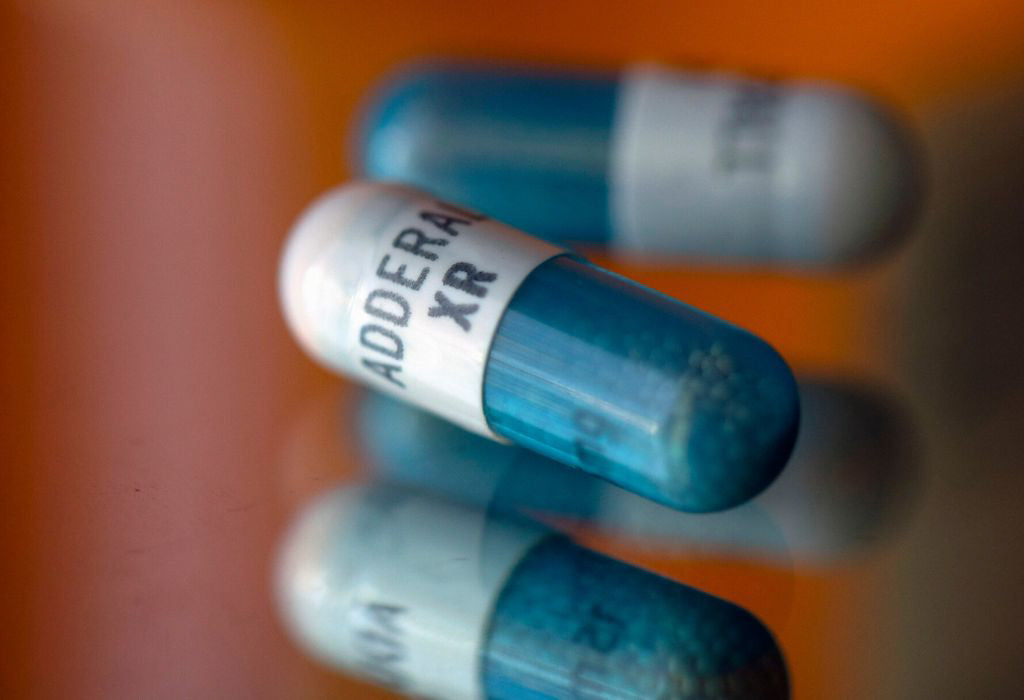
L-Theanine and Adderall: Which is Better for ADHD?
Did you know that approximately 5 out of every 100 children are diagnosed with Attention-Deficit/Hyperactivity Disorder (ADHD)? For many individuals, symptoms such as inattention, impulsivity, and hyperactivity continue into adulthood, affecting academic performance, work productivity, relationships, and daily life.
Because of these challenges, both prescription medications like Adderall and natural compounds such as L-theanine have attracted growing interest as potential tools for managing ADHD symptoms. While Adderall is one of the most established medical treatments for ADHD, L-theanine has gained attention for its potential to promote calmness and support cognitive function.
So, how do these two options compare? Can L-theanine replace Adderall, or are they better used for different purposes? This article examines their mechanisms, effectiveness, safety, and whether combining them may be appropriate.
Before exploring further, please read the disclaimer located at the end of this webpage.
Key Takeaways
- Adderall improves focus and impulse control but may cause insomnia, anxiety, appetite loss, and dependency risk.
- L-Theanine enhances focus and relaxation with minimal side effects, but its ADHD benefits need more research.
- Some use L-Theanine to reduce Adderall-related stress, though its safety in combination remains unclear.
- Alongside medication and supplements, diet, exercise, mindfulness, and behavioral strategies are key to managing ADHD.
Understanding Adderall: The Conventional ADHD Treatment
Adderall, a combination of amphetamine and dextroamphetamine, is one of the most commonly prescribed medications for Attention Deficit Hyperactivity Disorder (ADHD).
It works by enhancing the activity of key neurotransmitters in the brain—primarily dopamine and norepinephrine—leading to improved focus, concentration, and impulse control.
By increasing norepinephrine levels, Adderall helps reduce stress and sharpen attention. Meanwhile, its effects on dopamine create a mild "reward" response that enhances motivation and emotional regulation, both of which are critical in managing ADHD symptoms.

Imagine your brain as a chaotic office where employees (your thoughts) are running around, unfocused, and forgetting their tasks. Adderall steps in as the strict but effective boss, bringing order to the chaos!
It boosts norepinephrine, like a diligent office assistant, helping to organize everything, keeping employees focused, and ensuring work (your attention) flows smoothly
At the same time, Adderall stimulates dopamine, acting like an internal rewards program, handing out “gold stars” whenever a task is completed—boosting motivation and lifting your mind. Thanks to this combination, Adderall not only tidies up the mental clutter but also helps you work with more energy and positivity—an excellent way to manage ADHD.
A 2003 study (McCracken et al.) found that Adderall significantly improved behavioral regulation and classroom performance. Moreover, those who took 20mg or 30mg doses performed better on math assessments[1].
The efficacy of stimulant medications like Adderall is well-documented. Dr. Stephen V. Faraone, a leading ADHD researcher, states: "Stimulant medications have long been the primary pharmacological treatment for children and adults with ADHD.
Numerous studies have demonstrated that Adderall effectively reduces inattentiveness, hyperactivity-impulsivity, aggression, and disruptive behavior, while also improving academic performance." (Faraone et al., 2002) [2].
While Adderall is undoubtedly a potent treatment, it’s important to recognize that medication is just one piece of the puzzle. A comprehensive approach—including dietary changes, lifestyle modifications, and behavioral strategies—can help optimize outcomes for those with ADHD.
Side Effects and Risks
Like any pharmaceutical intervention, Adderall is not without its downsides. According to WebMD, common side effects include appetite suppression, weight loss, dry mouth, digestive discomfort, nausea, vomiting, headaches, dizziness, diarrhea, fever, and insomnia.
A preliminary analysis of a Reddit discussion suggested that approximately 22% of users reported experiencing at least one of these adverse effects to varying degrees. While some side effects may be mild and temporary, worsening symptoms warrant immediate consultation with a healthcare provider.*
L-Theanine: A Natural Alternative for ADHD Support?
What is L-Theanine?
L-theanine is a naturally occurring amino acid found primarily in green tea (Camellia sinensis) and certain mushrooms. It is widely recognized for promoting relaxation without causing the sedation typically associated with sleep aids.
Beyond its calming effects, L-theanine has attracted growing scientific interest for its potential role in supporting cognitive function and mental well-being. Researchers have investigated its use in several neuropsychiatric conditions, including anxiety disorders, schizophrenia, obsessive-compulsive disorder (OCD), major depressive disorder, Tourette syndrome, and ADHD.
A recent systematic review by Moshfeghinia et al. (2024) reported that L-theanine supplementation was associated with improvements in psychiatric symptoms across several mental health conditions, including ADHD. However, the available evidence remains limited, and larger randomized clinical trials are still needed before firm conclusions can be drawn [3].
Let's examine how L-theanine may influence brain function.
Mechanism of Action
Unlike stimulant medications, L-theanine does not directly stimulate the central nervous system.
Instead, it acts as a neuromodulator, influencing several neurotransmitter systems involved in attention, mood, and stress regulation. Research suggests that L-theanine may:
- Promote alpha brain wave activity, which is associated with relaxed alertness.
- Modulate glutamate signaling.
- Influence GABA, dopamine, and serotonin activity.
- Help reduce physiological responses to psychological stress.
Think of your brain as a busy city during rush hour.
Rather than forcing every car to move faster like Adderall, L-theanine functions more like an intelligent traffic control system. It synchronizes traffic lights, improves traffic flow, and reduces unnecessary congestion. The destination remains the same, but the journey becomes calmer and more efficient.
This difference explains why L-theanine is generally associated with fewer stimulant-related side effects.
Research on L-Theanine and ADHD

Scientists have explored L-theanine’s potential for managing ADHD through various studies, and while the findings are promising, more research is needed to establish definitive conclusions.
A 2020 study by Kahathuduwa et al. found that a combination of L-theanine and caffeine improved sustained attention, inhibitory control, and cognitive function in five boys with ADHD. However, given the extremely small sample size, these results should be interpreted with caution and warrant further investigation (Kahathuduwa et al., 2020) [3].
On a larger scale, a recent meta-analysis examining the effects of L-theanine supplementation across various mental health conditions, including ADHD, concluded:
"Findings from this systematic review suggest that L-theanine supplementation significantly reduces psychiatric symptoms in individuals with schizophrenia, anxiety disorders, and ADHD compared to control groups." (Moshfeghinia et al., 2024) [4].
Anecdotal evidence from an online ADHD discussion on Reddit forum adds further insight:
At least 64% of users agreed that L-theanine was effective and noticed improvements in their concentration levels. Of those, an estimated 28-31% were neutral or saw little/no benefit from L-theanine for their ADHD.*
While clinical research on L-theanine for ADHD remains in its early stages, these preliminary findings, combined with anecdotal reports, suggest that it may offer a natural and well-tolerated way to support focus and cognitive function.
L-Theanine and Adderall? Which is Better for ADHD?
Thus, after extensive analysis of the effectiveness and mechanisms of the two aforementioned components, we can see that both have significant potential in managing ADHD symptoms. However, between a powerful stimulant and a mild amino acid extracted from green tea, which one is truly effective? Let’s summarize the comparison in the table below:
|
Criteria |
L-Theanine |
Adderall |
|
Effectiveness |
- Reduces stress - Enhances focus - Promotes alpha brain waves for relaxation and calmness |
- Directly influences neurotransmitters, significantly improving focus and impulse control - Be clinically considered as an effective ADHD treatment |
|
Side Effects |
- Generally well-tolerated with minimal side effects - Possible drowsiness, headaches, nausea |
- May cause insomnia, appetite loss, anxiety, digestive discomfort, and dependency risk - Symptoms of gastrointestinal discomfort. - Potential headaches and irritability |
|
Suitability |
- Suitable for those seeking a natural, non-prescription supplement - Best used as an adjunct therapy or for mild symptoms |
- Recommended for individuals with moderate to severe ADHD, requiring medical supervision and prescription |
Both Adderall and L-theanine have their place in ADHD management. While Adderall is highly effective, it comes with side effects and requires careful monitoring. L-theanine may support relaxation and focus but is not a replacement for medical ADHD treatment.
Integrating L-Theanine into Your ADHD Management Plan (If You Choose To)
Dosage and Usage

Did you know that a 200mg L-theanine supplement is equivalent to the amount found in 5-7 cups of green tea? While consuming L-theanine through natural sources can be challenging, it is crucial to follow appropriate dosage guidelines.
A 2020 review found that supplementing with L-theanine 200–400 milligrams per day may reduce stress in people with stress, but there is insufficient evidence to support the use of L-theanine as a medication to treat stress (Williams, et. al. 2020) [5].
Dr. John Kruse, on his YouTube channel, also suggests a safe daily L-theanine dosage of up to 400mg, divided into 2-3 doses. Some studies have shown benefits with doses as low as 100mg.
Therefore, Dr. John suggests starting with a low dose (~100mg/day) and adjusting under professional supervision. However, he emphasizes the importance of consulting medical professionals to receive recommendations that best suit your health condition.
Combining L-Theanine with Other Strategies
Each individual with ADHD has their own unique journey in finding effective strategies to manage symptoms. However, ADHD management is not limited to a single approach. Combining L-theanine with dietary changes and exercise can yield unexpected benefits.
Beyond using L-theanine, a protein-rich diet with minimal refined sugar helps maintain stable and sustainable energy levels. Additionally, engaging in physical activity allows you to channel excess energy into productive tasks.
Exercise is not just about fitness and appearance—it also boosts dopamine and norepinephrine levels, significantly improving focus. If you’re looking for a gentler way to enhance concentration, practices such as yoga, mindfulness, and meditation can help regulate impulsivity and improve cognitive focus.
Ultimately, ADHD manifests differently in each person, and there is no universal "magic key" to achieving optimal mental well-being.
Therefore, integrating L-theanine with other methods that align with your circumstances, conditions, and individual needs can be more beneficial than you might expect. If you ever feel uncertain, seeking guidance from a medical professional is always a wise decision
Frequently Asked Questions
Can I Take L-Theanine with Adderall?
Currently, there is still a lack of clinical evidence to confirm that this combination is suitable and safe for everyone. Therefore, to be sure, consult your doctor before doing it to avoid potential risks between them.
Does L-Theanine Increase Focus?
L-Theanine has been explored for its potential effects on relaxation and cognitive function. L-theanine has been studied for its potential role in supporting relaxation and focus., the level of information processing, in other words, it can improve focus.
Conclusion
In conclusion, struggling with ADHD is certainly not easy for anyone, especially when it directly impacts our work and daily life. However, the journey to overcoming its frustrating symptoms is a battle that requires persistence and resilience.
If you’re exploring solutions to manage these symptoms, consider Adderall and L-theanine, depending on your individual condition and medical recommendations. Hopefully, one day, distractions will no longer have the power to disrupt your life!
References
- [1] MCCRACKEN, JAMES T., et al. “Analog Classroom Assessment of a Once-Daily Mixed Amphetamine Formulation, SLI381 (ADDERALL XR), in Children with ADHD.” Journal of the American Academy of Child & Adolescent Psychiatry, vol. 42, no. 6, Elsevier BV, June 2003, pp. 673–83, https://doi.org/10.1097/01.chi.0000046863.56865.fe.
- [2] Faraone, S. V., and J. Biederman. “Efficacy of Adderall® for Attention-Deficit/Hyperactivity Disorder: A Meta-Analysis.” Journal of Attention Disorders, vol. 6, no. 2, SAGE Publishing, Sept. 2002, pp. 69–75, https://doi.org/10.1177/108705470200600203.
- [3] Kahathuduwa CN;Wakefield S;West BD;Blume J;Dassanayake TL;Weerasinghe VS;Mastergeorge A. “Effects of L-Theanine-Caffeine Combination on Sustained Attention and Inhibitory Control among Children with ADHD: A Proof-of-Concept Neuroimaging RCT.” Scientific Reports, vol. 10, no. 1, Sci Rep, 2020, https://doi.org/10.1038/s41598-020-70037-7.
- [4] Moshfeghinia, Reza, et al. “The Effects of L-Theanine Supplementation on the Outcomes of Patients with Mental Disorders: A Systematic Review.” BMC Psychiatry, vol. 24, no. 1, BioMed Central, Dec. 2024, pp. 1–14, https://doi.org/10.1186/s12888-024-06285-y.
Testimonial Disclaimer
*The testimonials presented on this website are provided by individuals based on their personal experiences with our products. These testimonials represent individual opinions and experiences, which may not be typical or applicable to all users of our products. Results may vary depending on a variety of factors, including individual health, lifestyle, and adherence to product usage instructions.Author

Product Disclaimer
Including an ingredient or study does not evaluate, endorse, or recommend any Vinatura product or any third-party product. Some ingredients discussed may not be used in any Vinatura product.
The content of the articles has not been evaluated by the Food and Drug Administration (FDA) and is not intended to promote or endorse any specific product. Any products sold on this website are not intended to diagnose, treat, cure, or prevent any disease.
Opinions and Endorsements
Any claims, statements, or opinions expressed in the articles are those of the author(s) and do not necessarily reflect the views or opinions of the manufacturers of the dietary supplement products. The products sold on this website are separate from the content of the articles and are not directly endorsed or associated with the information presented here.
Liability Disclaimer
The author(s) of the articles, website, and manufacturers of the dietary supplement products do not assume any liability for any potential consequences arising from the use of the information provided in the articles. Ingredient effects, dosages, and safety vary by individual, formulation, and context; some ingredients interact with medications or may be unsuitable during pregnancy or lactation. It is recommended that individuals consult with a qualified healthcare professional before making any dietary or lifestyle changes, including the use of dietary supplements.
Product Usage
Please refer to the product labels and packaging for specific usage instructions and guidelines for the dietary supplement products sold on this website.
Customer Support
For any concerns or questions regarding the dietary supplement products, please contact our customer support team, who will be more than happy to assist you.


Leave a Comment
Be the first to comment.
What do you think?