

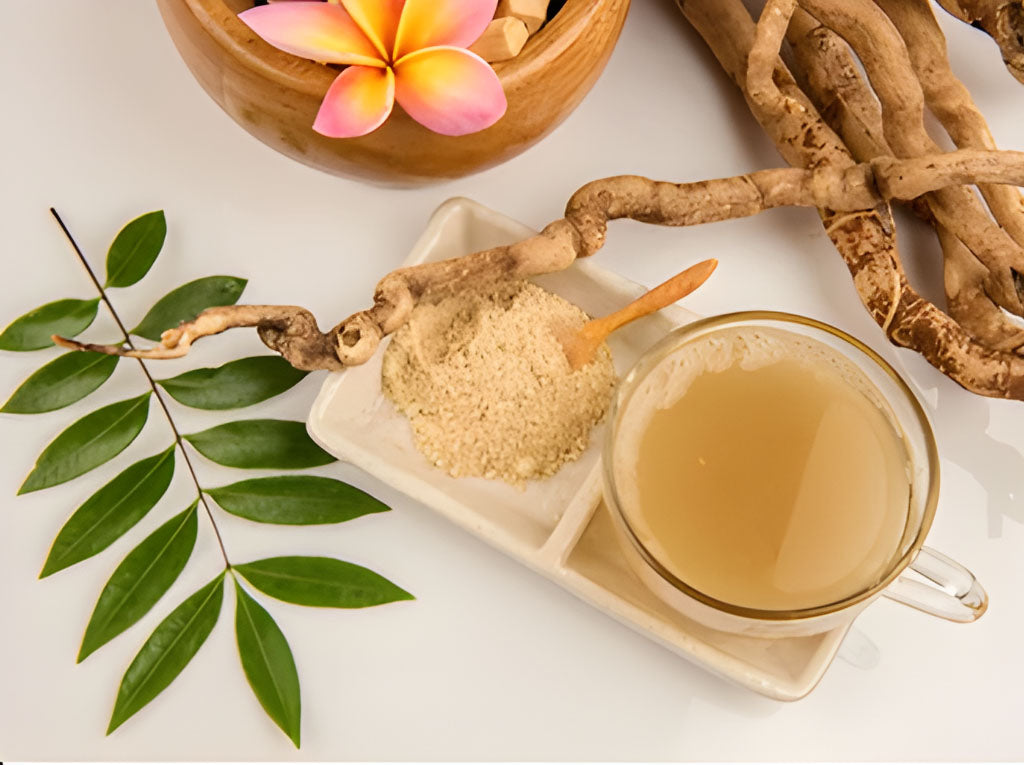
FAQs: Common Questions & Discussions About Tongkat Ali
Tongkat Ali (Eurycoma longifolia) is a traditional herb native to Southeast Asia, particularly Malaysia and Indonesia.
In recent years, it has gained widespread attention due to discussions by neuroscientist Andrew Huberman, who highlighted its scientifically studied effects and practical applications. This article brings together key questions and discussions surrounding Tongkat Ali.
Before exploring further, please read the disclaimer located at the end of this webpage.
Andrew Huberman’s Recommendations
Dr. Andrew Huberman, neuroscientist and host of the Huberman Lab Podcast, often highlights Tongkat Ali as a key natural supplement for supporting healthy testosterone levels. His endorsement reflects his focus on scientific evidence, quality, and personal experience.
How Much Tongkat Ali per Day Does Huberman Recommend?
Dr. Andrew Huberman recommends a daily dose of 200–400 mg of Tongkat Ali, taken in the morning. His own regimen follows the upper range—400 mg once daily—which he finds effective for sustaining energy and hormonal balance without side effects.
If results aren’t noticeable after several weeks, he suggests gradually increasing to 600 mg, depending on individual response and body size. Huberman emphasizes monitoring how your body feels and, ideally, confirming progress through blood tests after 8–12 weeks.
Because Tongkat Ali can have a mild stimulating effect, Huberman advises taking it early in the day to avoid possible sleep disruption. It can be taken with or without food, depending on personal preference. He notes that cycling is not required, but consistency is key to seeing meaningful benefits.
What Article or Study Does Huberman Cite for Tongkat Ali?
Dr. Andrew Huberman hasn’t named a specific study for Tongkat Ali, but his insights reflect research on its hormone-boosting effects. Known as Eurycoma longifolia or Longjack, this herb is studied for naturally increasing testosterone by reducing SHBG, a protein that binds testosterone, freeing it for bodily use [4].
Research also supports Tongkat Ali’s ability to enhance libido and male fertility by improving sperm production [9]. These benefits align with Huberman’s focus on vitality and overall well-being, making it a popular supplement for men’s health.
Huberman notes its mild energizing effects, which tie into studies highlighting its role as a natural stimulant. He emphasizes using high-quality extracts and consistent dosing, with effects best tracked through blood tests.
Cultivation and Sourcing
Can I Grow My Own Tongkat Ali at Home?
Growing Tongkat Ali (Eurycoma longifolia) at home is possible but challenging. This tropical herb needs a warm, humid climate like Malaysia or Thailand, and authentic seeds are hard to source. Recreating these conditions indoors requires effort and expertise.
The plant takes years to mature, with its potent bioactive compounds concentrated in the roots. Specific soil and care are crucial, and without them, home-grown Tongkat Ali may lack the potency of wild or professionally cultivated roots. Studies emphasize quality control for effective benefits.
For enthusiasts, start with thorough research and expert advice, but be prepared for a long wait. For most, buying verified Tongkat Ali from reputable suppliers is a simpler, more reliable option.
Where Can I Buy Tongkat Ali Seeds?
Authentic Tongkat Ali seeds are notoriously hard to find and even harder to germinate successfully. The seeds lose viability within a few days of harvest, making long-distance shipping risky. They are not mass-produced or stored like typical garden seeds.
If you’re determined to find them, a few niche sources may occasionally offer fresh seeds:
-
Ethnobotanical seed suppliers – These specialized vendors sometimes stock Eurycoma longifolia seeds during harvest seasons.
-
Online marketplaces like Etsy – Independent sellers based in Southeast Asia occasionally list freshly collected seeds.
-
Botanical exchange groups or tropical plant forums – Hobbyists or researchers may share or sell limited quantities directly.
Always confirm freshness and origin, since old or improperly stored seeds will not germinate. Due to these limitations, even seasoned growers often prefer purchasing young plants or extracts instead of seeds.
Where Can I Buy a Tongkat Ali Plant?
Finding a live Tongkat Ali (Eurycoma longifolia) plant can be challenging but not impossible.
Specialized tropical nurseries and ethnobotanical retailers occasionally offer young saplings or limited propagation batches for pre-order.
Online marketplaces like Etsy sometimes feature seedlings from growers in tropical regions such as Hawaii, Florida, Malaysia, or Indonesia.
Because Tongkat Ali is highly sensitive to temperature fluctuations, shipping requires extra care. For authenticity and quality, ethnobotanical suppliers that serve herbalists and researchers remain the most reliable sources.
Names and Terminology
What Is Tongkat Ali in English?
Tongkat Ali in English is Eurycoma longifolia, also known as "Malaysian ginseng," "Longjack," "Indonesian ginseng," or "Malaysia’s home-grown Viagra." This tropical plant from the Simaroubaceae family grows in Southeast Asia, like Malaysia and Vietnam, with "tongkat ali" as its local name.
What Is Tongkat Ali Called in Hindi?
The Hindi name for Tongkat Ali is "लॉन्गजैक" (pronounced "Longjack"), a vibrant label for this Southeast Asian treasure. This term connects to India’s herbal traditions, echoing its use in regions beyond Malaysia and Thailand where it naturally flourishes.
Nature and Composition
Is Tongkat Ali a Natural Supplement?
Yes, Tongkat Ali is a natural supplement, rooted in the Eurycoma longifolia plant, a tropical herb long cherished in Southeast Asia.
Its fame comes from the roots, which pack a punch with unique compounds, tying back to the cultivation challenges we explored earlier where quality sourcing matters.
This herbal treasure has been a go-to in traditional practices for centuries, especially in Malaysia, where it’s dubbed "Malaysian ginseng." Today, you’ll find it in modern forms like capsules, powders, or even blended into teas and coffees, all crafted from those potent roots [2, 3, 4].
Classification and Mechanism of Action
Is Tongkat Ali a Nitrate?
No, Tongkat Ali isn’t a nitrate—it’s a herbal powerhouse, packed with natural goodies like quassinoids and terpenoids [2, 3].
Instead of being a nitrate, this plant shines with compounds that support energy and balance, thanks to tiny "eurypeptides" that help free up testosterone from SHBG [4].
A 2012 study by Tambi et al. on rodents showed these peptides might boost vitality [4], but since it was animal-based, not human, the findings offer potential yet aren’t a done deal for everyone.
Is Tongkat Ali a Nootropic?
Not exactly—Tongkat Ali isn’t officially labeled a nootropic, but it might give your mind a gentle lift! Known as an adaptogen, it helps the body roll with daily stress [4].
This connects to its roots, which we touched on earlier with sourcing—its "eurypeptides" support energy and balance, potentially sharpening focus indirectly [8].
A notable 2012 study by Talbott et al. on stressed individuals revealed a slight trend toward better overall mood (Global Mood State) with a +3% boost, though the change wasn’t significant [8].
Is Tongkat Ali a SARM?
No, Tongkat Ali isn’t a SARM—it’s a natural herb, not a synthetic androgen receptor modulator.
While SARMs (Selective Androgen Receptor Modulators) act by binding directly to androgen receptors and mimicking testosterone’s effects, Tongkat Ali seems to increase free testosterone by lowering aromatase activity (which converts testosterone to estrogen) or by reducing SHBG binding, allowing more active testosterone to circulate [6].
A 2019 study by Chen et al. found that healthy men taking 200 mg daily for 8 weeks showed no change in the testosterone-to-epitestosterone ratio, a standard marker used to detect synthetic androgen use. This indicates Tongkat Ali acts through natural endocrine modulation, not receptor agonism like SARMs [6].
Is Tongkat Ali a Steroid?
Nope, Tongkat Ali isn’t a steroid—it’s a natural herb with its own distinct mechanism. Known scientifically as Eurycoma longifolia, it’s rich in bioactive quassinoids rather than synthetic compounds.
This plant appears to support testosterone levels naturally, possibly by reducing aromatase activity or releasing testosterone from SHBG, aligning with its traditional use and natural sourcing.
A 2021 study by Chan et al. found that young men taking 600 mg daily for two weeks experienced increases in both total and free testosterone, along with a mild rise in estradiol—indicating it influences hormones without acting like a synthetic enhancer [6].
Is Tongkat Ali a Stimulant?
Not quite—Tongkat Ali isn’t officially a stimulant, but it can give you a little pep with a twist! It’s an adaptogen that supports energy and focus, tying back to its roots we explored in sourcing earlier [3, 4].
Some folks report side effects like restlessness, insomnia, or a jittery feeling, which can mimic stimulants [8]. This might come from its natural compounds like quassinoids, though it’s not designed to rev you up like coffee [8].
Is Tongkat Ali an Adaptogen?
Yes, Tongkat Ali is often seen as an adaptogen—a natural helper that eases daily stress! It’s been a go-to in traditional use, connecting to its roots we talk about in sourcing earlier.
This herbal buddy supports a calm vibe, with a standout 2013 study by Talbott et al. showing that 200mg daily for 4 weeks lowered cortisol and lifted testosterone in stressed folks [8].
Since it’s human-based, it hints at real potential, though results can vary. It also toned down tension, anger, and confusion in some trials, though not all mood aspects shifted.
Is Tongkat Ali an Aromatase Inhibitor?
Not exactly—Tongkat Ali isn’t a true aromatase inhibitor, but it may have mild aromatase-suppressing effects. Aromatase is the enzyme that converts testosterone into estrogen.
A 2018 study by Nor Amira Binti Khurshid Ahmed found that eurycomanone (EN), a key compound in Tongkat Ali, reduced aromatase activity in mouse Leydig cells—similar to the control drug formestane (FM) [5]. This suggests it might help maintain testosterone by limiting estrogen conversion.
However, the standardized extract (F2) didn’t show the same direct effect, though it did lower aromatase gene expression, possibly through other pathways like 5-alpha-reductase.
These results come from lab studies in mice, so the impact in humans remains uncertain but promising.
Relation to Steroids
Is Tongkat Ali an Anabolic Steroid?
Tongkat Ali is a natural herbal supplement and does not belong to the steroid group — therefore, it is definitely not an anabolic steroid.
Does Tongkat Ali Act Like Steroids in the Body?
Not exactly—Tongkat Ali may produce steroid-like results, but it doesn’t work like steroids. Instead of supplying artificial hormones, it helps the body optimize its own testosterone and cortisol balance, supporting a natural anabolic state.
Its effects are often compared to steroids because higher testosterone and lower cortisol can enhance muscle growth, strength, and recovery [4].
In a 2013 study by Talbott et al., 63 moderately stressed adults took Tongkat Ali for four weeks. Results showed a 37% increase in testosterone and a 16% decrease in cortisol, leading to a healthier testosterone-to-cortisol ratio [4,8].
In summary, Tongkat Ali can mimic some benefits of steroids—such as better muscle tone and vitality—but it acts through natural hormone regulation, not synthetic hormone replacement. More long-term research is still needed to fully understand these effects.
Long-Term Use and Health Monitoring
How Often Should I Do Blood Tests When Using Tongkat Ali Long-Term?
There are no official guidelines for how often to test your blood while taking Tongkat Ali, but regular monitoring with a healthcare professional is strongly recommended to tailor the schedule to your individual needs.
Long-term studies have used 200–600 mg per day of standardized water-extracted Tongkat Ali root [4]. To improve absorption and reduce side effects like restlessness or insomnia [8], divide the dose into morning and early afternoon servings.
Taking it with food can help ease stomach discomfort, and it’s best to avoid late-day dosing to avoid sleep issues.
Consistency is key—taking it at the same time daily helps maintain steady hormone support.
Short-term research suggests Tongkat Ali is generally well-tolerated, but long-term safety data are still limited.
A two-month study using 600 mg daily found no significant changes in blood counts, liver, or kidney markers [4]. However, the European Food Safety Authority (EFSA) has raised concerns about potential DNA damage and notes that safety at 200 mg daily isn’t fully established [8].
There have also been rare reports of liver injury associated with testosterone-boosting supplements, including Tongkat Ali [6], so monitoring liver enzymes (ALT, AST) and kidney function (creatinine, eGFR) is important.
User experiences, such as one Reddit user who reported feeling energized initially but later experienced fatigue after a week of use, underscore the variability in individual responses.*
This suggests that while Tongkat Ali may offer benefits like improved energy, long-term effects can differ, making regular health monitoring vital.
Effectiveness, Results, and Safety
Is Tongkat Ali Worth Trying Again If It Didn’t Work the First Time?
Yes — trying Tongkat Ali again may be worthwhile if your first experience didn’t account for key factors like product quality, dosage, or duration [1]. Its effectiveness varies depending on your baseline hormone levels, lifestyle, sleep quality, and biological sensitivity.
A common reason for poor results is using low-quality or improperly standardized products. Many supplements list only an extraction ratio without confirming active compounds like eurypeptides or eurycomanone, which are responsible for Tongkat Ali’s effects [1].
Clinical studies showing benefits typically use standardized hot-water extracts with around 22% eurypeptides or 1% eurycomanone [1]. If your previous product lacked clear standardization or the distinct bitter taste of authentic root extract, it likely wasn’t effective.
Additionally, some market products are adulterated or made from incorrect plant species, which can completely negate Tongkat Ali’s natural benefits [1].
In short, if you’re considering giving Tongkat Ali another try, focus on verified, standardized extracts from reputable sources and maintain consistent use over several weeks for best results.
What Are the Main Pros and Cons of Tongkat Ali?
Tongkat Ali (Eurycoma longifolia) is known for its potential effects on vitality, hormone balance, and overall well-being. Understanding its pros and cons can help determine if it fits your personal health goals.
Pros of Tongkat Ali
Tongkat Ali is celebrated for its traditional uses and emerging research suggesting several benefits:
-
Supports Male Reproductive Health and Energy: Tongkat Ali may help improve testosterone levels, energy, and sexual health, especially in men dealing with stress or low hormone levels.
In a 12-week study by Ismail et al. (2012) involving 109 men, taking 300 mg daily of standardized water-extracted Tongkat Ali significantly improved scores for erectile function and sexual performance, suggesting potential benefits for male vitality [1].
-
Boosts Physical Performance: It may improve muscle strength and stamina, making it appealing for active individuals. While human studies are limited, this benefit shows promise, especially for older adults [1].
-
Reduces Stress: As a potential adaptogen, Tongkat Ali may help manage stress by balancing stress hormones, enhancing mood, and promoting resilience [1].
Cons and Safety Concerns
While generally safe at recommended doses (200–400 mg daily of standardized water extract), Tongkat Ali has some risks:
-
Potential Toxicity at High Doses: Animal studies, like one by Satayavivad et al. (1998), found that water-based extracts are safer (LD50 >3000 mg/kg) than alcohol-based ones, but high doses (over 1200 mg/kg in rats) may harm the liver. These findings are from animal research, so their relevance to humans is limited but suggests caution [1].
-
Risk for Specific Groups: Men with prostate issues should be cautious, as Tongkat Ali may increase testosterone, potentially affecting prostate health, though a study by Ismail et al. (2012) found no changes in prostate-specific antigen levels [1].
People on blood sugar medications should monitor closely due to possible interactions, as shown in animal studies [1]. Those with weakened immune systems, heart, kidney, or liver conditions, or women who are pregnant or breastfeeding should avoid it due to insufficient safety data.
-
Side Effects: Some users report restlessness, insomnia, or, as noted earlier, fatigue after initial benefits, possibly due to poor product quality or individual sensitivity [1].
In summary, Tongkat Ali offers promising benefits for energy, male health, and stress management, but its safety depends on using high-quality, standardized extracts and monitoring for side effects.
While animal studies show potential, human research is still evolving, making professional guidance essential.
Is the Effect of Tongkat Ali Just a Placebo?
The effects of Tongkat Ali (Eurycoma longifolia) are not just a placebo, as studies and user experiences show real benefits.
Below, we summarize evidence of its effects in a simple, clear way for non-experts. Always consult a doctor before using Tongkat Ali, as this is not medical advice.
Research shows Tongkat Ali can improve male sexual health, energy, and hormone balance.
A 12-week study (Ismail et al., 2012) with 109 men found that those taking 300 mg daily of standardized Tongkat Ali extract had better erectile function, a 14% boost in libido, 44.4% improved sperm motility, and 18.2% increased semen volume compared to the placebo group.
User reports, like a YouTuber who noticed increased energy and sex drive while maintaining their routine, align with these findings, though they also mentioned side effects like hair loss, suggesting individual variability.*
What Kind of Results Can I Expect from Taking Tongkat Ali?
Tongkat Ali (Eurycoma longifolia) may support several aspects of health and well-being, but the degree of benefit often depends on individual biology, product quality, and consistent use.
When taken at 200–400 mg per day of a standardized water-extracted form, typically divided into two doses (morning and early afternoon), noticeable effects are most often reported after 4–12 weeks [1].
Male Sexual Health:
Tongkat Ali may help support libido, sexual vitality, and healthy testosterone levels. In a 12-week study by Ismail et al. (2012), men aged 30–55 who took 300 mg daily experienced increases in libido (14%), sperm motility (44.4%), and semen volume (18.2%). These improvements generally appeared after 4–12 weeks of continuous use [1].
Physical Performance:
Some users report enhanced muscle strength and energy, particularly in older adults or those with low baseline vitality. Such effects usually emerge gradually over 5–12 weeks of regular supplementation [1].
Stress and Mood:
As an adaptogenic herb, Tongkat Ali may contribute to reduced stress and a more balanced mood. Early changes in well-being are often observed after about 4 weeks [1].
However, results can vary widely. Factors such as overall health, sleep quality, and lifestyle play significant roles.
Low-quality or unstandardized extracts are unlikely to deliver meaningful results. Findings from animal or in vitro studies are informative but may not fully translate to human outcomes.
Mild side effects like restlessness have occasionally been noted, so it’s best to avoid taking it late in the day.
Conclusion
Tongkat Ali continues to draw attention for its potential to support hormone balance, vitality, and overall well-being when used properly and sourced from trusted brands.
While individual responses may vary, consistent use of a standardized extract appears to offer the most reliable outcomes.
As research on this traditional herb evolves, exploring its benefits under professional guidance could be a valuable next step for those seeking a natural way to enhance their health and performance.
Testimonial Disclaimer
*The testimonials presented on this website are provided by individuals based on their personal experiences with our products. These testimonials represent individual opinions and experiences, which may not be typical or applicable to all users of our products. Results may vary depending on a variety of factors, including individual health, lifestyle, and adherence to product usage instructions.References
- [1] Rehman, Shaheed, et al. “Review on a Traditional Herbal Medicine, Eurycoma Longifolia Jack (Tongkat Ali): Its Traditional Uses, Chemistry, Evidence-Based Pharmacology and Toxicology.” Molecules, vol. 21, no. 3, 10 Mar. 2016, p. 331, https://doi.org/10.3390/molecules21030331
- [2] Maryam Riyadh Yaseen, et al. “Preparation of Euyrycoma Longifolia Jack (E.L) Tongkat Ali (Ta) Root Extract Hydrogel for Wound Application.” Pharmacognosy Journal, vol. 13, no. 6, 13 Nov. 2021, pp. 1456–1463, https://doi.org/10.5530/pj.2021.13.185. Accessed 3 Jan. 2024.
- [3] Abubakar, Bashir Mohammed, et al. “Assessing Product Adulteration of Eurycoma Longifolia (Tongkat Ali) Herbal Medicinal Product Using DNA Barcoding and HPLC Analysis.” Pharmaceutical Biology, vol. 56, no. 1, Jan. 2018, pp. 368–377, https://doi.org/10.1080/13880209.2018.1479869
- [4] Talbott, Shawn M, et al. “Effect of Tongkat Ali on Stress Hormones and Psychological Mood State in Moderately Stressed Subjects.” Journal of the International Society of Sports Nutrition, vol. 10, 26 May 2013, p. 28, https://doi.org/10.1186/1550-2783-10-28
- [5] Nor, Ahmed,. “Welcome to Repository@USM - USM Research and Publication.” Eprints.usm.my, July 2018, eprints.usm.my/id/eprint/43710, http://eprints.usm.my/43710/2/NOR%20AMIRA%20KHURSHID%20AHMED.pdf. Accessed 24 Oct. 2025.
- [6] Jędrejko, Karol, et al. “Ergogenic Properties, Safety Evaluation and Regulations of Selected Ingredients in Testosterone Booster Dietary Supplements.” Food Reviews International, 16 Oct. 2023, pp. 1–29, https://doi.org/10.1080/87559129.2023.2238055
- [7] Carty, Michael, and Andrew G. Bowie. “SARM: From Immune Regulator to Cell Executioner.” Biochemical Pharmacology, vol. 161, Mar. 2019, pp. 52–62, https://doi.org/10.1016/j.bcp.2019.01.005. Accessed 2 Dec. 2021.
- [8] Lee, E Lyn, and Joanne Barnes. “Tongkat Ali/Long Jack.” Journal of Primary Health Care, 2022, https://doi.org/10.1071/hc22143
- [9] Mohd, & Imran, M. K. (2010). Eurycoma longifolia Jack in managing idiopathic male infertility. Asian Journal of Andrology, 12(3), 376–380. https://doi.org/10.1038/aja.2010.7
Author
Product Disclaimer
Including an ingredient or study does not evaluate, endorse, or recommend any Vinatura product or any third-party product. Some ingredients discussed may not be used in any Vinatura product.
The content of the articles has not been evaluated by the Food and Drug Administration (FDA) and is not intended to promote or endorse any specific product. Any products sold on this website are not intended to diagnose, treat, cure, or prevent any disease.
Opinions and Endorsements
Any claims, statements, or opinions expressed in the articles are those of the author(s) and do not necessarily reflect the views or opinions of the manufacturers of the dietary supplement products. The products sold on this website are separate from the content of the articles and are not directly endorsed or associated with the information presented here.
Liability Disclaimer
The author(s) of the articles, website, and manufacturers of the dietary supplement products do not assume any liability for any potential consequences arising from the use of the information provided in the articles. Ingredient effects, dosages, and safety vary by individual, formulation, and context; some ingredients interact with medications or may be unsuitable during pregnancy or lactation. It is recommended that individuals consult with a qualified healthcare professional before making any dietary or lifestyle changes, including the use of dietary supplements.
Product Usage
Please refer to the product labels and packaging for specific usage instructions and guidelines for the dietary supplement products sold on this website.
Customer Support
For any concerns or questions regarding the dietary supplement products, please contact our customer support team, who will be more than happy to assist you.


Leave a Comment
Be the first to comment.
What do you think?