

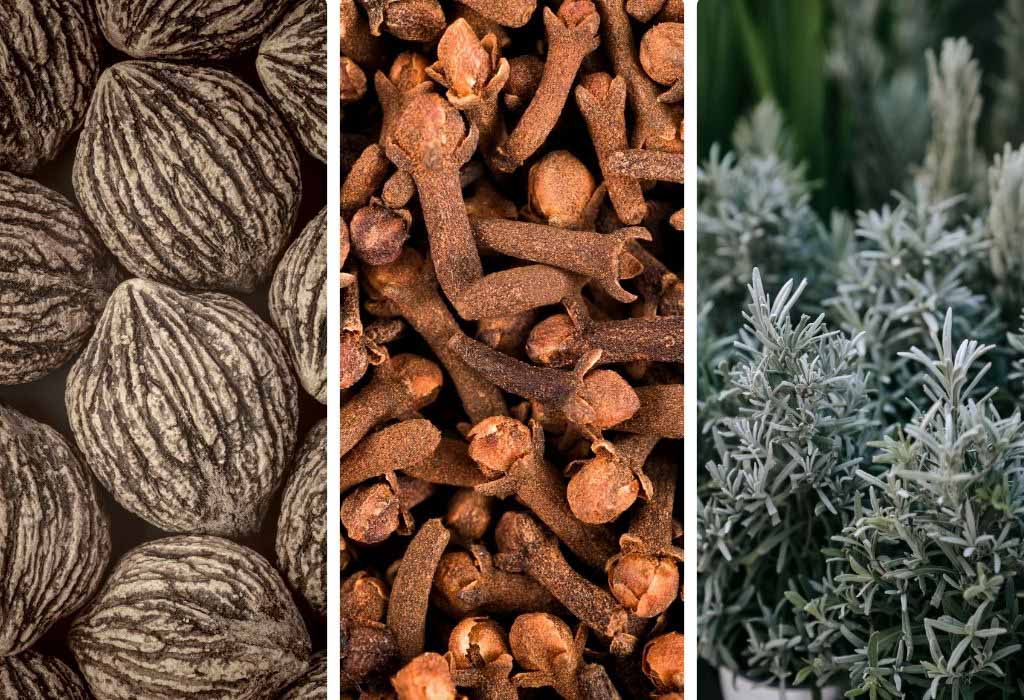
Can You Take Clove, Black Walnut and Wormwood Together?
Quick answer. Clove, black walnut and wormwood are often sold together in one supplement. No published study has tested the three together, in people, animals or the lab, so there is no evidence that the combination works better than any one herb or does what it is marketed for. Each herb has its own safety cautions, and they add up when the herbs are combined. Ask a healthcare professional first if you take any prescription medicine, are pregnant or breastfeeding, or have liver disease, a seizure disorder or a nut allergy.
Which wormwood? Two different plants are sold as "wormwood". Wormwood (Artemisia absinthium) contains thujone. Sweet wormwood (Artemisia annua) contains artemisinin. Their evidence and safety differ, and many products don't say which one they contain. See Sweet wormwood vs wormwood.
What is known about each herb
| Herb | Part commonly used | What studies in people show | Main cautions |
|---|---|---|---|
| Wormwood (Artemisia absinthium) | Herb (leaves and flowering tops) | The EU herbal monograph accepts its traditional use for temporary loss of appetite and mild indigestion, based on long-standing use rather than clinical trials. No trial has tested it for digestion in healthy people. | Contains thujone, which can cause seizures at high exposure. Not recommended in pregnancy, breastfeeding or under 18. |
| Sweet wormwood (Artemisia annua) | Leaf | No human trials for digestive or general wellness use. | Case reports of liver injury after sweet wormwood tea and artemisinin-containing supplements. |
| Black walnut (Juglans nigra) | Hull | No human trials of black walnut hull for any use. One small trial studied eating black walnut nuts, not the hull, and looked at blood lipids and blood-vessel function. Lab studies report antibacterial activity for some of its compounds, such as juglone and tannins; these effects have not been tested in people. | Tree nut: avoid with a walnut or tree-nut allergy. |
| Clove (Syzygium aromaticum) | Flower bud | Two very small studies, both by researchers from the extract’s maker, tested a concentrated clove-bud polyphenol extract (13 and 16 people), not whole clove powder. | Clove oil swallowed by young children has caused liver failure. Eugenol, its main compound, reduces platelet clumping in lab tests. |
Does combining them do anything?
- No study of the combination. A PubMed search on October 24, 2026 found no study of wormwood or sweet wormwood together with black walnut and clove.
- No support for "synergy" claims. Claims that the three herbs boost each other or act on "different life-cycle stages" have no published evidence behind them.
- No human evidence on parasites. These herbs are widely marketed as a "parasite cleanse". No study in people shows that wormwood, sweet wormwood, black walnut, clove or their combination removes intestinal parasites. The research behind these claims was done in pigs, sheep, mice and lab dishes, often at amounts per kilogram of body weight far higher than a supplement serving. Two large human trials of Artemisia tea, one against schistosomiasis (a parasitic worm infection) and one against malaria, were retracted by their journal. If you think you have a parasitic infection, see a doctor for testing and treatment.
What popular cleanse routines claim, and what the evidence says
Cleanse videos and product pages often add steps to the herbs themselves. We checked the most common ones.
- “Follow a 14- to 28-day protocol, then take a break.” No study has compared schedules, so these lengths are conventions, not findings. The EU monograph advises seeing a doctor if symptoms last longer than 2 weeks.
- “Feeling worse on days 2 to 4 means parasites are dying.” This “die-off” idea borrows from the Jarisch–Herxheimer reaction, a short bout of chills and fever that can follow antibiotic treatment of infections such as syphilis and Lyme disease. We found no study showing that symptoms during an herbal cleanse come from dying parasites. Nausea, stomach pain or headache may simply be side effects of the herbs. Stop and ask a doctor if they continue.
- “Add a binder.” Cleanse routines often add a binder such as activated charcoal. Activated charcoal adsorbs many substances in the gut, which is why it is used in some poisonings, and it can reduce the absorption of medicines taken at the same time. If you take prescription medicine, ask a pharmacist how far apart to take them.
- “Your symptoms mean you have parasites.” Intestinal parasite infections can look like irritable bowel syndrome or other gut conditions. They are diagnosed with stool or other lab tests, not by symptoms alone.
Safety when the herbs are combined
- Pregnancy and breastfeeding. The EU monograph does not recommend wormwood during pregnancy or breastfeeding and notes that thujone stimulates the uterus. The other herbs have no safety data in pregnancy.
- Children and teenagers. The monograph does not recommend wormwood under 18. A 10-month-old developed severe diarrhea and metabolic acidosis after a home-made wormwood extract, and young children who swallowed clove oil developed liver failure.
- Liver and gallbladder. The monograph lists liver disease, bile-duct obstruction and cholangitis as reasons not to use wormwood, and advises asking a doctor first if you have gallstones. Liver injury has also been reported with sweet wormwood tea and artemisinin-containing supplements.
- Seizure disorders. Thujone acts on GABA-A receptors in the brain and can trigger seizures at high exposure. Wormwood oil is a known convulsant.
- Blood thinners. An 82-year-old woman taking warfarin developed gastrointestinal bleeding with a very high INR after taking wormwood; the case authors rated the link as probable. Eugenol from clove reduces platelet clumping in lab tests. Ask your doctor before using these herbs with anticoagulant or antiplatelet medicines.
- Allergies. Wormwood and sweet wormwood belong to the daisy family (Asteraceae), which includes ragweed and chrysanthemums. The monograph lists allergy to this family as a reason not to use wormwood. Black walnut is a tree nut.
- Never swallow the essential oils. Swallowing wormwood oil has been linked to seizures and kidney failure, and clove oil to liver failure in children.
- Duration. The monograph advises seeing a doctor if symptoms last longer than 2 weeks. Products differ, so follow the label of the one you use.
Why we don't publish a tea recipe
Earlier versions of this article included a home tea recipe. We removed it. The thujone content of wormwood varies with the plant and how it is prepared, and it can't be measured at home. The EU monograph says daily thujone exposure should stay below 6.0 mg and recommends plant types low in thujone.
How this applies to Vinatura products
Vinatura sells two products that contain these herbs. Neither finished product has been tested in a clinical study. The research above is about the individual herbs, not our products.
- Wormwood Black Walnut Cloves capsules: each capsule contains 300 mg sweet wormwood (Artemisia annua) leaf, 200 mg black walnut (Juglans nigra) hull and 100 mg clove bud. The wormwood in this product is sweet wormwood, not Artemisia absinthium. NSF Contents Certified, which checks that the contents match the label and screens for contaminants; it does not test effects. Contains tree nuts (walnut).
- Wormwood Black Walnut Cloves Liquid: wormwood (Artemisia absinthium), black walnut, clove, pumpkin seed and papaya leaf in a 1 mL serving. The label does not list the amount of each herb. Label directions: use for up to 14 days, then pause for 7 days. Contains tree nuts.
Both products are labeled for healthy adults only.
How we reviewed the evidence
We searched PubMed on October 24, 2026 for human trials, animal and laboratory studies and case reports on each herb and on the combination. We read the EU herbal monograph on wormwood, the WHO statement on Artemisia plant material, and FDA and FTC guidance on supplement claims. We separated studies in people from animal and lab studies and checked each reference against what the study actually tested. For the cleanse routines above, we used our team’s review of popular cleanse content from March 2026. We did not test these herbs ourselves.
Vinatura Research Perspective
We started from the question most often asked about this combination: what does the research actually show? Then we checked each step of the routines that circulate online against published research. Three things stood out. First, the combination itself has never been studied, so every claim about it is borrowed from single-herb studies. Second, most of those studies used animals or lab dishes at amounts per kilogram far above one capsule, and the two large human tea trials, for schistosomiasis and for malaria, were both retracted. Third, the steps people discuss most, such as “die-off” and binders, have no studies supporting their use in an herbal cleanse, while the safety concerns are documented: thujone, liver injury reports, clove oil in children, walnut allergy and a warfarin interaction. Our assessment: there is no human evidence that this combination removes parasites, and its safety deserves more attention than it gets online. A controlled human study of the combination would change that assessment.
Frequently asked questions
Can I take these herbs with other supplements or medicines? No interaction studies exist for the combination. Because of the warfarin case and clove's effect on platelets in lab tests, ask a pharmacist or doctor first if you take any prescription medicine, especially a blood thinner.
How long do people take them? No study has tested how long to take the combination. The EU monograph advises seeing a doctor if symptoms last more than 2 weeks. Follow the label of your product.
Is black walnut the same as the walnuts I eat? Not quite. Most walnuts sold as food are English walnuts (Juglans regia). Supplements use the green outer hull of the black walnut (Juglans nigra). Both are tree nuts.
References
- European Medicines Agency, HMPC. European Union herbal monograph on Artemisia absinthium L., herba. EMA/HMPC/751490/2016 Corr. 1. ema.europa.eu
- Băieş MH, et al. In vivo assessment of the antiparasitic effects of Allium sativum L. and Artemisia absinthium L. against gastrointestinal parasites in swine from low-input farms. BMC Vet Res. 2024;20(1):126. doi:10.1186/s12917-024-03983-3
- Tariq KA, et al. Anthelmintic activity of extracts of Artemisia absinthium against ovine nematodes. Vet Parasitol. 2009;160(1-2):83–88. doi:10.1016/j.vetpar.2008.10.084
- Beshay EVN. Therapeutic efficacy of Artemisia absinthium against Hymenolepis nana: in vitro and in vivo studies in comparison with the anthelmintic praziquantel. J Helminthol. 2018;92(3):298–308. doi:10.1017/S0022149X17000529
- Retraction notice to: Effect of Artemisia annua and Artemisia afra tea infusions on schistosomiasis in a large clinical trial. Phytomedicine. 2020;78:153303. doi:10.1016/j.phymed.2020.153303
- Retraction notice to: Artemisia annua and Artemisia afra tea infusions vs. artesunate-amodiaquine (ASAQ) in treating Plasmodium falciparum malaria in a large scale, double blind, randomized clinical trial. Phytomedicine. 2020;78:153304. doi:10.1016/j.phymed.2020.153304
- Höld KM, et al. Alpha-thujone (the active component of absinthe): gamma-aminobutyric acid type A receptor modulation and metabolic detoxification. Proc Natl Acad Sci USA. 2000;97(8):3826–3831. doi:10.1073/pnas.070042397
- Burkhard PR, et al. Plant-induced seizures: reappearance of an old problem. J Neurol. 1999;246(8):667–670. doi:10.1007/s004150050429
- Weisbord SD, et al. Poison on line: acute renal failure caused by oil of wormwood purchased through the Internet. N Engl J Med. 1997;337(12):825–827. doi:10.1056/NEJM199709183371205
- Açıkgöz SK, Açıkgöz E. Gastrointestinal bleeding secondary to interaction of Artemisia absinthium with warfarin. Drug Metabol Drug Interact. 2013;28(3):187–189. doi:10.1515/dmdi-2013-0021
- Kocaoglu C, Ozel A. Persistent metabolic acidosis and severe diarrhoea due to Artemisia absinthium poisoning. J Pak Med Assoc. 2014;64(9):1081–1083. PubMed 25823193
- Ruperti-Repilado FJ, et al. Danger of herbal tea: a case of acute cholestatic hepatitis due to Artemisia annua tea. Front Med. 2019;6:221. doi:10.3389/fmed.2019.00221
- Zhan J, et al. Herb-induced hepatitis secondary to artemisinin: a case report. Front Med. 2022;9:1033906. doi:10.3389/fmed.2022.1033906
- Amarowicz R, et al. Antibacterial activity of tannin constituents from Phaseolus vulgaris, Fagopyrum esculentum, Corylus avellana and Juglans nigra. Fitoterapia. 2008;79(3):217–219. doi:10.1016/j.fitote.2007.11.019
- Dos S Moreira C, et al. Juglone: a versatile natural platform for obtaining new bioactive compounds. Curr Top Med Chem. 2021;21(22):2018–2045. doi:10.2174/1568026621666210804121054
- Mohan R, et al. Water-soluble polyphenol-rich clove extract lowers pre- and post-prandial blood glucose levels in healthy and prediabetic volunteers: an open label pilot study. BMC Complement Altern Med. 2019;19(1):99. doi:10.1186/s12906-019-2507-7
- Mammen RR, et al. Clove bud polyphenols alleviate alterations in inflammation and oxidative stress markers associated with binge drinking: a randomized double-blinded placebo-controlled crossover study. J Med Food. 2018;21(11):1188–1196. doi:10.1089/jmf.2017.4177
- Eisen JS, et al. N-acetylcysteine for the treatment of clove oil-induced fulminant hepatic failure. J Toxicol Clin Toxicol. 2004;42(1):89–92. doi:10.1081/clt-120028751
- Janes SE, et al. Essential oil poisoning: N-acetylcysteine for eugenol-induced hepatic failure and analysis of a national database. Eur J Pediatr. 2005;164(8):520–522. doi:10.1007/s00431-005-1692-1
- Raghavendra RH, Naidu KA. Spice active principles as the inhibitors of human platelet aggregation and thromboxane biosynthesis. Prostaglandins Leukot Essent Fatty Acids. 2009;81(1):73–78. doi:10.1016/j.plefa.2009.04.009
- Zhang YZ, et al. Purification and characterization of a black walnut (Juglans nigra) allergen, Jug n 4. J Agric Food Chem. 2017;65(2):454–462. doi:10.1021/acs.jafc.6b04387
- Fitschen PJ, et al. Cardiovascular effects of consumption of black versus English walnuts. J Med Food. 2011;14(9):890–898. doi:10.1089/jmf.2010.0169
- Butler T. The Jarisch-Herxheimer reaction after antibiotic treatment of spirochetal infections: a review of recent cases and our understanding of pathogenesis. Am J Trop Med Hyg. 2017;96(1):46–52. doi:10.4269/ajtmh.16-0434
- Chyka PA, et al. Position paper: single-dose activated charcoal. Clin Toxicol (Phila). 2005;43(2):61–87. doi:10.1081/clt-200051867
- Mohapatra S, et al. Beyond O&P times three. Am J Gastroenterol. 2018;113(6):805–818. doi:10.1038/s41395-018-0083-y
Editorial note: This article reviews published research for educational purposes. It does not establish the effects or safety of any specific supplement, including Vinatura products, and is not medical advice. Written by Vinatura Editorial Team. Last reviewed October 2026.
Author
Product Disclaimer
Including an ingredient or study does not evaluate, endorse, or recommend any Vinatura product or any third-party product. Some ingredients discussed may not be used in any Vinatura product.
The content of the articles has not been evaluated by the Food and Drug Administration (FDA) and is not intended to promote or endorse any specific product. Any products sold on this website are not intended to diagnose, treat, cure, or prevent any disease.
Opinions and Endorsements
Any claims, statements, or opinions expressed in the articles are those of the author(s) and do not necessarily reflect the views or opinions of the manufacturers of the dietary supplement products. The products sold on this website are separate from the content of the articles and are not directly endorsed or associated with the information presented here.
Liability Disclaimer
The author(s) of the articles, website, and manufacturers of the dietary supplement products do not assume any liability for any potential consequences arising from the use of the information provided in the articles. Ingredient effects, dosages, and safety vary by individual, formulation, and context; some ingredients interact with medications or may be unsuitable during pregnancy or lactation. It is recommended that individuals consult with a qualified healthcare professional before making any dietary or lifestyle changes, including the use of dietary supplements.
Product Usage
Please refer to the product labels and packaging for specific usage instructions and guidelines for the dietary supplement products sold on this website.
Customer Support
For any concerns or questions regarding the dietary supplement products, please contact our customer support team, who will be more than happy to assist you.


Leave a Comment
Be the first to comment.
What do you think?