

Black Walnut Hull (Juglans nigra): What the Research Shows
Quick answer. Black walnut hull is the green outer husk of the fruit of the black walnut tree (Juglans nigra), and it contains juglone, a reactive plant compound, along with tannin-related phenolics. We found no human trial of the hull for any use; the only human studies of black walnut tested the edible nut. Lab and animal studies show that hull extracts and purified juglone act against some bacteria, fungi and parasites in dishes or in mice, but no study links those results to an amount in a supplement. In lab and animal studies, juglone also damages cells and causes mutations in some tests; it irritates skin, and black walnut is a tree nut allergen, so people with a nut allergy, pregnant or breastfeeding women, children and anyone taking medicines should ask a healthcare professional first.
What black walnut hull is
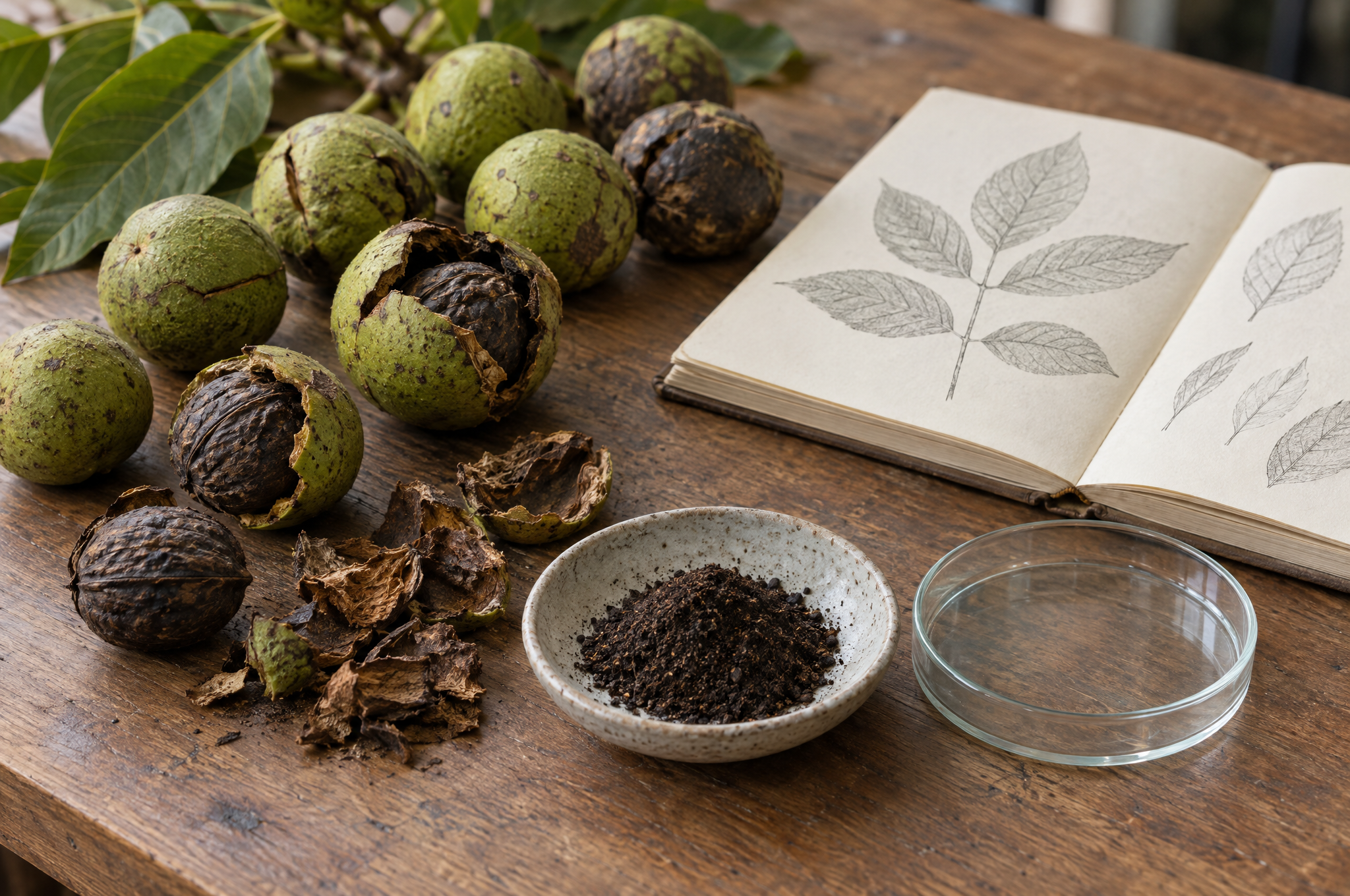
Black walnut (Juglans nigra L.) is a tree in the walnut family (Juglandaceae), native to eastern North America and grown for timber and nuts. Its fruit has three layers: a green outer husk, a hard shell and the kernel. The husk is usually discarded when nuts are processed. "Hull," "husk" and "pericarp" all name this outer layer. Supplements sell it as dried powder in capsules or as liquid extracts.
Black walnut is a different species from the English or Persian walnut (Juglans regia), and most walnut health research tested English walnut kernels. Neither those findings nor black walnut nut findings tell us anything about the hull.
In a 2024 lab analysis, researchers in Hungary tentatively identified 161 compounds in black walnut hull, leaf and bark extracts. From the hull they isolated juglone, ellagic acid, gallic acid and flavonoids such as quercetin and myricetin glycosides; juglone was the main compound in one extract. Juglone (5-hydroxy-1,4-naphthoquinone) is the compound behind black walnut's known ability to suppress nearby plants. A 1961 report found that an extract of crushed unripe black walnut hulls sedated or slowed water fleas, frogs, fish, mice, rats and rabbits, and identified juglone as one active compound.
Juglone content is not fixed. In one study of English walnut husks, it fell from 42.28 mg per gram in late May to 6.02 mg per gram by early August. We found no study that measured juglone in black walnut hull supplements.
Official status. We found no EU herbal monograph for black walnut. The European Medicines Agency's walnut monograph covers English walnut leaf, a traditional remedy applied to the skin for minor skin inflammation and sweaty hands and feet. In the United States, walnut hulls of either species are listed as a natural food flavoring, and FDA lists black walnut as a major food allergen.
Black walnut hull is often sold with wormwood and clove; see our separate review of wormwood (Artemisia absinthium).
What human studies have tested
We found no published or registered human trial of black walnut hull. The table lists every human study of a black walnut product that we found; both tested the nut.
| Study | Who took part | Form and daily amount | Duration | What was measured | Result |
|---|---|---|---|---|---|
| Fitschen et al., 2011 (crossover; U.S.; abstract only) | 36 adults; a meal test in 6 adults with untreated high cholesterol | Black or English walnuts added to the usual diet; the abstract gives 30 g a day only for English walnuts (the first author's 2010 thesis gives 30 g of each) | About 30 days per nut (per the thesis) | Blood lipids, body weight, red blood cell fatty acids, blood vessel function | English walnuts improved blood lipids; black walnut effects differed by sex. Neither nut caused weight gain. Black walnuts eaten with a high-saturated-fat meal did not maintain blood vessel function |
| Rodrigues et al., 2019 (randomized, double-blind crossover; U.S.) | 30 healthy adults | Breakfast muffins made with black walnuts, English walnuts or butter (amount not given in the abstract) | 3 single test meals | Appetite, glucose, triglycerides, lipid peroxidation and antioxidant capacity over 3 hours | The black walnut meal raised fullness more than the other two meals and lowered lipid peroxidation compared with butter. Glucose, triglycerides and antioxidant capacity did not differ |
| Black walnut hull, any form | None found | — | — | — | No trial in PubMed or ClinicalTrials.gov (searched October 25, 2026) |
Because there are no human data, the evidence for the hull comes from the lab and animal studies below.
| Study | Model | What was tested | Main finding |
|---|---|---|---|
| Detering et al., 2025 | Lab dishes: 4 skin-infection microbes (2 from people, 2 from dogs) | Alcohol extracts of black walnut hull, 40 to 240 µg/mL | The 70% alcohol extract killed 3 of the 4 (Staphylococcus aureus, a dog Staphylococcus and the yeast Malassezia) but not Pseudomonas; one of 7 broad-spectrum extracts |
| Feng et al., 2020 | Lab dishes: Lyme disease bacteria (Borrelia burgdorferi) | Alcohol extracts of two black walnut samples, 1%; the most active came from a sample whose plant part was not stated (the other was described as husk or hull) | One of 7 of 15 natural products more active than two antibiotics against non-growing bacteria; weak against growing bacteria; did not clear the bacteria in follow-up cultures |
| Vaezi et al., 2022 | Lab dishes: Candida yeasts | Purified juglone | Needed higher concentrations than the drugs fluconazole and nystatin |
| Khalil et al., 2022 | Mice infected with the blood fluke Schistosoma mansoni | Purified juglone, 8 mg per kg body weight (route and schedule not given in the abstract) | 63.1% fewer male and 52.1% fewer female worms; less liver scarring |
| Kasem et al., 2025 | Mice infected with a single-celled gut parasite (Eimeria papillata), 5 per group | Purified juglone, 8 mg per kg body weight, for 5 days | Fewer parasite oocysts in stool and less gut damage than in untreated infected mice |
| Chen et al., 2005 | Rats | Radiolabeled juglone by mouth, 0.1 to 10 mg per kg | 40% to 50% absorbed within 24 hours; high levels in the kidney |
| Tikkanen et al., 1983; Erisen et al., 2020 | Bacterial mutation (Ames) tests | Purified juglone | Caused mutations in some strains when liver enzymes were added, but not in others |
| Monks et al., 1990 | Mice | Juglone on the skin after a cancer-starting chemical | Promoted skin tumors |
| Chen et al., 2026 | Mice with surgically induced heart strain | Purified juglone (route and high dose not given in the abstract) | High doses harmed the heart, liver and kidneys; 1 mg per kg a day was tolerated and reduced heart enlargement |
| Minnick et al., 1987; True and Lowe, 1980 | Horses | Black walnut heartwood extract; juglone up to 1 g by mouth | Heartwood extract caused laminitis in 8 of 10 horses, but juglone was not found in heartwood; juglone itself caused only inconsistent, mild laminitis |
| Coleman and Merola, 2016 | Dogs (poison center records, 93 cases) | Swallowed black walnut wood, nuts or hulls | Nuts or hulls: vomiting in 48%, nerve or muscle signs in 23%; wood: nerve or muscle signs in 93% |
What the findings suggest
Effects in people. No effect of black walnut hull has been tested in people. The two nut studies were small, short and about food; they do not apply to the hull. Evidence strength: none for the hull.
Bacteria and fungi. Hull extracts killed two kinds of skin bacteria and a skin yeast in lab dishes. Black walnut extracts were active against non-growing Lyme disease bacteria but did not clear them, and the most active sample's plant part was not stated. The Lyme study authors call for animal and human studies; one author runs clinics that supply botanical preparations to patients. Purified juglone was weaker against Candida than standard antifungal drugs. Evidence strength: lab only.
Parasites. We found no human or animal study of black walnut hull against intestinal worms or protozoa. Two small mouse studies gave purified juglone (8 mg per kg): one against a blood fluke infection, and one against Eimeria, a single-celled gut parasite, where treated mice shed fewer parasite oocysts over 5 days. A 2007 survey in British Columbia, Canada, listed black walnut among plants used against worms in pets and pigs, based on interviews with herbalists, naturopaths, holistic veterinarians, farmers and others; that documents use, not effect. Evidence strength: two small animal studies of a purified compound, plus traditional use.
Toxicity. Juglone is reactive. It reduced the survival of human skin cells in culture at 1 to 20 micromolar, caused mutations in some bacterial tests, and harmed organs in mice at high doses. These are lab and animal signals; we found no study that measured juglone in human blood or urine.
Where the evidence is limited or conflicting
- Which part was studied. "Black walnut" research mixes kernels, hulls, leaves and heartwood. The well-known horse toxicity comes from heartwood shavings, and a 2021 lab study of horse immune cells concluded juglone is not the trigger for laminitis, at least through those cells. A 2004 paper from a National Institutes of Health lab even calls black walnut "Juglans regia," the English walnut's name.
- Pure compound or whole hull. Juglone studies used the purified compound at measured concentrations. A hull capsule contains an unknown amount, which varies by season and handling.
- Absorption. Rats absorbed about half of an oral juglone dose. We found no human data.
- Both helpful and harmful in the lab. Juglone is studied for anticancer and protective effects in cells and mice, yet the same chemistry makes it toxic to cells. In the 2026 mouse study, high doses harmed organs while a low dose was tolerated and reduced heart enlargement.
- Long-term safety. We found no long-term (two-year) cancer study of juglone or of hull extracts.
- Registered research. On October 25, 2026, ClinicalTrials.gov listed one study with black walnut as an intervention, the breakfast nut study above. A search for walnut hulls also found a 2022 trial of a multi-herb skin ointment for joint pain (98% coconut oil, with walnut hulls of unstated species among 10 herbs). None tested black walnut hull.
What buyers believe, and what the research shows
Our team's March 2026 market research for our wormwood, black walnut and clove products recorded these claims about black walnut; the last is described there as what informed buyers believe. We have no counts of how many buyers hold each one. Beliefs show what people expect, not what the hull does.
Belief: black walnut hull is a traditional remedy for worms and fungi. The tradition is documented, as in the British Columbia survey above. Tradition does not show effect: no human study has tested the hull against worms or fungal infections, and FDA has treated the claim that "black walnut hulls" are "purgative help for intestinal worms" as a drug claim.
Belief: juglone kills worms at the larval and adult stages. We found no study of black walnut hull against any stage of an intestinal worm. The closest evidence is two mouse studies of purified juglone: one counted adult blood flukes, the other counted oocysts of a single-celled gut parasite, not worm larvae.
Belief: black walnut creates an "astringent" gut environment. The hull contains ellagic acid, gallic acid and related tannin-type compounds. No study we found measured what black walnut hull does in the human gut.
Belief: wormwood, clove and black walnut each cover a different parasite life stage, so a formula missing black walnut is incomplete. A PubMed search found no study of the three herbs together; see what is known about combining clove, black walnut and wormwood.
Safety
Side effects in people. No trial of black walnut hull has been run, so there are no trial data on its side effects.
Tree nut allergy. FDA lists black walnut (Juglans nigra) as a tree nut major food allergen, and allergen labeling rules apply to supplement ingredients. Black walnut proteins named Jug n 1, Jug n 2 and Jug n 4 are known allergens; in one lab test, 32% of blood samples from 25 people with confirmed walnut allergy reacted to Jug n 4. These studies tested kernel proteins, and we found no study measuring allergens in hull powder. People with a walnut or tree nut allergy should treat hull products as containing walnut.
Skin. Juglone irritates skin. Applied to horses' lower legs, it caused local irritation. In two young children, juice from green English walnut husks caused irritant dermatitis and skin discoloration.
Pregnancy, breastfeeding and children. We found no safety data. The EU herbal monograph for English walnut leaf, which is used on the skin, does not recommend use in pregnancy or breastfeeding and says use under 18 has not been established, because data are lacking.
Medicines. We found no interaction study of black walnut hull or juglone in people. In a 1987 lab study, juglone inhibited cytochrome P450 enzymes in rabbit liver and human placenta tissue, including enzymes that process drugs and make estrogen; whether this happens in people is unknown. Tell your doctor or pharmacist if you use it.
Animals. Horses bedded on black walnut shavings can develop laminitis within 8 to 12 hours; in one stable, all 10 affected horses recovered. Dogs that swallowed nuts or hulls most often vomited.
Upper limits. No official body has set an upper limit. U.S. rules allow walnut hulls as a food flavoring "in the minimum quantity required," which is not a supplement dose. FDA does not approve dietary supplements for safety or effectiveness before sale.
What research does not establish
- That black walnut hull has any health effect in people.
- That lab or mouse results with purified juglone apply to a capsule of whole hull powder.
- How much juglone a hull product contains, or how much people absorb.
- That hull products are safe for long-term use, in pregnancy, breastfeeding or childhood, or with medicines.
- That hull products are free of walnut allergens.
How we reviewed the evidence
On October 25, 2026, we searched PubMed and screened all 147 records indexed with "Juglans nigra," then ran targeted searches on hulls, juglone toxicity, mutations, parasites, fungi and bacteria, allergy, skin reactions, and horse and dog cases, screening about 290 more records with overlap. For broad juglone searches (98 to 233 hits each), we screened narrower searches instead. We searched ClinicalTrials.gov and read FDA, eCFR and EMA documents; we found no black walnut entry in NCCIH's or the NIH Office of Dietary Supplements' herb lists, or in LiverTox. We included every human study of a black walnut product and lab, animal, toxicity, allergy and case studies of the hull or juglone. We excluded English walnut nutrition trials, forestry research and the multi-herb ointment trial. We read full texts or full-text sections of seven papers and abstracts of the rest, and rechecked every reference against its source. Buyer beliefs come from our team's March 2026 market research. Vinatura did not run any studies.
Vinatura Research Perspective
We asked four questions of this evidence: which part of the tree was tested, whether the test used whole hull or purified juglone, in what model, and at what amount compared with a supplement. The human studies tested nuts. The best-known black walnut toxicity, laminitis in horses, comes from heartwood, and juglone was not found there. Some antibacterial and anti-inflammatory studies of "black walnut" used kernels. Nearly every finding about the hull itself comes from lab dishes, and the parasite evidence comes from two small mouse studies of purified juglone. Even scientific papers confuse the species. We found no study that measured juglone in hull supplements or in a person's blood, and it varied seven-fold within one season in English walnut husks, so no lab concentration can be translated into a capsule.
Our assessment: there is no human evidence that black walnut hull does anything in the body, positive or negative. Lab evidence of antimicrobial activity is real but preliminary. Lab and animal evidence of juglone's toxicity, including mutations in some tests and organ harm at high doses in mice, should be weighed alongside the antimicrobial findings, though it too comes only from lab and animal studies. No study has measured walnut allergens in hull products, so they should be treated as tree nut products. A controlled human study of a hull product with measured juglone content, with liver and kidney safety tests and stool-test-confirmed parasite outcomes, would change this assessment, as would long-term toxicity testing of hull extracts.
Where this ingredient appears in Vinatura products
Wormwood Black Walnut Cloves contains 200 mg black walnut (Juglans nigra) hull per capsule (1 capsule per serving, 60 capsules), with 300 mg sweet wormwood (Artemisia annua) leaf and 100 mg clove flower bud; the product page says it is NSF Contents Certified, and the label does not state a juglone content or extract ratio. Wormwood Black Walnut Cloves Liquid contains black walnut with wormwood, cloves, pumpkin seed and papaya leaf in each 1 mL (20 drops) serving; the page does not list the amount of each herb. Both contain tree nut. The studies above did not test these products.
Frequently asked questions
Is black walnut hull the same as the walnuts I eat? No. Hull supplements use the green outer husk of the black walnut (Juglans nigra), not the kernel, and most walnut health research tested kernels of a different species, the English walnut (Juglans regia). Both are tree nuts.
Has black walnut hull been tested against parasites in people? No. We found no human or animal study of the hull against intestinal parasites. If you think you have an infection, see a doctor for testing and treatment.
Is juglone toxic? In lab and animal studies, juglone damaged cells, caused mutations in some bacterial tests and harmed organs in mice at high doses. No study has measured its effects or levels in people taking hull supplements.
How much did studies use? No human study has tested a dose of black walnut hull. Follow your product label and ask a healthcare professional before use, especially if you have a nut allergy, are pregnant or take medicines.
References
- Fitschen PJ, et al. Cardiovascular effects of consumption of black versus English walnuts. J Med Food. 2011;14(9):890–898. doi:10.1089/jmf.2010.0169
- Rodrigues LL, Cooper JA, Paton CM. Acute consumption of black walnuts increases fullness and decreases lipid peroxidation in humans. Nutr Res. 2019;71:56–64. doi:10.1016/j.nutres.2019.09.002
- Osztie R, et al. Comprehensive characterization of phytochemical composition, membrane permeability, and antiproliferative activity of Juglans nigra polyphenols. Int J Mol Sci. 2024;25(13):6930. doi:10.3390/ijms25136930
- Wenzel J, et al. Antioxidant potential of Juglans nigra, black walnut, husks extracted using supercritical carbon dioxide with an ethanol modifier. Food Sci Nutr. 2016;5(2):223–232. doi:10.1002/fsn3.385
- McCoy RM, et al. The origin and biosynthesis of the naphthalenoid moiety of juglone in black walnut. Hortic Res. 2018;5:67. doi:10.1038/s41438-018-0067-5
- Westfall BA, Russell RL, Auyong TK. Depressant agent from walnut hulls. Science. 1961;134(3490):1617. doi:10.1126/science.134.3490.1617
- Li JY, et al. Effects of dietary juglone on the oriental fruit moth Grapholita molesta (Lepidoptera: Tortricidae): growth performance and protective enzyme activity. J Econ Entomol. 2026;119(5):3427–3438. doi:10.1093/jee/toag185
- Detering M, et al. In vitro characterization of potential botanicals to reduce infection and improve the rate of wound healing in humans and canines. BMC Complement Med Ther. 2025;25(1):55. doi:10.1186/s12906-025-04777-2
- Feng J, et al. Evaluation of natural and botanical medicines for activity against growing and non-growing forms of B. burgdorferi. Front Med (Lausanne). 2020;7:6. doi:10.3389/fmed.2020.00006
- Ho KV, et al. Identifying antibacterial compounds in black walnuts (Juglans nigra) using a metabolomics approach. Metabolites. 2018;8(4):58. doi:10.3390/metabo8040058
- Ho KV, et al. Black walnut (Juglans nigra) extracts inhibit proinflammatory cytokine production from lipopolysaccharide-stimulated human promonocytic cell line U-937. Front Pharmacol. 2019;10:1059. doi:10.3389/fphar.2019.01059
- Vaezi A, et al. In vitro activity of juglone (5-hydroxy-1,4-naphthoquinone) against both fluconazole-resistant and susceptible Candida isolates. Rev Iberoam Micol. 2022;39(2):50–53. doi:10.1016/j.riam.2022.01.004
- Khalil RG, Ibrahim AM, Bakery HH. Juglone: "A novel immunomodulatory, antifibrotic, and schistosomicidal agent to ameliorate liver damage in murine schistosomiasis mansoni". Int Immunopharmacol. 2022;113(Pt A):109415. doi:10.1016/j.intimp.2022.109415
- Kasem SM, et al. Juglone as a therapeutic agent in murine coccidiosis: enhancing intestinal recovery and regulating host immune responses. Microsc Res Tech. 2025;88(9):2429–2438. doi:10.1002/jemt.24871
- Lans C, et al. Ethnoveterinary medicines used to treat endoparasites and stomach problems in pigs and pets in British Columbia, Canada. Vet Parasitol. 2007;148(3-4):325–340. doi:10.1016/j.vetpar.2007.06.014
- Chen LJ, Lebetkin EH, Burka LT. Metabolism and disposition of juglone in male F344 rats. Xenobiotica. 2005;35(10-11):1019–1034. doi:10.1080/00498250500356621
- Tikkanen L, et al. Mutagenicity of natural naphthoquinones and benzoquinones in the Salmonella/microsome test. Mutat Res. 1983;124(1):25–34. doi:10.1016/0165-1218(83)90182-9
- Erisen S, et al. Cytotoxic and mutagenic potential of juglone: a comparison of free and nano-encapsulated form. Arh Hig Rada Toksikol. 2020;71(1):69–77. doi:10.2478/aiht-2020-71-3344
- Monks TJ, et al. Epidermal ornithine decarboxylase induction and mouse skin tumor promotion by quinones. Carcinogenesis. 1990;11(10):1795–1801. doi:10.1093/carcin/11.10.1795
- Chen H, et al. Low-dose juglone attenuates pressure overload-induced cardiac hypertrophy through Lys207-dependent FoxO1 activation and mitochondrial protection. Pharmacol Res. 2026;233:109685. doi:10.1016/j.phrs.2026.109685
- Inbaraj JJ, Chignell CF. Cytotoxic action of juglone and plumbagin: a mechanistic study using HaCaT keratinocytes. Chem Res Toxicol. 2004;17(1):55–62. doi:10.1021/tx034132s
- Muto N, et al. Inhibition of cytochrome P-450-linked monooxygenase systems by naphthoquinones. Biochem Biophys Res Commun. 1987;146(2):487–494. doi:10.1016/0006-291x(87)90555-9
- Minnick PD, et al. The induction of equine laminitis with an aqueous extract of the heartwood of black walnut (Juglans nigra). Vet Hum Toxicol. 1987;29(3):230–233. PubMed 3604042
- True RG, Lowe JE. Induced juglone toxicosis in ponies and horses. Am J Vet Res. 1980;41(6):944–945. PubMed 7436086
- Uhlinger C. Black walnut toxicosis in ten horses. J Am Vet Med Assoc. 1989;195(3):343–344. PubMed 2768058
- Belknap JK. Black walnut extract: an inflammatory model. Vet Clin North Am Equine Pract. 2010;26(1):95–101. doi:10.1016/j.cveq.2009.12.007
- Mouithys-Mickalad A, et al. Effects of juglone on neutrophil degranulation and myeloperoxidase activity related to equine laminitis. Front Vet Sci. 2021;8:677675. doi:10.3389/fvets.2021.677675
- Coleman AE, Merola V. Clinical signs associated with ingestion of black walnut tree (Juglans nigra) wood, nuts, and hulls in dogs: 93 cases (2001-2012). J Am Vet Med Assoc. 2016;248(2):195–200. doi:10.2460/javma.248.2.195
- Zhang YZ, et al. Purification and characterization of a black walnut (Juglans nigra) allergen, Jug n 4. J Agric Food Chem. 2017;65(2):454–462. doi:10.1021/acs.jafc.6b04387
- Costa J, et al. Walnut allergens: molecular characterization, detection and clinical relevance. Clin Exp Allergy. 2014;44(3):319–341. doi:10.1111/cea.12267
- Neri I, et al. Acute irritant contact dermatitis due to Juglans regia. Contact Dermatitis. 2006;55(1):62–63. doi:10.1111/j.0105-1873.2006.0847h.x
- Bloomer RJ, et al. A topical botanical ointment for self-reported hip and/or knee pain: a randomized placebo-controlled clinical trial. J Evid Based Integr Med. 2022;27:2515690X221138824. doi:10.1177/2515690X221138824
- ClinicalTrials.gov. Acute Consumption of Breakfast Meals With Black Walnut, English Walnuts, or no Nuts, NCT04849949. Accessed October 25, 2026. clinicaltrials.gov
- U.S. Food and Drug Administration. Warning letter to a dietary supplement firm, MARCS-CMS 554500. August 15, 2018. fda.gov
- U.S. Food and Drug Administration. Questions and Answers Regarding Food Allergens, Including the Food Allergen Labeling Requirements of the Federal Food, Drug, and Cosmetic Act (Edition 5): Guidance for Industry. January 2025. fda.gov
- U.S. Code of Federal Regulations. 21 CFR 172.510, Natural flavoring substances and natural substances used in conjunction with flavors. eCFR, up to date as of October 22, 2026. ecfr.gov
- U.S. Food and Drug Administration. FDA 101: Dietary Supplements. Content current as of June 2, 2022. fda.gov
- European Medicines Agency, Committee on Herbal Medicinal Products. Community herbal monograph on Juglans regia L., folium (EMA/HMPC/346737/2011). Adopted July 9, 2013. ema.europa.eu
Editorial note: This article reviews published research for educational purposes. It does not establish the effects or safety of any specific supplement, including Vinatura products, and is not medical advice. Written by Vinatura Editorial Team. Last reviewed October 2026.
Author
Product Disclaimer
Including an ingredient or study does not evaluate, endorse, or recommend any Vinatura product or any third-party product. Some ingredients discussed may not be used in any Vinatura product.
The content of the articles has not been evaluated by the Food and Drug Administration (FDA) and is not intended to promote or endorse any specific product. Any products sold on this website are not intended to diagnose, treat, cure, or prevent any disease.
Opinions and Endorsements
Any claims, statements, or opinions expressed in the articles are those of the author(s) and do not necessarily reflect the views or opinions of the manufacturers of the dietary supplement products. The products sold on this website are separate from the content of the articles and are not directly endorsed or associated with the information presented here.
Liability Disclaimer
The author(s) of the articles, website, and manufacturers of the dietary supplement products do not assume any liability for any potential consequences arising from the use of the information provided in the articles. Ingredient effects, dosages, and safety vary by individual, formulation, and context; some ingredients interact with medications or may be unsuitable during pregnancy or lactation. It is recommended that individuals consult with a qualified healthcare professional before making any dietary or lifestyle changes, including the use of dietary supplements.
Product Usage
Please refer to the product labels and packaging for specific usage instructions and guidelines for the dietary supplement products sold on this website.
Customer Support
For any concerns or questions regarding the dietary supplement products, please contact our customer support team, who will be more than happy to assist you.


Leave a Comment
Be the first to comment.
What do you think?