

Clove and Eugenol: What Human Studies Show and Clove Oil Safety
Quick answer. Clove is the dried flower bud of the clove tree, Syzygium aromaticum; its main compound, eugenol, makes up most of clove oil. Swallowed clove products have been tested in people only in a few very small studies: three of a clove-bud polyphenol extract, each with authors from the extract's maker, plus two 1996 reports, from overlapping research teams, of short trials of pure eugenol in healthy men. No published trial has tested whole clove powder as a supplement, and claims about parasites, gut microbes and digestion rest on lab and animal work. The clearest safety finding concerns clove oil: a few milliliters swallowed by infants and toddlers has caused liver failure, seizures and coma, and the European Medicines Agency (EMA) does not recommend medicinal clove oil for anyone under 18.
What clove is
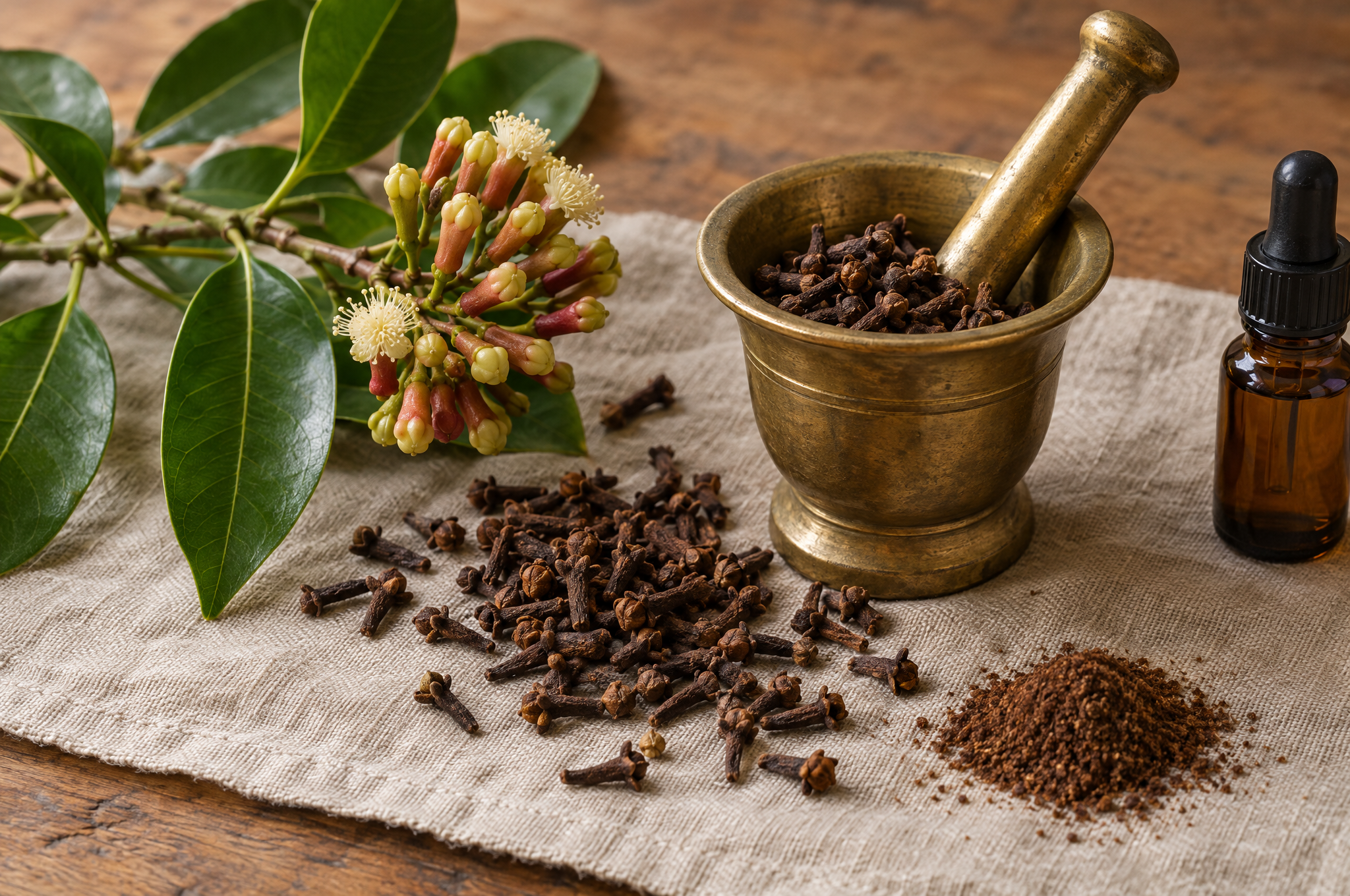
Cloves are "the dried unopened flower buds and calyx tubes" of the clove tree, native to tropical Asia, in the words of a U.S. Food and Drug Administration (FDA) regulation; older texts call the tree Eugenia caryophyllata. EMA's assessment report cites 15% to 17% essential oil in the bud, of which 75% to 88% is eugenol; NIH's LiverTox gives 70% to 90%.
Findings for one form do not transfer to the others:
- Whole or ground bud, the kitchen spice. The FDA lists cloves, clove oils, clove extracts and eugenol as generally recognized as safe (GRAS) as food flavorings at levels consistent with good manufacturing practice.
- Extracts, concentrates made with water or alcohol. The human studies of swallowed clove used a water-soluble bud extract with at least 30% polyphenols, which its makers call "de-flavoured."
- Clove oil, the steam-distilled essential oil, mostly eugenol and the form behind poisoning reports. Eugenol is also used in dentistry, for example in zinc oxide–eugenol dressings for a painful socket after tooth extraction (dry socket).
EMA has a monograph only for clove oil, as a traditional medicine for minor mouth or throat inflammation and temporary toothache from a dental cavity in adults, for up to 1 week. It wrote none for the bud, noting that "no single-ingredient products are available." The Joint FAO/WHO Expert Committee on Food Additives (JECFA) set an acceptable daily intake (ADI) for eugenol of 0 to 2.5 mg per kilogram of body weight in 1982 and kept it in 2005.
What human studies have tested
| Study | Who took part | Form and daily amount | Duration | What was measured | Result |
|---|---|---|---|---|---|
| Mohan et al., 2019 (open-label pilot, no control group; India) | 13 healthy adults aged 25 to 35: 7 with pre-lunch glucose of 100 mg/dL or less, 6 with 101 to 125 mg/dL | Water-soluble clove-bud polyphenol extract (at least 30% polyphenols), 250 mg once daily after lunch | 30 days | Glucose before lunch and 2 hours after, by glucometer | 2-hour glucose fell in both groups from day 12; at day 30, 125.4 to 98.4 mg/dL and 148.3 to 108.0 mg/dL. Pre-lunch glucose fell only in the higher group (114.2 to 100.5 mg/dL). No one was blinded; registered after the study; funded by the extract's maker |
| Mammen et al., 2018 (randomized, double-blind, placebo-controlled crossover; India) | 16 male social drinkers aged 25 to 55 | Clove-bud polyphenol extract (Clovinol), 250 mg in one capsule, with alcohol at 1 g/kg body weight | Crossover with 2-week washout; blood drawn up to 12 hours after dosing | Blood acetaldehyde, oxidative stress and inflammation markers, hangover score | Faster acetaldehyde clearance and lower C-reactive protein and IL-6 than placebo, and hangover scores 55% lower than with placebo. Four of five authors listed the extract maker's research center |
| Johannah et al., 2015 (open-label, no control group; human part of a product-development paper; India) | 24 healthy office workers aged 25 to 40 who completed the study, in 4 groups of 6 | Clovinol 250 mg a day, as capsules or mixed into juice, yogurt or honey | 30 days | Antioxidant enzymes, lipid peroxidation | Catalase +33% and lipid peroxidation −81% vs each person's starting values; no adverse effects seen. Funded by the extract's maker |
| Roberts et al., 2022 (systematic review) | 21 placebo-controlled hangover trials, 386 healthy adults; clove extract in 1 trial | Various | Varied | Hangover symptoms | Clove extract lowered symptom scores in its single trial, but all efficacy evidence in the review was rated very low quality |
| Rompelberg et al., 1996 (randomized, placebo-controlled crossover; Netherlands) | 10 healthy nonsmoking men | Eugenol 150 mg a day vs placebo | 7 days per arm, 1-week washout | Routine blood chemistry; chromosome damage in blood cells challenged in the lab; drug-metabolizing enzymes (glutathione S-transferases) | No differences in blood chemistry or chromosome damage; plasma alpha-class glutathione S-transferase fell |
| Nanjee et al., 1996 (double-blind, placebo-controlled crossover; shares authors with the Rompelberg trial) | Healthy nonsmoking men aged 20 to 28; number in the eugenol study not given in the abstract | Eugenol 150 mg a day in capsules vs placebo | Not given in the abstract | HDL cholesterol and its proteins | No significant changes |
| Alqareer et al., 2006 (randomized, subject-blinded; Kuwait) | 73 adult volunteers | Homemade gel of ground clove (40% in glycerin, per EMA's summary) on the inner cheek vs 20% benzocaine gel vs two placebos | Single application, 5 minutes before needle sticks | Needle-stick pain (100 mm scale) | Clove and benzocaine both lowered pain vs placebo; no difference between them |
| Burgoyne et al., 2010 (randomized; U.S.) | 35 patients with dry socket after tooth extraction | Eugenol on a gauze strip in the socket vs a gel with 2.5% lidocaine and 2.5% prilocaine | 48 hours | Pain scores | Both lowered pain; the anesthetic gel lowered it more in the first 15 minutes (P=.022), with no significant difference over 48 hours |
| Daly et al., 2022 (Cochrane review) | 49 trials, 6,771 people; 2 trials (80 people) compared zinc oxide–eugenol with a commercial socket dressing | Zinc oxide–eugenol vs the dressing (old formulation) | 7 days | Pain in dry socket | The commercial dressing lowered day-7 pain more (mean difference −1.40 points); very low certainty |
| Jahanshir et al., 2023 (randomized, triple-blind; Iran) | 168 adults ventilated for more than 48 hours in the intensive care units of one hospital | Clove-extract mouthwash 6.66% vs chlorhexidine 0.2%, 15 mL applied by swab twice daily | 5 days | Ventilator-associated pneumonia by clinical score | Pneumonia in 20.2% vs 41.7% (risk 2.06 times higher with chlorhexidine); severity did not differ. Diagnosis did not use lung sampling |
We found no human trial of whole clove powder taken by mouth. A 2024 meta-analysis of herbs and spices in type 2 diabetes found "not enough studies" on clove to analyze it.
What the findings suggest
Blood sugar. The only study is a 30-day pilot in 13 young adults, unblinded, without a comparison group and funded by the extract's maker. After-lunch glucose fell by 21% to 27%, but without controls the study cannot show that the extract caused the drop. Evidence strength: very low, and untested in diabetes.
Alcohol and hangover. One small crossover trial in 16 men, which a systematic review rated very low quality, like every hangover trial it included. Evidence strength: very low.
Antioxidant markers. One 30-day open-label study in 24 office workers, without a control group and funded by the maker, reported higher antioxidant enzymes than at the start. Evidence strength: very low.
Pure eugenol. In two 1996 reports of small crossover trials from overlapping research teams, 150 mg a day did not change routine blood tests, HDL cholesterol or lab tests of chromosome damage; these were safety and mechanism studies, not tests of benefit.
Mouth and dental use. A homemade clove gel matched 20% benzocaine for needle-stick pain in one trial. Eugenol dressings eased dry-socket pain but did not outperform an anesthetic gel or a commercial dressing, with very low certainty. One intensive care trial found less pneumonia with a clove mouthwash than with chlorhexidine. EMA accepted its clove oil uses on traditional use alone, finding "no data available" from clinical studies in those uses. Evidence strength: low to very low, and none of it applies to swallowing clove.
Where the evidence is limited or conflicting
- Antiparasitic and antimicrobial claims come from lab dishes and farm animals. Clove oil and eugenol slowed the gut parasite Giardia in culture (IC50 134 and 101 µg/mL), and eugenol killed all Trichinella worm larvae in culture at 1,218 µM and above. In sheep (10 ewes per group), 1.8 g of ground clove a day for 7 days was followed by 40.7% fewer worm eggs in feces within the group, but only the pumpkin-seed group differed significantly from untreated controls, and the clove group's anemia score worsened slightly.
- Glucose and antioxidant mechanisms come from cells and animals. A clove extract acted like insulin on liver cells in culture, and a 2018 review draws eugenol's antioxidant and anti-inflammatory effects mostly from preclinical work.
- Platelet results differ by model. Eugenol blocked clumping of human platelets in test tubes, 29 times more potently than aspirin in one assay, yet in a 2024 mouse study it reduced lung clots without lengthening bleeding time.
- Who ran the studies. All three extract studies list authors from its maker. The glucose pilot and the antioxidant study state that the maker funded them, and two authors of the glucose pilot worked for a U.S. supplement company that sells products containing the extract. No independent group has repeated them.
- Registries. On October 25, 2026, ClinicalTrials.gov intervention searches returned 66 records for clove (some unrelated, such as garlic cloves) and 112 for eugenol, mostly mouthwashes, dental materials and smell-training kits; none tested a swallowed clove or eugenol supplement on its own.
What buyers believe, and what the research shows
Our team's March 2026 market research on wormwood, black walnut and clove products recorded these beliefs about clove. They show what buyers and online communities believe, not evidence.
Belief: "Clove's eugenol disrupts the parasite egg stage." No study in people has tested this, and the one animal study counted the eggs sheep shed, not whether eggs were destroyed. In a lab dish, pure eugenol stopped half the eggs of a sheep stomach worm from hatching at 0.57 mg/mL, weaker than six of the ten plant compounds tested. That says nothing about clove powder in the human gut. If you think you have a parasitic infection, see a doctor for testing.
Belief: "A wormwood and black walnut formula is incomplete without clove." A PubMed search on October 25, 2026 found no study of the three herbs together and none comparing formulas with and without clove. Our review of the combination covers each herb's evidence and cautions, and our black walnut hull review covers that herb.
Belief: "Clove is a traditional antimicrobial and digestive herb." EMA found no medicinal products with clove bud as the only active ingredient. Clove's antimicrobial effects come mainly from lab tests (the one clinical trial used a mouthwash), and we found no human trial of clove for digestion.
Safety
Clove oil and young children. Case reports describe infants and young children, aged 3 months to 2 years, who swallowed clove oil (about 5 to 10 mL where the amount was reported) and developed liver failure, coma, seizures, acidosis or severe clotting problems; in a 15-month-old, the liver enzyme ALT rose above 13,000 U/L. Two of these children improved after intravenous N-acetylcysteine, the antidote used for acetaminophen poisoning. EMA notes life-threatening effects after 5 to 10 mL in children under 2 and lists low blood sugar among overdose effects. LiverTox rates clove oil a "probable cause of clinically apparent liver injury in overdoses" but says eugenol at therapeutic doses has not been linked to liver injury. A UK database recorded a 14-fold rise in aromatherapy-related home accidents from 1994 to 1999. Keep clove oil away from children; if a child swallows any, get emergency help at once.
Eugenol limits. JECFA's ADI for eugenol is 0 to 2.5 mg per kilogram of body weight a day. EMA notes "equivocal results" for eugenol in some genotoxicity and carcinogenicity tests and says whole clove oil has not been adequately tested for these or for reproductive toxicity. For dental use, EMA advises applying the oil only to the decayed tooth with cotton, avoiding the gums, for no more than 1 week.
Allergy and irritation. EMA lists mucosal irritation and allergic reactions, frequency unknown, and says not to use clove oil with an allergy to it or to balsam of Peru. In a study summarized by EMA, a clove-powder skin test was positive in 36 of 78 people allergic to balsam of Peru and in none of 156 controls. One 30-day extract study reported no adverse effects; the other small oral studies did not report adverse events in the text we could read.
Bleeding, blood sugar and medicines. No human study has tested clove with blood thinners, and we found no published case of bleeding linked to clove. Citing lab antiplatelet effects, EMA's assessment says clove oil "may increase the risk of bleeding" if taken with blood-thinning medicines, but called such interactions theoretical and not relevant to short-term mouth use, and a 2000 pharmacist review listed clove among herbs that may raise bleeding risk with warfarin. No human study has tested clove with diabetes medicines either. If you take any of these medicines, ask your doctor or pharmacist first.
Pregnancy, breastfeeding and children. EMA says the safety of clove oil in pregnancy and breastfeeding "has not been established," and it does not recommend medicinal clove oil under 18. We found no safety data for clove supplements in these groups and no official upper limit for clove bud in supplements.
What research does not establish
- That clove or clove supplements lower blood sugar in people with prediabetes or diabetes.
- That clove removes parasites, parasite eggs or harmful microbes from the human gut.
- That results from polyphenol extracts, pure eugenol or clove oil apply to whole clove powder.
- That clove helps digestion.
- That clove supplements are safe in pregnancy, breastfeeding, childhood or with blood thinners.
How we reviewed the evidence
On October 25, 2026, we searched PubMed for clinical trials of clove (69 records, all screened) and of eugenol (311 records; we screened the 37 left after removing dental-material, dry-socket and smell-training studies). Targeted searches (extracts, glucose, digestion, dry socket, poisoning, bleeding, antiparasitic and egg-hatch tests, the three-herb combination, retractions) added about 210 screened records, with overlap. We read or searched the full texts of four studies and three reviews and read abstracts of the rest, read EMA's clove oil monograph, assessment report, 2020 addendum and clove flower statement, LiverTox, JECFA's eugenol record and the FDA regulation, and searched ClinicalTrials.gov. We included human trials and reviews of clove or eugenol, used lab and animal studies only for mechanisms, and excluded multi-herb and multi-spice products, smell training and dental materials. None of the cited studies is retracted, and an editor rechecked every reference against its source. Buyer beliefs come from our team's March 2026 market research. Vinatura did not run any trials.
Vinatura Research Perspective
We asked four questions of each study: which form of clove (bud, extract, pure eugenol or oil), how much, whether it was swallowed or applied, and in whom. The swallowed-clove studies used one "de-flavoured" polyphenol extract at 250 mg a day, all involved its maker, enrolled 13 to 24 people, and measured short-term markers. The eugenol trials were short safety and mechanism checks in small groups of healthy men. Nearly all trials with clinical outcomes were topical. No trial tested swallowed whole clove powder, or any clove product against parasites in people, even though three-herb clove combinations are often marketed with anti-parasite language.
Form matters even more for safety. JECFA's ADI for eugenol works out to about 150 mg a day for a 60 kg adult, the daily amount one eugenol trial gave for a week without changes in routine blood tests. The poisonings involved 5 to 10 mL of clove oil, which by our estimate holds about 4 to 9 grams of eugenol, roughly 27 to 60 times that daily amount. This is an estimate from typical values, not a measurement of any product.
Our assessment: very low-certainty, industry-linked evidence for a clove polyphenol extract on after-meal glucose and alcohol-related markers; low- to very low-certainty evidence for topical dental uses; no human evidence for parasites, gut microbes or digestion; and consistent case evidence that swallowed clove oil can be dangerous for young children. An independent, placebo-controlled trial of whole clove bud or a defined extract, with measured eugenol content, lasting at least 12 weeks in people with prediabetes and measuring HbA1c or glucose tolerance would change this assessment, as would a controlled human study with stool testing for parasite claims or a study of clove with antiplatelet or anticoagulant medicines.
Where this ingredient appears in Vinatura products
Wormwood Black Walnut Cloves contains 100 mg cloves (Syzygium aromaticum, flower bud) per 1-capsule serving, with 300 mg sweet wormwood (Artemisia annua) leaf and 200 mg black walnut (Juglans nigra) hull; the label does not state a eugenol content. Wormwood Black Walnut Cloves Liquid lists cloves with wormwood, black walnut, pumpkin seed and papaya leaf in a 1 mL (20-drop) serving, without the amount of each herb. The studies above did not test these products, and none tested swallowed clove bud powder or these combinations.
Frequently asked questions
Is clove oil the same as ground clove? No. Clove oil is a distilled concentrate that is mostly eugenol; ground clove is the whole dried bud. A few milliliters of oil has poisoned young children.
How much clove did studies use? Extract studies used 250 mg a day of a clove-bud polyphenol extract for up to 30 days; eugenol trials used 150 mg a day, for 7 days in the one whose duration we could confirm. These are study amounts, not recommendations. Follow your product label and ask a healthcare professional.
Can clove oil help a toothache? EMA accepts clove oil only as a traditional remedy for temporary toothache from a cavity in adults, for up to a week, noting no clinical studies in that use. See a dentist for tooth pain.
References
- Mohan R, et al. Water-soluble polyphenol-rich clove extract lowers pre- and post-prandial blood glucose levels in healthy and prediabetic volunteers: an open label pilot study. BMC Complement Altern Med. 2019;19(1):99. doi:10.1186/s12906-019-2507-7
- Mammen RR, et al. Clove bud polyphenols alleviate alterations in inflammation and oxidative stress markers associated with binge drinking: a randomized double-blinded placebo-controlled crossover study. J Med Food. 2018;21(11):1188–1196. doi:10.1089/jmf.2017.4177
- Johannah NM, et al. Beyond the flavour: a de-flavoured polyphenol rich extract of clove buds (Syzygium aromaticum L) as a novel dietary antioxidant ingredient. Food Funct. 2015;6(10):3373–3382. doi:10.1039/c5fo00682a
- Roberts E, et al. The efficacy and tolerability of pharmacologically active interventions for alcohol-induced hangover symptomatology: a systematic review of the evidence from randomised placebo-controlled trials. Addiction. 2022;117(8):2157–2167. doi:10.1111/add.15786
- Rompelberg CJ, et al. Effect of short-term dietary administration of eugenol in humans. Hum Exp Toxicol. 1996;15(2):129–135. doi:10.1177/096032719601500205
- Nanjee MN, et al. Do dietary phytochemicals with cytochrome P-450 enzyme-inducing activity increase high-density-lipoprotein concentrations in humans? Am J Clin Nutr. 1996;64(5):706–711. doi:10.1093/ajcn/64.5.706
- Alqareer A, Alyahya A, Andersson L. The effect of clove and benzocaine versus placebo as topical anesthetics. J Dent. 2006;34(10):747–750. doi:10.1016/j.jdent.2006.01.009
- Burgoyne CC, et al. The efficacy of a topical anesthetic gel in the relief of pain associated with localized alveolar osteitis. J Oral Maxillofac Surg. 2010;68(1):144–148. doi:10.1016/j.joms.2009.06.033
- Daly BJ, et al. Local interventions for the management of alveolar osteitis (dry socket). Cochrane Database Syst Rev. 2022;9(9):CD006968. doi:10.1002/14651858.CD006968.pub3
- Jahanshir M, et al. Effect of clove mouthwash on the incidence of ventilator-associated pneumonia in intensive care unit patients: a comparative randomized triple-blind clinical trial. Clin Oral Investig. 2023;27(7):3589–3600. doi:10.1007/s00784-023-04972-w
- Garza MC, et al. Effect of aromatic herbs and spices present in the Mediterranean diet on the glycemic profile in type 2 diabetes subjects: a systematic review and meta-analysis. Nutrients. 2024;16(6):756. doi:10.3390/nu16060756
- Prasad RC, et al. An extract of Syzygium aromaticum represses genes encoding hepatic gluconeogenic enzymes. J Ethnopharmacol. 2005;96(1-2):295–301. doi:10.1016/j.jep.2004.09.024
- Machado M, et al. Anti-Giardia activity of Syzygium aromaticum essential oil and eugenol: effects on growth, viability, adherence and ultrastructure. Exp Parasitol. 2011;127(4):732–739. doi:10.1016/j.exppara.2011.01.011
- ElGhannam M, et al. Eugenol; effective anthelmintic compound against foodborne parasite Trichinella spiralis muscle larvae and adult. Pathogens. 2023;12(1):127. doi:10.3390/pathogens12010127
- Ježek J, et al. The effect of pumpkin seed cake and ground cloves (Syzygium aromaticum) supplementation on gastrointestinal nematode egg shedding in sheep. Parasite. 2021;28:78. doi:10.1051/parasite/2021076
- Katiki LM, et al. Synergistic interaction of ten essential oils against Haemonchus contortus in vitro. Vet Parasitol. 2017;243:47–51. doi:10.1016/j.vetpar.2017.06.008
- Barboza JN, et al. An overview on the anti-inflammatory potential and antioxidant profile of eugenol. Oxid Med Cell Longev. 2018;2018:3957262. doi:10.1155/2018/3957262
- Raghavendra RH, Naidu KA. Spice active principles as the inhibitors of human platelet aggregation and thromboxane biosynthesis. Prostaglandins Leukot Essent Fatty Acids. 2009;81(1):73–78. doi:10.1016/j.plefa.2009.04.009
- Huang WC, et al. Eugenol suppresses platelet activation and mitigates pulmonary thromboembolism in humans and murine models. Int J Mol Sci. 2024;25(4):2098. doi:10.3390/ijms25042098
- Heck AM, DeWitt BA, Lukes AL. Potential interactions between alternative therapies and warfarin. Am J Health Syst Pharm. 2000;57(13):1221–1227. PubMed 10902065
- Eisen JS, et al. N-acetylcysteine for the treatment of clove oil-induced fulminant hepatic failure. J Toxicol Clin Toxicol. 2004;42(1):89–92. doi:10.1081/clt-120028751
- Janes SE, Price CS, Thomas D. Essential oil poisoning: N-acetylcysteine for eugenol-induced hepatic failure and analysis of a national database. Eur J Pediatr. 2005;164(8):520–522. doi:10.1007/s00431-005-1692-1
- Lane BW, et al. Clove oil ingestion in an infant. Hum Exp Toxicol. 1991;10(4):291–294. doi:10.1177/096032719101000410
- Brown SA, Biggerstaff J, Savidge GF. Disseminated intravascular coagulation and hepatocellular necrosis due to clove oil. Blood Coagul Fibrinolysis. 1992;3(5):665–668. doi:10.1097/00001721-199210000-00025
- Hartnoll G, Moore D, Douek D. Near fatal ingestion of oil of cloves. Arch Dis Child. 1993;69(3):392–393. doi:10.1136/adc.69.3.392
- National Institutes of Health, LiverTox. Eugenol (Clove Oil). Last updated October 28, 2019. ncbi.nlm.nih.gov
- European Medicines Agency, Committee on Herbal Medicinal Products. Community herbal monograph on Syzygium aromaticum (L.) Merill et L. M. Perry, floris aetheroleum (EMA/HMPC/534924/2010). Adopted September 13, 2011. ema.europa.eu
- European Medicines Agency, Committee on Herbal Medicinal Products. Assessment report on Syzygium aromaticum (L.) Merill et L.M. Perry, flos and floris aetheroleum (EMA/HMPC/534946/2010). Published December 21, 2011. ema.europa.eu
- European Medicines Agency, Committee on Herbal Medicinal Products. Addendum to assessment report on Syzygium aromaticum flos and floris aetheroleum (EMA/HMPC/475451/2020). Adopted November 18, 2020. ema.europa.eu
- European Medicines Agency, Committee on Herbal Medicinal Products. Public statement on Syzygium aromaticum (L.) Merill et L.M. Perry, flos (EMA/HMPC/112102/2011). Adopted November 22, 2011. ema.europa.eu
- Joint FAO/WHO Expert Committee on Food Additives. Eugenol (JECFA No. 1529): evaluation summary. ADI established 1982, maintained 2005. inchem.org
- U.S. Code of Federal Regulations. 21 CFR 184.1257, Clove and its derivatives. Accessed October 25, 2026. law.cornell.edu
- ClinicalTrials.gov. Searches of the intervention field for clove and for eugenol. Accessed October 25, 2026. clinicaltrials.gov
Editorial note: This article reviews published research for educational purposes. It does not establish the effects or safety of any specific supplement, including Vinatura products, and is not medical advice. Written by Vinatura Editorial Team. Last reviewed October 2026.
Author
Product Disclaimer
Including an ingredient or study does not evaluate, endorse, or recommend any Vinatura product or any third-party product. Some ingredients discussed may not be used in any Vinatura product.
The content of the articles has not been evaluated by the Food and Drug Administration (FDA) and is not intended to promote or endorse any specific product. Any products sold on this website are not intended to diagnose, treat, cure, or prevent any disease.
Opinions and Endorsements
Any claims, statements, or opinions expressed in the articles are those of the author(s) and do not necessarily reflect the views or opinions of the manufacturers of the dietary supplement products. The products sold on this website are separate from the content of the articles and are not directly endorsed or associated with the information presented here.
Liability Disclaimer
The author(s) of the articles, website, and manufacturers of the dietary supplement products do not assume any liability for any potential consequences arising from the use of the information provided in the articles. Ingredient effects, dosages, and safety vary by individual, formulation, and context; some ingredients interact with medications or may be unsuitable during pregnancy or lactation. It is recommended that individuals consult with a qualified healthcare professional before making any dietary or lifestyle changes, including the use of dietary supplements.
Product Usage
Please refer to the product labels and packaging for specific usage instructions and guidelines for the dietary supplement products sold on this website.
Customer Support
For any concerns or questions regarding the dietary supplement products, please contact our customer support team, who will be more than happy to assist you.


Leave a Comment
Be the first to comment.
What do you think?