

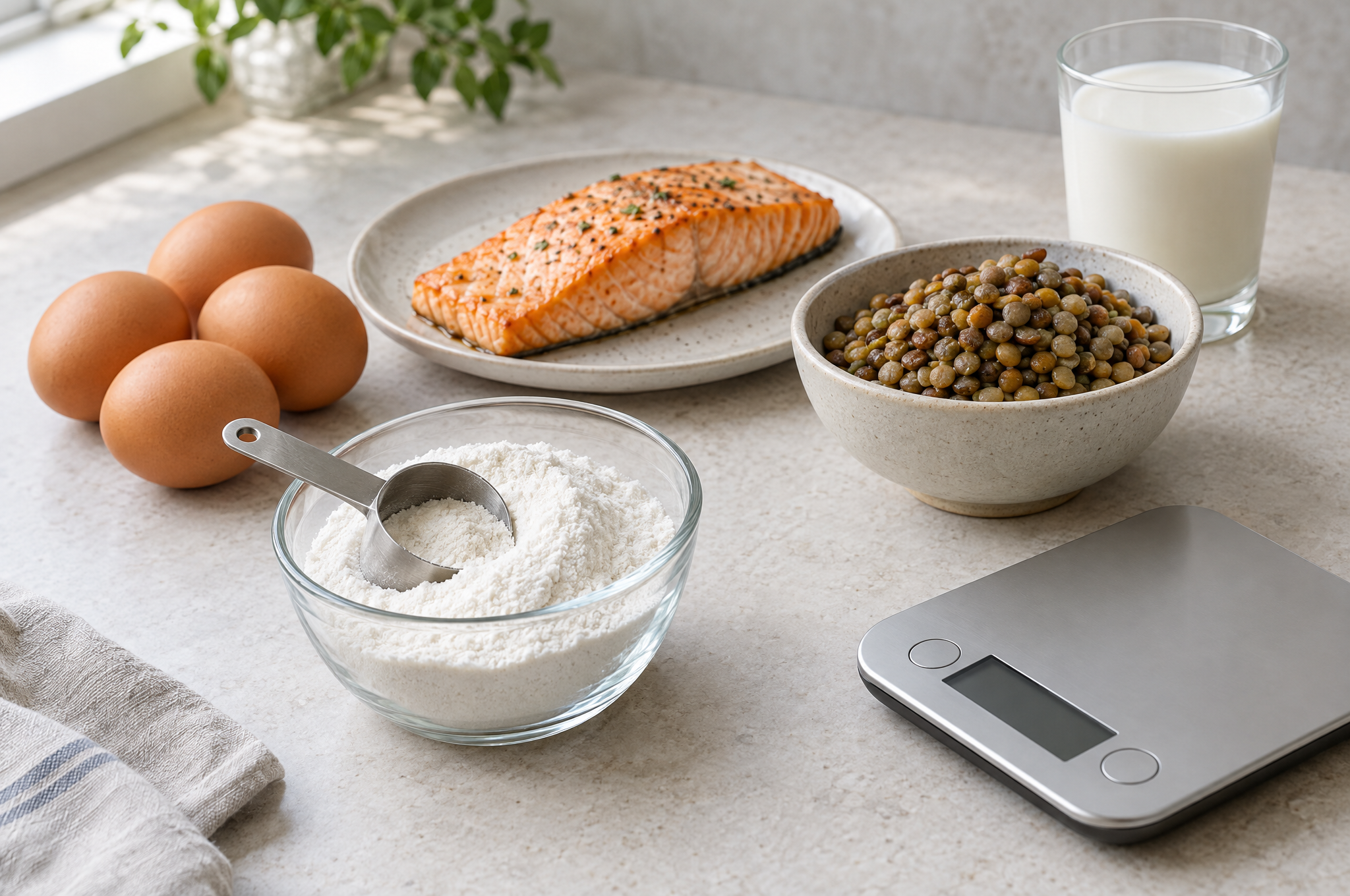
Leucine and Muscle: The 'Threshold' Idea vs Long-Term Human Trials
Quick answer. Leucine is an essential amino acid found in protein foods and sold as a powder. In short human studies, adding leucine to a small protein dose raised muscle protein synthesis, more consistently in older than younger adults; this is the source of the per-meal "leucine threshold" idea, but reviews have found no single cutoff. Trials in older adults lasting 12 weeks to 12 months, mostly at 7.5 g a day, found no gain in muscle mass or strength, including the largest leucine-only trial, a 12-month UK study in 145 people with sarcopenia. There is no official tolerable upper intake level, but Germany's food-safety agency gives 4 g a day of supplemental leucine as a cautious guide for adults, based mainly on rat data. People with maple syrup urine disease or who take levodopa should ask a doctor first, and the same agency advises children, teens and pregnant or breastfeeding women to avoid isolated branched-chain amino acids such as leucine.
What leucine is
Leucine is one of nine essential amino acids and one of three branched-chain amino acids (BCAAs), with isoleucine and valine, according to the NIH Office of Dietary Supplements (ODS). Whey has more leucine than casein or soy (ODS); for food sources, see our doctor-reviewed article on foods high in leucine.
Supplements contain free-form L-leucine, alone, in BCAA blends or added to protein drinks. About 5% of the body's leucine becomes HMB (ODS), which we cover in our article on HMB.
Leucine also acts as a signal: it activates mTOR, a pathway that regulates muscle protein synthesis (MPS). Most leucine studies measure this building rate over hours or days with tracers and muscle biopsies, not changes in muscle mass or strength.
What human studies have tested
| Study | Who took part | Form and daily amount | Duration | What was measured | Result |
|---|---|---|---|---|---|
| Katsanos et al., 2006 (controlled trial) | Young and older adults, 2 groups of each (group sizes not in abstract) | 6.7 g essential amino acids with 26% or 41% leucine (about 1.7 or 2.7 g leucine) | Single dose; hours | MPS | Older adults: MPS rose only with the 41% mix. Young adults: rose with both |
| Wall et al., 2013 (RCT) | 24 older men (mean age 74) | 20 g casein with or without 2.5 g free leucine | Single dose; 6 hours | MPS | 22% higher with added leucine (0.049 vs 0.040 %/hour) |
| Murphy et al., 2016 (crossover; placebo days first) | 20 older men (65–85) on lower- or higher-protein diets | 5 g leucine with each of 3 meals (15 g/day) vs placebo | 3 days per condition | Myofibrillar MPS over days | Higher with leucine at rest (1.57 vs 1.48 %/day) and after exercise (1.87 vs 1.71 %/day), on either diet |
| Verhoeven et al., 2009 (RCT) | 30 healthy older men (mean age 71) | 2.5 g with each main meal (7.5 g/day) vs placebo | 3 months | Muscle mass (CT, DXA), 1-repetition-maximum strength, blood sugar control | No change in muscle mass or strength in either group; no improvement in insulin sensitivity, HbA1c or lipids |
| Leenders et al., 2011 (RCT) | 60 older men with type 2 diabetes (mean age 71) | 2.5 g with each main meal (7.5 g/day) vs placebo | 6 months | Lean mass, strength, HbA1c | Lean mass 61.9 to 62.0 kg vs 62.2 to 62.2 kg; strength and HbA1c unchanged |
| Achison et al., 2022 (LACE; RCT, 14 UK centers; publicly funded by the UK MRC and NIHR) | 145 adults aged 70+ with sarcopenia, most meeting "probable" criteria (440 planned; stopped early for slow recruitment) | 2.5 g leucine powder 3 times a day with meals (7.5 g/day) vs lactose; factorial design that also tested the blood pressure drug perindopril | 12 months | Short Physical Performance Battery (SPPB), muscle mass, strength | No benefit: SPPB +0.1 point (95% CI −1.0 to 1.1); no difference in muscle mass, grip or leg strength |
| Martínez-Arnau et al., 2020 (RCT) | 50 nursing-home residents aged 65+ (42 completed) | 6 g/day (about 3 g twice a day) vs lactose | 13 weeks | Sarcopenia criteria, breathing-muscle strength | Walking time stayed steady with leucine but slowed with placebo (P=0.011); muscle mass index and grip strength did not differ between groups; several numbers in the paper conflict |
| Jacob et al., 2019 and 2025 (RCT; two reports) | 19 pre-frail or frail women (mean age 77.5) doing strength training on a 1.2 g/kg protein diet | 7.5 g/day leucine vs 5.1 g/day alanine | 12 weeks | MPS, lean mass, strength, frailty | Training improved frailty, lean mass and MPS in both groups; leucine added no benefit |
| Ispoglou et al., 2011 (double-blind controlled trial) | 26 untrained men, twice-weekly weight training | 4 g/day vs lactose | 12 weeks | 5-repetition-maximum strength, lean mass (DXA) | Total strength +40.8% vs +31.0% (P<0.05); lean mass gain did not differ |
| De Andrade et al., 2020 (RCT) | 25 resistance-trained men eating about 1.8 g/kg protein a day | 10 g/day (5 g twice) vs alanine, with leg training | 12 weeks | Leg-press 1-repetition maximum, thigh muscle size | Gains matched: strength +19.0% vs +21.0%; muscle size +8.0% vs +8.4% |
| English et al., 2016 (RCT) | 19 middle-aged adults (mean age 52) | 0.06 g/kg leucine per meal vs alanine | 14 days of bed rest | MPS, lean mass, knee strength | MPS fell similarly in both groups; strength loss smaller (−7% vs −15%); lean mass loss smaller at day 7 (−0.8 vs −1.5 kg) but not at day 14 |
| Arentson-Lantz et al., 2020 (RCT) | 20 healthy older adults (mean age 68) | 0.06 g/kg leucine per meal vs alanine | 7 days of bed rest, then 5 days of rehabilitation | Leg lean mass, strength, function | Less leg lean mass lost (−423 vs −1,035 g); strength and function not preserved |
| Churchward-Venne et al., 2026 (RCT) | 24 young and 24 older adults, men and women | 5 g leucine 3 times a day (15 g/day) vs carbohydrate | 3 days in a leg cast | Daily MPS, thigh muscle size (CT) | No protection of MPS or muscle size at either age |
| Xu et al., 2015 (meta-analysis) | 9 RCTs in older adults | Leucine, various amounts | Various | MPS, lean body mass, leg lean mass | MPS higher (standardized difference 1.08); no difference in lean body mass or leg lean mass |
| Guo et al., 2022 (meta-analysis) | 17 RCTs, 1,418 older adults | Leucine alone, or combined with other nutrients | Various | Lean mass, grip, leg press, gait speed | Leucine alone: no effect on lean mass (+0.03 kg; 95% CI −0.51 to 0.57), grip or leg press. Combinations including vitamin D: grip +2.17 kg, gait speed +0.03 m/s |
| Huang and Hsieh, 2025 (meta-analysis) | 10 RCTs and 1 prospective study, 1,133 older adults with sarcopenia | Leucine or leucine-enriched protein, some with vitamin D or exercise | Various | Grip, appendicular muscle mass index, gait speed, SPPB | Grip +1.76 kg, muscle mass index +0.19 kg/m², gait speed +0.05 m/s; SPPB unchanged; rated low-quality evidence |
RCT = randomized controlled trial. MPS = muscle protein synthesis (the rate at which muscle protein is built). DXA and CT = body scans. SPPB = a 0–12 test of balance, walking speed and rising from a chair.
What the findings suggest
Short-term protein synthesis: where the "threshold" comes from. Part of the idea comes from rat studies, in which a meal's leucine content set the peak of MPS. In people, an amino acid drink with 41% leucine raised MPS in older adults while a 26% mix did not; young adults responded to both, and in young adults 1.8 g of leucine was as effective as 3.5 g. Adding 2.5 g of leucine to 20 g of casein raised MPS by 22% in older men, but added leucine did not help 8 older men who already took ample protein after activity. In young men, 6.25 g of whey matched 25 g in the later hours only when leucine was raised to 5 g.
Two systematic reviews tested the idea. One found that 16 of 29 studies supported a leucine "trigger," mostly in older adults given isolated proteins rather than whole foods; the other found that leucine dose predicted post-exercise MPS in older but not younger adults, with no threshold. Evidence strength: consistent that leucine raises short-term MPS in older adults when the protein dose is small; a fixed per-meal amount is not established.
Muscle and function in older adults over months. Taking 7.5 g a day for 3 or 6 months changed neither muscle mass nor strength in healthy older men or in older men with type 2 diabetes who ate adequate protein. In LACE, 12 months at the same dose did not help adults 70 and older with sarcopenia, and adding LACE to earlier leucine-only trials gave a pooled muscle-mass effect near zero (standardized difference −0.04). In nursing-home residents, 6 g a day did not change muscle mass index or grip strength; walking time differed because the placebo group slowed. With strength training, 7.5 g a day added nothing in 19 frail or pre-frail women, and a 16-week Brazilian trial in frail and pre-frail older women found leucine "ineffective" (dose not reported in its abstract). The 2022 meta-analysis's leucine-alone results agree; the 2025 meta-analysis that found small gains pooled leucine with leucine-enriched protein products and rated the evidence low quality. Evidence strength: moderate and consistent that leucine alone does not add muscle or function in older adults who eat about 1 g/kg of protein a day; uncertain for people who eat less.
Younger and mid-life adults who lift weights. Leucine did not add muscle in untrained young adults taking 3 g a day after training for 8 weeks or about 3 g twice a day for 12 weeks, in 36 untrained mid-life women taking 5 g of leucine during 10 weeks of training, or in trained men taking 10 g a day for 12 weeks. One trial in 26 untrained men found larger strength gains with 4 g a day but not more lean mass. Evidence strength: consistent for no added muscle; one small positive result for strength.
Bed rest, leg casting and weight loss. During bed rest, 0.06 g/kg per meal reduced strength loss in middle-aged adults and leg lean-mass loss in older adults, without preserving function in the older group. In leg-cast studies of 3 to 7 days, 7.5 g or 15 g a day did not protect muscle in young or older adults. During calorie restriction, 3 g a day for 8 weeks preserved more fat-free mass in 37 adults at risk of metabolic syndrome, but only in the 12 men (the authors say this could be chance), while 10 g a day in 34 mid-life women and a 4-week alternate-day fasting trial in 61 older men showed no significant benefit. Evidence strength: low and conflicting.
Where the evidence is limited or conflicting
- Short-term signals did not predict long-term results. In 23 young men, MPS after their first workout did not correlate with muscle growth over 16 weeks.
- Protein intake may matter. Many trials enrolled people eating about 1 g/kg of protein a day or more. In LACE, people below the median intake of 1.01 g/kg improved more with leucine (2.6 SPPB points), but the subgroup test was not significant (P=0.70), so this is a hypothesis.
- Mixed products. Many positive trials used leucine-enriched whey drinks, often with vitamin D. In the 13-week PROVIDE trial in 380 older adults with sarcopenia, such a drink added 0.17 kg of limb muscle and improved chair rises, but not grip strength or SPPB.
- Small trials. Most had fewer than 60 participants. LACE enrolled 145 of a planned 440 and could not rule out a clinically important effect on its own, though its pooled analysis did not support one.
- Abstract vs results. The nursing-home trial's abstract says leucine improved lean mass index, but its results show no significant between-group difference in the change (P=0.168), and some of its other figures conflict.
- Unreported trial. A Singapore trial of four leucine doses in 92 young men with overweight on alternate-day fasting was completed in 2021, with no results posted and no paper we could find in PubMed.
Safety
Side effects in trials. In LACE, adverse events and falls were similar with leucine and placebo over 12 months; the leucine group scored lower on one quality-of-life measure, possibly by chance, the authors said. The nursing-home trial found no blood-test differences and the Brazilian frailty trial no adverse effects.
Upper limits. No agency has set a tolerable upper intake level for leucine; the U.S. Food and Nutrition Board found the data insufficient. In 2019 Germany's Federal Institute for Risk Assessment (BfR) set a cautious guidance value of 4.0 g a day of supplemental leucine for adults, derived mainly from a rat study with safety factors; the trials above used 3 to 15 g a day. In one-day tests of rising doses, blood ammonia rose above normal above 500 mg/kg a day in 5 healthy young men and above 550 mg/kg in 6 healthy older men. The authors proposed 500 mg/kg as a cautious limit for both (about 35 g at 70 kg; ODS cites about 38 g for a 75 kg man), but later summaries by the same group gave lower figures for older men: 351 mg/kg (about 24.5 g) and 30 g a day. No women were studied.
Who should be careful. In maple syrup urine disease, an inherited disorder affecting about 1 in 185,000 infants worldwide, the body cannot process leucine, isoleucine and valine (MedlinePlus); treatment includes dietary leucine restriction (GeneReviews). A geriatric expert group notes that older people with severe kidney disease not on dialysis may need to limit protein; anyone told to limit protein should ask their doctor first. We found no human studies of leucine supplements in pregnancy or breastfeeding; the BfR advises children, adolescents and pregnant or breastfeeding women to avoid relevant intakes of isolated BCAAs, and says its guidance value does not apply to people with reduced kidney function.
Medicines. Levodopa, a Parkinson's disease drug, competes with large neutral amino acids such as leucine for entry into the brain, and in 7 volunteers a leucine solution placed in the small intestine cut levodopa absorption from 40% to 21%. The effect of supplement doses is unknown; people taking levodopa should ask their doctor. We found no other studies of interactions between leucine supplements and medicines in adults.
What research does not establish
- That a specific amount of leucine per meal is needed, or enough, for long-term muscle gain.
- That leucine alone adds muscle or strength in people who lift weights or in older adults who eat enough protein.
- That leucine treats or prevents sarcopenia, frailty, or muscle loss during bed rest or weight loss.
- That benefits of leucine-enriched protein drinks come from the leucine rather than the other ingredients.
- What intake of leucine supplements is safe over years, or in women, children or pregnancy.
How we reviewed the evidence
On October 25, 2026, we searched PubMed for randomized trials of leucine and muscle mass or strength (80 records, all screened), systematic reviews (23), acute studies in older adults (23), and leucine in frailty, disuse, upper limits, drug interactions (23), pregnancy (17) and retractions (none of the cited papers is retracted). We also screened ClinicalTrials.gov by title (292 interventional records naming leucine). We included human studies of free leucine, summarized leucine-enriched products separately, used animal work only as background, and excluded trials in cancer, critical illness, cirrhosis and stroke. We read six full texts (including LACE, the nursing-home trial and the 2023 upper-limit review), the abstracts of all other studies, and the ODS, BfR, MedlinePlus and GeneReviews pages. Our team's review of Amazon buyer comments had too few leucine-specific themes to report. Vinatura did not run any trials.
Vinatura Research Perspective
We asked of each study how much leucine was taken per meal and per day, whether it was free leucine or part of a protein or multi-nutrient drink, who took part (age, sex, training, usual protein intake), and whether the outcome was hours of protein synthesis or months of muscle, strength and function. The main pattern is a short-term vs long-term gap. Per-meal "threshold" figures come from tracer studies lasting a few hours, often in men and with isolated proteins or amino acid drinks, and the review that looked for a cutoff found none. Long-term trials in older adults then gave an amount within that tested range, 2.5 g with each of three meals, which LACE chose because it raised protein synthesis in healthy older people; over 3 to 12 months they found no added muscle or function. Positive pooled results appear mainly when leucine-enriched protein or vitamin D drinks are pooled with leucine alone, one trial abstract reports a lean-mass benefit its own results do not show, and the human upper-limit figures rest on 11 men tested one day per dose, while the only official guidance value, Germany's 4 g a day, comes mainly from rat data.
Our assessment: evidence is consistent that leucine raises short-term protein synthesis in older adults when a meal's protein is low; evidence for a fixed threshold is weak; evidence is moderate and consistent that leucine alone does not add muscle or function over months in older adults eating about 1 g/kg of protein a day, or muscle in young adults who train; evidence for bed rest and weight loss conflicts; long-term safety data are lacking. A large, independently funded, year-long trial of leucine with each meal in older adults with low protein intake and confirmed sarcopenia, against an equal-calorie protein control, would change this view, as would results from the Singapore dose trial and safety studies in women.
Where this ingredient appears in Vinatura products
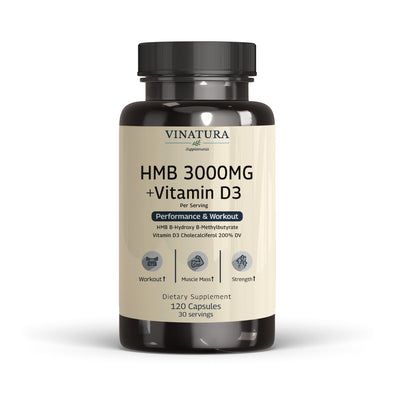
HMB Leucine Creatine Powder with Vitamin D3 contains 3 g of L-leucine per serving (one 15.5 g scoop; 30 servings), with 5 g creatine monohydrate, 3 g calcium HMB (myHMB®) providing 390 mg calcium, and 40 mcg (1,600 IU) vitamin D3; it is NSF Contents Certified (per product page). The studies above did not test this product, and none combined leucine with creatine and HMB.
Frequently asked questions
Is the leucine threshold 2.5 g or 3 g per meal? No single number is established. Studies tested doses from under 2 g to 5 g, in short studies older adults needed more than young adults to respond, a 2017 sports nutrition position stand gives a range of 700 to 3,000 mg per protein dose, and a 2023 review found no clear cutoff in older adults.
How is leucine different from HMB? HMB is a breakdown product of leucine. In a 12-week trial in 26 trained men, 1.5 g of HMB or of leucine twice a day with whey gave equal gains in muscle and strength.
How much leucine did trials use? Trials used 3 to 15 g a day. These are study amounts, not recommendations: follow your product label and ask a healthcare professional, especially if you take levodopa or have been told to limit protein.
References
- NIH Office of Dietary Supplements. Dietary Supplements for Exercise and Athletic Performance: Fact Sheet for Health Professionals. Accessed October 25, 2026. ods.od.nih.gov
- Churchward-Venne TA, et al. Supplementation of a suboptimal protein dose with leucine or essential amino acids: effects on myofibrillar protein synthesis at rest and following resistance exercise in men. J Physiol. 2012;590(11):2751–2765. doi:10.1113/jphysiol.2012.228833
- Norton LE, et al. The leucine content of a complete meal directs peak activation but not duration of skeletal muscle protein synthesis and mammalian target of rapamycin signaling in rats. J Nutr. 2009;139(6):1103–1109. doi:10.3945/jn.108.103853
- Katsanos CS, et al. A high proportion of leucine is required for optimal stimulation of the rate of muscle protein synthesis by essential amino acids in the elderly. Am J Physiol Endocrinol Metab. 2006;291(2):E381–E387. doi:10.1152/ajpendo.00488.2005
- Glynn EL, et al. Excess leucine intake enhances muscle anabolic signaling but not net protein anabolism in young men and women. J Nutr. 2010;140(11):1970–1976. doi:10.3945/jn.110.127647
- Wall BT, et al. Leucine co-ingestion improves post-prandial muscle protein accretion in elderly men. Clin Nutr. 2013;32(3):412–419. doi:10.1016/j.clnu.2012.09.002
- Koopman R, et al. Co-ingestion of leucine with protein does not further augment post-exercise muscle protein synthesis rates in elderly men. Br J Nutr. 2008;99(3):571–580. doi:10.1017/S0007114507812013
- Churchward-Venne TA, et al. Leucine supplementation of a low-protein mixed macronutrient beverage enhances myofibrillar protein synthesis in young men: a double-blind, randomized trial. Am J Clin Nutr. 2014;99(2):276–286. doi:10.3945/ajcn.113.068775
- Jäger R, et al. International Society of Sports Nutrition position stand: protein and exercise. J Int Soc Sports Nutr. 2017;14:20. doi:10.1186/s12970-017-0177-8
- Zaromskyte G, et al. Evaluating the leucine trigger hypothesis to explain the post-prandial regulation of muscle protein synthesis in young and older adults: a systematic review. Front Nutr. 2021;8:685165. doi:10.3389/fnut.2021.685165
- Wilkinson K, et al. Association of postprandial postexercise muscle protein synthesis rates with dietary leucine: a systematic review. Physiol Rep. 2023;11(15):e15775. doi:10.14814/phy2.15775
- Murphy CH, et al. Leucine supplementation enhances integrative myofibrillar protein synthesis in free-living older men consuming lower- and higher-protein diets: a parallel-group crossover study. Am J Clin Nutr. 2016;104(6):1594–1606. doi:10.3945/ajcn.116.136424
- Mitchell CJ, et al. Acute post-exercise myofibrillar protein synthesis is not correlated with resistance training-induced muscle hypertrophy in young men. PLoS One. 2014;9(2):e89431. doi:10.1371/journal.pone.0089431
- Verhoeven S, et al. Long-term leucine supplementation does not increase muscle mass or strength in healthy elderly men. Am J Clin Nutr. 2009;89(5):1468–1475. doi:10.3945/ajcn.2008.26668
- Leenders M, et al. Prolonged leucine supplementation does not augment muscle mass or affect glycemic control in elderly type 2 diabetic men. J Nutr. 2011;141(6):1070–1076. doi:10.3945/jn.111.138495
- Achison M, et al. (LACE Study Group). Effect of perindopril or leucine on physical performance in older people with sarcopenia: the LACE randomized controlled trial. J Cachexia Sarcopenia Muscle. 2022;13(2):858–871. doi:10.1002/jcsm.12934
- Martínez-Arnau FM, et al. Effects of leucine administration in sarcopenia: a randomized and placebo-controlled clinical trial. Nutrients. 2020;12(4):932. doi:10.3390/nu12040932
- Jacob KJ, et al. Leucine supplementation does not alter insulin sensitivity in prefrail and frail older women following a resistance training protocol. J Nutr. 2019;149(6):959–967. doi:10.1093/jn/nxz038
- Jacob KJ, et al. Resistance training, but not leucine, increased basal muscle protein synthesis and reversed frailty in older women consuming optimized protein intake. GeroScience. 2026;48(3):3971–3982 (published online 2025). doi:10.1007/s11357-025-01877-2
- Roschel H, et al. Supplement-based nutritional strategies to tackle frailty: a multifactorial, double-blind, randomized placebo-controlled trial. Clin Nutr. 2021;40(8):4849–4858. doi:10.1016/j.clnu.2021.06.024
- Xu ZR, et al. The effectiveness of leucine on muscle protein synthesis, lean body mass and leg lean mass accretion in older people: a systematic review and meta-analysis. Br J Nutr. 2015;113(1):25–34. doi:10.1017/S0007114514002475
- Guo Y, et al. The effect of leucine supplementation on sarcopenia-related measures in older adults: a systematic review and meta-analysis of 17 randomized controlled trials. Front Nutr. 2022;9:929891. doi:10.3389/fnut.2022.929891
- Huang C, Hsieh MH. Effects of leucine supplementation in older adults with sarcopenia: a meta-analysis. Nutrients. 2025;17(15):2413. doi:10.3390/nu17152413
- Aguiar AF, et al. Free leucine supplementation during an 8-week resistance training program does not increase muscle mass and strength in untrained young adult subjects. Amino Acids. 2017;49(7):1255–1262. doi:10.1007/s00726-017-2427-0
- Mobley CB, et al. Effects of whey, soy or leucine supplementation with 12 weeks of resistance training on strength, body composition, and skeletal muscle and adipose tissue histological attributes in college-aged males. Nutrients. 2017;9(9):972. doi:10.3390/nu9090972
- Funderburk LK, et al. Efficacy of L-leucine supplementation coupled with resistance training in untrained midlife women. J Am Coll Nutr. 2020;39(4):316–324. doi:10.1080/07315724.2019.1650675
- De Andrade IT, et al. Leucine supplementation has no further effect on training-induced muscle adaptations. Med Sci Sports Exerc. 2020;52(8):1809–1814. doi:10.1249/MSS.0000000000002307
- Ispoglou T, et al. Daily L-leucine supplementation in novice trainees during a 12-week weight training program. Int J Sports Physiol Perform. 2011;6(1):38–50. doi:10.1123/ijspp.6.1.38
- English KL, et al. Leucine partially protects muscle mass and function during bed rest in middle-aged adults. Am J Clin Nutr. 2016;103(2):465–473. doi:10.3945/ajcn.115.112359
- Arentson-Lantz EJ, et al. Countering disuse atrophy in older adults with low-volume leucine supplementation. J Appl Physiol. 2020;128(4):967–977. doi:10.1152/japplphysiol.00847.2019
- Backx EMP, et al. Leucine supplementation does not attenuate skeletal muscle loss during leg immobilization in healthy, young men. Nutrients. 2018;10(5):635. doi:10.3390/nu10050635
- Edwards SJ, et al. High-dose leucine supplementation does not prevent muscle atrophy or strength loss over 7 days of immobilization in healthy young males. Am J Clin Nutr. 2020;112(5):1368–1381. doi:10.1093/ajcn/nqaa229
- Churchward-Venne TA, et al. Leucine supplementation does not attenuate the decline in daily muscle protein synthesis rates or preserve leg muscle mass during leg immobilization in young or older adults: a double-blind randomized trial. Am J Clin Nutr. 2026;123(4):101205. doi:10.1016/j.ajcnut.2026.101205
- Pathak K, et al. The impact of leucine supplementation on body composition and glucose tolerance following energy restriction: an 8-week RCT in adults at risk of the metabolic syndrome. Eur J Clin Nutr. 2024;78(2):155–162. doi:10.1038/s41430-023-01360-1
- Funderburk L, et al. Efficacy of L-leucine supplementation coupled with a calorie-restricted diet to promote weight loss in mid-life women. J Am Coll Nutr. 2021;40(8):699–707. doi:10.1080/07315724.2020.1815607
- Pang BWJ, et al. Effects of body-mass-scaled protein and leucine supplementation on body composition and cardiometabolic blood markers during weight loss in older men: a randomized controlled trial. Nutrients. 2026;18(19):3255. doi:10.3390/nu18193255
- Bauer JM, et al. Effects of a vitamin D and leucine-enriched whey protein nutritional supplement on measures of sarcopenia in older adults, the PROVIDE study: a randomized, double-blind, placebo-controlled trial. J Am Med Dir Assoc. 2015;16(9):740–747. doi:10.1016/j.jamda.2015.05.021
- Jakubowski JS, et al. Equivalent hypertrophy and strength gains in β-hydroxy-β-methylbutyrate- or leucine-supplemented men. Med Sci Sports Exerc. 2019;51(1):65–74. doi:10.1249/MSS.0000000000001752
- Elango R. Tolerable upper intake level for individual amino acids in humans: a narrative review of recent clinical studies. Adv Nutr. 2023;14(4):885–894. doi:10.1016/j.advnut.2023.04.004
- German Federal Institute for Risk Assessment (BfR). Food supplements: high intake of isolated branched-chain amino acids can lead to health impairments. BfR Opinion No. 052/2019. December 20, 2019. bfr.bund.de
- Elango R, et al. Determination of the tolerable upper intake level of leucine in acute dietary studies in young men. Am J Clin Nutr. 2012;96(4):759–767. doi:10.3945/ajcn.111.024471
- Rasmussen B, et al. Determination of the safety of leucine supplementation in healthy elderly men. Amino Acids. 2016;48(7):1707–1716. doi:10.1007/s00726-016-2241-0
- Elango R, Rasmussen B, Madden K. Safety and tolerability of leucine supplementation in elderly men. J Nutr. 2016;146(12):2630S–2634S. doi:10.3945/jn.116.234930
- Bauer J, et al. Evidence-based recommendations for optimal dietary protein intake in older people: a position paper from the PROT-AGE Study Group. J Am Med Dir Assoc. 2013;14(8):542–559. doi:10.1016/j.jamda.2013.05.021
- Lennernäs H, et al. The effect of L-leucine on the absorption of levodopa, studied by regional jejunal perfusion in man. Br J Clin Pharmacol. 1993;35(3):243–250. doi:10.1111/j.1365-2125.1993.tb05691.x
- Nutt JG, et al. Influence of fluctuations of plasma large neutral amino acids with normal diets on the clinical response to levodopa. J Neurol Neurosurg Psychiatry. 1989;52(4):481–487. doi:10.1136/jnnp.52.4.481
- MedlinePlus Genetics (National Library of Medicine). Maple syrup urine disease. Last updated July 1, 2017. medlineplus.gov
- Strauss KA, Puffenberger EG, Carson VJ. Maple syrup urine disease. GeneReviews. Last update April 23, 2020. ncbi.nlm.nih.gov
- ClinicalTrials.gov. Dose Response of Leucine on Muscle Maintenance During Weight Loss, NCT07583875 (sponsor: Nanyang Technological University; status: completed). Accessed October 25, 2026. clinicaltrials.gov
Editorial note: This article reviews published research for educational purposes. It does not establish the effects or safety of any specific supplement, including Vinatura products, and is not medical advice. Written by Vinatura Editorial Team. Last reviewed October 2026.
Author

Product Disclaimer
Including an ingredient or study does not evaluate, endorse, or recommend any Vinatura product or any third-party product. Some ingredients discussed may not be used in any Vinatura product.
The content of the articles has not been evaluated by the Food and Drug Administration (FDA) and is not intended to promote or endorse any specific product. Any products sold on this website are not intended to diagnose, treat, cure, or prevent any disease.
Opinions and Endorsements
Any claims, statements, or opinions expressed in the articles are those of the author(s) and do not necessarily reflect the views or opinions of the manufacturers of the dietary supplement products. The products sold on this website are separate from the content of the articles and are not directly endorsed or associated with the information presented here.
Liability Disclaimer
The author(s) of the articles, website, and manufacturers of the dietary supplement products do not assume any liability for any potential consequences arising from the use of the information provided in the articles. Ingredient effects, dosages, and safety vary by individual, formulation, and context; some ingredients interact with medications or may be unsuitable during pregnancy or lactation. It is recommended that individuals consult with a qualified healthcare professional before making any dietary or lifestyle changes, including the use of dietary supplements.
Product Usage
Please refer to the product labels and packaging for specific usage instructions and guidelines for the dietary supplement products sold on this website.
Customer Support
For any concerns or questions regarding the dietary supplement products, please contact our customer support team, who will be more than happy to assist you.



Leave a Comment
Be the first to comment.
What do you think?