

Nicotinamide Riboside (NR): What Human Trials Show
Quick answer. Nicotinamide riboside (NR) is a form of vitamin B3 that cells convert into NAD+, a coenzyme used in energy metabolism. In human trials, 100 to 3,000 mg a day raised NAD+ in whole blood in a dose-related way, often doubling it at 1,000 to 2,000 mg a day, but NAD+ itself did not rise in muscle in two trials that measured it. Trials of blood pressure, insulin sensitivity, muscle, cognition and long COVID were mostly null, and the largest, longest trial, in 410 people with early Parkinson's disease, found no benefit and slightly worse symptom scores than placebo after one year. Side effects in trials were mostly mild and similar to placebo, and in the one-year trial serious adverse events were not more common on NR; there are no data in pregnancy and no interaction studies with medicines.
What nicotinamide riboside is
NR is a nucleoside: nicotinamide (one form of vitamin B3) joined to the sugar ribose. Inside cells, enzymes called NR kinases turn it into NMN, which is then made into NAD+. A rise in a related compound, NAAD, is a sensitive blood marker of this conversion. In a 2026 study, human gut bacteria tested outside the body converted NR and NMN to nicotinic acid, another B3 form, which the authors propose is how swallowed NR raises blood NAD+.
Many human trials used one ingredient: crystalline NR chloride, a synthetic salt sold under the name Niagen. According to the European Food Safety Authority (EFSA), 500 mg of NR chloride corresponds to 210 mg of nicotinamide.
How NR differs from related compounds.
- Nicotinamide and nicotinic acid (niacin) are the classic B3 forms. In the 2026 comparison, 14 days of nicotinamide (500 mg a day) did not raise blood NAD+ the way NR did.
- NMN is NR plus a phosphate. In the only head-to-head trial, NR and NMN at 1,000 mg a day for 14 days raised blood NAD+ by similar amounts (see our review of NMN trials).
- NMNH is the reduced form of NMN; no trial has compared it with NR (see our NMNH review).
Regulatory status. In 2016, FDA said it had "no questions" about the maker's conclusion that NR chloride is generally recognized as safe (GRAS) in specific foods, such as vitamin waters and bars, without making its own determination. A 2019 paper by two authors from the maker's consulting arm states that NR chloride has also been the subject of two new dietary ingredient (NDI) notifications; we could not confirm them in FDA's online records. EFSA judged NR chloride safe in food supplements for healthy adults at up to 300 mg a day, and up to 230 mg a day in pregnancy and breastfeeding.
What human studies have tested
All trials gave NR by mouth and were placebo-controlled unless noted. ‡ = the paper states the NR was the maker's product (ChromaDex, now Niagen Bioscience).
| Study | Who took part | Form and daily amount | Duration | What was measured | Result |
|---|---|---|---|---|---|
| Airhart et al., 2017 (open-label, no placebo) | 8 healthy adults | 250 mg, increased to 1,000 mg twice daily | 9 days | Blood NR and NAD+, safety | Whole-blood NAD+ rose 100% at steady state; no adverse events |
| Conze et al., 2019 ‡ | 140 healthy adults with overweight | NR chloride 100, 300 or 1,000 mg | 8 weeks | Whole-blood NAD+, safety | NAD+ up 22%, 51% and 142% from baseline at day 14; 10%, 48% and 139% at day 56. No flushing; adverse events like placebo; no rise in LDL cholesterol or homocysteine. Two of three authors affiliated with the maker's consulting arm |
| Martens et al., 2018 (crossover) ‡ | 30 adults aged 55–79 (24 completed) | 1,000 mg (500 mg twice) | 6 weeks per phase | Safety, NAD+ in blood immune cells (PBMCs), blood pressure | PBMC NAD+ about 60% higher than placebo. Systolic pressure −3.9 mmHg, not significant after correction for multiple tests |
| Dollerup et al., 2018–2019 | 40 sedentary men aged 40–70 with obesity | 2,000 mg (1,000 mg twice) | 12 weeks | Insulin sensitivity (clamp test), body composition, muscle mitochondria | No change in insulin sensitivity, glucose handling, body composition or mitochondria; muscle NAD+ unchanged; no serious adverse events |
| Remie et al., 2020 (crossover) | 13 adults with overweight or obesity | 1,000 mg | 6 weeks | Insulin sensitivity, mitochondrial function, liver fat, blood pressure | None changed. Fat-free mass 1.3 percentage points higher; muscle NAAD higher |
| Elhassan et al., 2019 (crossover) | 12 men aged 70–80 | 1,000 mg | 21 days | Muscle NAD metabolites, mitochondria | Muscle NAAD and breakdown products rose; mitochondrial energy production unchanged; inflammatory markers in blood lower |
| Lapatto et al., 2023 (open-label, not randomized) | 20 identical twin pairs differing in weight, all on NR (16 analyzed), plus 4 similar-weight pairs with one twin on placebo | 250 mg rising to 1,000 mg | 5 months | Muscle mitochondria, weight, metabolic health | Blood NAD+ 2.3-fold; more muscle mitochondria; "NR did not ameliorate adiposity or metabolic health"; glucose-tolerance measures suggested insulin sensitivity fell during the study |
| McDermott et al., 2024 (NICE) ‡ | 90 adults with peripheral artery disease (PAD) | 1,000 mg, with or without resveratrol 125 mg | 6 months | 6-minute walk | +7.0 m vs −10.6 m with placebo (difference 17.6 m; one-sided 90% CI from 1.8 m); resveratrol added nothing |
| Wang et al., 2022 ‡ | 30 adults with stable heart failure (reduced pumping) | Up to 2,000 mg | 12 weeks | Safety, whole-blood NAD+; heart measures exploratory | Well tolerated; NAD+ about doubled. NIH-funded |
| Ahmadi et al., 2023 (crossover) | 25 adults with chronic kidney disease | 1,000 mg (vs CoQ10 vs placebo) | 6 weeks | Peak oxygen uptake, work efficiency | No difference from placebo |
| Norheim et al., 2024 | 40 adults with COPD (plus 20 healthy controls) | 2,000 mg | 6 weeks | Sputum IL-8 (an inflammation marker) | IL-8 −52.6% vs placebo; blood NAD+ more than doubled; IL-6 unchanged |
| Lin et al., 2025 | 54 sedentary adults 55+ with high blood pressure | 1,000 mg, with or without supervised walking | 6 weeks | Daytime systolic pressure | NR plus walking did not lower pressure more than placebo plus walking |
| Orr et al., 2023 | 20 older adults with mild cognitive impairment (MCI) | Increased to 1,000 mg | 10 weeks | Cognition (MoCA) | No change; blood NAD+ 2.6-fold higher |
| Wu et al., 2025 (crossover) | 46 adults over 55 with cognitive complaints or MCI (37 completed) | 1,000 mg | 8 weeks | Memory and thinking tests (RBANS), blood markers | Cognition unchanged; blood pTau217 −7% vs +18% on placebo |
| Martens et al., 2026 ‡ | 52 adults 65+ with amnestic MCI (42 completed) | 1,000 mg (500 mg twice) | 12 weeks | Cognition; brain blood flow and blood pressure secondary | No improvement; whole-blood NAD+ 23.4 to 48.5 µM |
| Wu et al., 2025 (long COVID) ‡ | 58 adults with long COVID | 2,000 mg | 10 weeks vs placebo, 20 weeks in total | Cognition; fatigue, sleep, mood | No difference from placebo on any; NAD+ 2.6- to 3.1-fold. 51% dropout by week 20 on NR. Part-funded by the maker; two authors hold equity in it |
| Brakedal et al., 2022 (NADPARK) | 30 adults newly diagnosed with Parkinson's | 1,000 mg | 30 days | Brain NAD (MR spectroscopy), brain metabolism | Variable rise in brain NAD; "mild clinical improvement" in those whose brain NAD rose |
| Berven et al., 2023 (NR-SAFE) ‡ | 20 adults with Parkinson's | 3,000 mg (1,500 mg twice) | 4 weeks | Moderate or severe adverse events | None; mild events similar to placebo; blood NAD+ up to 5-fold; small early rise in homocysteine |
| Brakedal et al., 2026 (NOPARK, phase 3) | 410 adults with early Parkinson's, 11 Norwegian centers (393 analyzed) | 1,000 mg (500 mg twice) | 52 weeks | Symptom score (MDS-UPDRS parts I–III) | Score worsened 2.45 points on NR vs improved 0.27 on placebo (difference 2.72; 95% CI 0.47–4.98), below the 5.2-point worsening the paper calls clinically important. Non-motor symptoms worse on NR; serious adverse events 8.3% vs 14.1% |
| Shoji et al., 2025 (crossover) ‡ | 9 adults with Werner syndrome, a rare premature-aging disorder (6 completed) | 1,000 mg | 26 weeks per phase | Safety; artery stiffness, skin ulcers | No serious adverse events; artery stiffness and ulcer area improved |
| Lin et al., 2026 | 66 people aged 10–40 with Friedreich's ataxia | 300–900 mg by weight, with or without exercise | 12 weeks | Peak oxygen uptake | NR alone not different from control; NR plus exercise better than control but not than exercise alone |
| Christen et al., 2026 (open-label, placebo-controlled) ‡ | 65 healthy adults aged 18–50 | NR 1,000 mg vs NMN 1,000 mg vs nicotinamide 500 mg | 14 days | Blood NAD+ | NR and NMN raised NAD+ similarly; nicotinamide did not. Nestlé-run |
| Prokopidis et al., 2025 (meta-analysis) | Trials of NR or NMN in adults with mean age 60+ | Varied | Varied | Muscle mass and function | "Current evidence does not support" NR or NMN for preserving muscle mass and function |
What the findings suggest
Blood NAD+: consistent, dose-related. Every trial in our table that measured whole-blood NAD+ found a rise: roughly 2- to 3-fold at 1,000 to 2,000 mg a day, up to 5-fold at 3,000 mg, and 22% at two weeks but 10% at eight at 100 mg. Labs used different assays, so absolute values cannot be compared across trials. Evidence strength: strong.
Other compartments: mixed. NAD+ in blood immune cells rose about 60% in one trial. In muscle, NR raised related metabolites such as NAAD in three trials, but NAD+ itself did not rise in two (Dollerup; Stocks, 8 young men for 7 days). Brain scans found a variable rise in Parkinson's patients and a rise from 0.392 to 0.458 mM four hours after one 900 mg dose in 10 healthy adults. Evidence strength: limited outside blood.
Blood pressure: not confirmed. The 2018 signal (−3.9 mmHg) was not significant after correction, and three later trials found no significant blood-pressure effect. Evidence strength: does not show a benefit.
Insulin sensitivity and body weight: null. Clamp tests, liver fat and body fat did not change in two placebo-controlled trials. In the 5-month twin study, which had no placebo group for most twins, adiposity did not improve and glucose-tolerance measures suggested insulin sensitivity fell. Evidence strength: consistently null for benefit.
Muscle and physical performance: mostly null, one signal in PAD. Mitochondrial function did not change, and a 2025 meta-analysis did not support NR for muscle in older adults. The PAD walking result is a single trial whose authors call for a larger one; kidney disease and Friedreich's ataxia trials found no effect of NR alone. Evidence strength: low.
Cognition: consistently null. Three trials in cognitive impairment and one in long COVID found no cognitive benefit over 8 to 12 weeks; changes in pTau217 or brain blood flow were secondary or exploratory. Evidence strength: consistently null in the short term.
Parkinson's disease: negative in the definitive trial. A 30-day pilot suggested benefit in some patients. The one-year phase 3 trial found total symptom scores 2.72 points worse on NR than placebo, less than the 5.2-point worsening the paper lists as clinically important, and non-motor symptoms also worsened more on NR. The authors concluded that the findings "do not support nicotinamide riboside as a disease-modifying treatment for Parkinson disease." Evidence strength: moderate evidence of no benefit.
Where the evidence is limited or conflicting
- Short and small. Apart from NOPARK (410 people, one year), trials enrolled 8 to 140 people for 9 days to 6 months per treatment phase.
- Biomarkers vs outcomes. Positive results are mostly in markers (IL-8, pTau217, cytokines) or exploratory measures, and none has been confirmed in a larger trial.
- One ingredient source. In at least 12 trials we reviewed, the NR was the maker's branded product, per the paper or registry. The 2019 dose trial had maker-affiliated authors, and the long COVID trial was partly maker-funded.
- Unreported trials. A 310-person long COVID trial (completed 2025), a maker-sponsored cognition and sleep trial (completed 2019) and an 81-person Parkinson's dose trial (completed 2025) had no results we could find.
- Animal data. In a mouse model of triple-negative breast cancer, NR increased cancer prevalence and brain metastases; human relevance is unknown.
What buyers say, and what the research shows
Our team analyzed 649 public Amazon reviews of seven NMNH products, including Vinatura's own NMNH, NR and TMG listing (449 analyzed after setting aside a burst of recent five-star reviews on two listings), and 2,040 reviews of 17 NMN products, including a listing from our sister brand, Therexa, both collected in September 2026 from the reviews Amazon shows most prominently. Neither included a single-ingredient NR product, so these are beliefs of NAD+ supplement buyers. A theme counts as common on a listing when it makes up at least 10% of its review weight (weighted toward reviews marked helpful). Reviews show what buyers believe, not whether a product caused any change.
Belief: raising NAD+ is the goal. Raising NAD+ was a common reason for buying on all 4 single-ingredient NMNH capsule listings. NR does reliably raise blood NAD+, but in trials where it doubled or tripled, cognition, fatigue and metabolic health did not improve.
Belief: higher NAD+ should mean more energy. Energy was a common reason for buying on 3 of the 4 NMNH capsule listings and on 14 of 16 other-brand NMN listings. In the long COVID trial, fatigue scores did not differ from placebo, and a 2026 network meta-analysis found that no NAD+ precursor significantly improved perceived fatigue.
Belief: a different NAD+ precursor may work better. Switching from NR, NAD+ or another NMN was a common theme on 8 of the 16 other-brand NMN listings. NR and NMN raised blood NAD+ similarly in the only head-to-head trial; no trial has compared their health effects.
Safety
- Adverse events in trials. Rates were similar to placebo in most trials, mostly mild stomach upset, headache or nausea. The 2019 dose trial found no flushing (the classic niacin side effect) and no rise in LDL cholesterol. In NOPARK, serious adverse events were less common on NR (8.3% vs 14.1%), but non-motor symptom scores worsened more.
- Highest doses and longest use studied. 3,000 mg a day for 4 weeks (10 people on NR); 2,000 mg a day for up to 20 weeks; 1,000 mg a day for 52 weeks in 205 people.
- Methylation markers. At 3,000 mg a day, homocysteine rose slightly (1.66 µmol/L at the last visit; in a visit-by-visit analysis, significantly only on day 3) and blood betaine fell slightly, while the main methyl donor (SAM) did not change. At up to 1,000 mg a day for 8 weeks, homocysteine did not rise, but in a 14-day trial of 1,000 mg it stayed higher than on placebo.
- Official limits. No official upper limit exists for NR. EFSA counts NR chloride as a source of nicotinamide, whose EU adult upper limit is 900 mg a day. In 2021, EFSA's panel noted experimental pathways by which high intakes of nicotinamide or its precursors "might cause adverse effects" and said re-evaluating that limit may be warranted.
- Who should be careful. We found no published trials in pregnancy, breastfeeding or children under 10. In early Parkinson's disease, a year of NR led to slightly worse symptom scores than placebo. People with a history of cancer were excluded from some trials.
- Medicines. A PubMed search on November 5, 2026 found no human interaction studies or case reports; missing data do not mean there are no interactions.
Follow your product label, and ask a healthcare professional first if you are pregnant or breastfeeding, take prescription medicines, or have a medical condition.
What research does not establish
- That a higher blood NAD+ level from NR improves energy, cognition, blood pressure or any health outcome.
- That NR slows aging or any disease; in early Parkinson's, a year of NR did not help.
- That NR raises NAD+ inside muscle.
- That NR is safe beyond one year, above 3,000 mg a day, in pregnancy or combined with NMNH or TMG.
How we reviewed the evidence
On November 5, 2026, we searched the PubMed website (the PubMed search tool we normally use was returning errors) for NR randomized trials (31 records), systematic reviews (9) and drug interactions (17), used PubMed related-article links from key trials, and searched the web for 2026 publications. We searched ClinicalTrials.gov (126 studies listing NR among interventions) and read FDA's GRAS letter and NDI list and two EFSA opinions. We included controlled trials of NR alone and meta-analyses, and excluded NR combined with pterostilbene or multi-ingredient products, intravenous NR, and animal studies except safety signals. We read full texts for numbers not in abstracts. For NOPARK we could read only the published abstract, so its funding and the source of its NR are not stated here. Buyer beliefs come from our team's September 2026 review analyses. Vinatura did not run any trials.
Vinatura Research Perspective
We asked of each study which form and dose of NR, in whom, for how long, and whether the outcome was a blood marker or something a person or doctor would notice. One form dominates: crystalline NR chloride from a single maker, most often at 1,000 mg a day. That dose is more than three times the 300 mg a day of NR chloride EFSA assessed for supplements (about 420 mg of nicotinamide on EFSA's conversion). As with NMN, most NR trials have a commercial link, but here it is usually the maker's product rather than company funding: most were led by universities and hospitals, several government-funded (heart failure, kidney disease, Friedreich's ataxia).
The comparison that stood out was the gap between marker and outcome. Blood NAD+ is the most reproducible finding in this field, yet NAD+ itself did not rise in muscle in two trials. In four trials where blood NAD+ at least doubled (three in cognitive impairment or long COVID, plus the twin study), the main outcome did not improve. The largest test, NOPARK, was negative although its pilot had suggested benefit; early signals in PAD, COPD and Werner syndrome have not been tested at that scale. Online claims about energy, aging and blood pressure go beyond the trials.
Our assessment: evidence is strong that oral NR raises blood NAD+ and is well tolerated for weeks to a year in adults; consistent that it does not improve insulin sensitivity, body fat or short-term cognition; moderate that it does not benefit early Parkinson's disease; low for walking in PAD and airway inflammation in COPD; and insufficient for energy or aging. Results of the ongoing 118-person blood-pressure trial and planned 250-person PAD trial, publication of the completed long COVID and dose trials, and trials longer than a year with clinical outcomes would change it.
Where this ingredient appears in Vinatura products
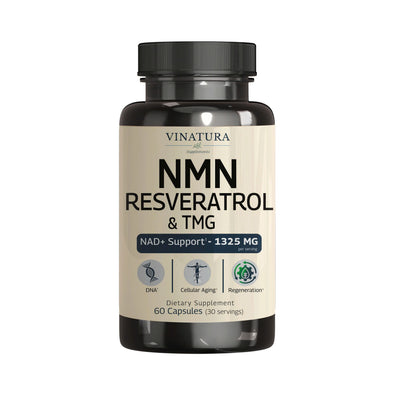
NMNH, Nicotinamide Riboside & TMG contains NMNH, nicotinamide riboside and TMG (trimethylglycine) in a 2-capsule serving, 60 capsules per bottle. The studies above did not test this product, and none of them combined NR with NMNH or TMG.
Frequently asked questions
Is NR the same as niacin? NR is a form of vitamin B3, like nicotinic acid and nicotinamide, but a different molecule. In a 140-person trial it did not cause the flushing typical of nicotinic acid.
How much NR did studies use? Most trials used 1,000 mg a day; doses ranged from 100 to 3,000 mg a day, and 1,000 mg a day was tested for up to a year. These are study amounts, not recommendations; follow your product label and ask a healthcare professional.
Does NR raise NAD+ in muscle? Muscle NAD+ itself did not rise in two trials; three found rises in related compounds such as NAAD.
References
- Airhart SE, et al. An open-label, non-randomized study of the pharmacokinetics of the nutritional supplement nicotinamide riboside (NR) and its effects on blood NAD+ levels in healthy volunteers. PLoS One. 2017;12(12):e0186459. doi:10.1371/journal.pone.0186459
- Trammell SA, et al. Nicotinamide riboside is uniquely and orally bioavailable in mice and humans. Nat Commun. 2016;7:12948. doi:10.1038/ncomms12948
- Conze D, Brenner C, Kruger CL. Safety and metabolism of long-term administration of NIAGEN (nicotinamide riboside chloride) in a randomized, double-blind, placebo-controlled clinical trial of healthy overweight adults. Sci Rep. 2019;9(1):9772. doi:10.1038/s41598-019-46120-z
- Martens CR, et al. Chronic nicotinamide riboside supplementation is well-tolerated and elevates NAD+ in healthy middle-aged and older adults. Nat Commun. 2018;9(1):1286. doi:10.1038/s41467-018-03421-7
- Dollerup OL, et al. A randomized placebo-controlled clinical trial of nicotinamide riboside in obese men: safety, insulin-sensitivity, and lipid-mobilizing effects. Am J Clin Nutr. 2018;108(2):343–353. doi:10.1093/ajcn/nqy132
- Dollerup OL, et al. Nicotinamide riboside does not alter mitochondrial respiration, content or morphology in skeletal muscle from obese and insulin-resistant men. J Physiol. 2020;598(4):731–754 (published online 2019). doi:10.1113/JP278752
- Dollerup OL, et al. Effects of nicotinamide riboside on endocrine pancreatic function and incretin hormones in nondiabetic men with obesity. J Clin Endocrinol Metab. 2019;104(11):5703–5714. doi:10.1210/jc.2019-01081
- Remie CME, et al. Nicotinamide riboside supplementation alters body composition and skeletal muscle acetylcarnitine concentrations in healthy obese humans. Am J Clin Nutr. 2020;112(2):413–426. doi:10.1093/ajcn/nqaa072
- Elhassan YS, et al. Nicotinamide riboside augments the aged human skeletal muscle NAD+ metabolome and induces transcriptomic and anti-inflammatory signatures. Cell Rep. 2019;28(7):1717–1728.e6. doi:10.1016/j.celrep.2019.07.043
- Stocks B, et al. Nicotinamide riboside supplementation does not alter whole-body or skeletal muscle metabolic responses to a single bout of endurance exercise. J Physiol. 2021;599(5):1513–1531. doi:10.1113/JP280825
- Lapatto HAK, et al. Nicotinamide riboside improves muscle mitochondrial biogenesis, satellite cell differentiation, and gut microbiota in a twin study. Sci Adv. 2023;9(2):eadd5163. doi:10.1126/sciadv.add5163
- McDermott MM, et al. Nicotinamide riboside for peripheral artery disease: the NICE randomized clinical trial. Nat Commun. 2024;15(1):5046. doi:10.1038/s41467-024-49092-5
- Wang DD, et al. Safety and tolerability of nicotinamide riboside in heart failure with reduced ejection fraction. JACC Basic Transl Sci. 2022;7(12):1183–1196. doi:10.1016/j.jacbts.2022.06.012
- Ahmadi A, et al. Randomized crossover clinical trial of coenzyme Q10 and nicotinamide riboside in chronic kidney disease. JCI Insight. 2023;8(11):e167274. doi:10.1172/jci.insight.167274
- Norheim KL, et al. Effect of nicotinamide riboside on airway inflammation in COPD: a randomized, placebo-controlled trial. Nat Aging. 2024;4(12):1772–1781. doi:10.1038/s43587-024-00758-1
- Lin Y, et al. Nicotinamide riboside combined with exercise to treat hypertension in middle-aged and older adults: a pilot randomized clinical trial. GeroScience. 2025;47(6):6895–6908. doi:10.1007/s11357-025-01815-2
- Orr ME, et al. A randomized placebo-controlled trial of nicotinamide riboside in older adults with mild cognitive impairment. GeroScience. 2024;46(1):665–682 (published online 2023). doi:10.1007/s11357-023-00999-9
- Wu CY, et al. Cognitive and Alzheimer's disease biomarker effects of oral nicotinamide riboside (NR) supplementation in older adults with subjective cognitive decline and mild cognitive impairment. Alzheimers Dement (N Y). 2025;11(1):e70023. doi:10.1002/trc2.70023
- Martens CR, et al. A phase-II randomized controlled pilot study of nicotinamide riboside supplementation in older adults with amnestic mild cognitive impairment. Alzheimers Dement. 2026;22(7):e71605. doi:10.1002/alz.71605
- Wu CY, et al. Effects of nicotinamide riboside on NAD+ levels, cognition, and symptom recovery in long-COVID: a randomized controlled trial. EClinicalMedicine. 2025;89:103633. doi:10.1016/j.eclinm.2025.103633
- Brakedal B, et al. The NADPARK study: a randomized phase I trial of nicotinamide riboside supplementation in Parkinson's disease. Cell Metab. 2022;34(3):396–407.e6. doi:10.1016/j.cmet.2022.02.001
- Berven H, et al. NR-SAFE: a randomized, double-blind safety trial of high dose nicotinamide riboside in Parkinson's disease. Nat Commun. 2023;14(1):7793. doi:10.1038/s41467-023-43514-6
- Brakedal B, Skeie GO, Derad C, et al. Nicotinamide riboside for patients with early-stage Parkinson disease: the NOPARK randomized clinical trial. JAMA. Published online October 8, 2026. doi:10.1001/jama.2026.18828
- Shoji M, et al. Nicotinamide riboside supplementation benefits in patients with Werner syndrome: a double-blind randomized crossover placebo-controlled trial. Aging Cell. 2025;24(8):e70093. doi:10.1111/acel.70093
- Lin KY, et al. Safety and efficacy of individualised exercise and NAD+ precursor supplementation in patients with Friedreich's ataxia in the USA: a single-centre, 2 × 2 factorial, randomised controlled trial. Lancet Neurol. 2026;25(5):469–481. doi:10.1016/S1474-4422(26)00082-7
- Christen S, et al. The differential impact of three different NAD+ boosters on circulatory NAD and microbial metabolism in humans. Nat Metab. 2026;8(1):62–73. doi:10.1038/s42255-025-01421-8
- Prokopidis K, et al. The effect of nicotinamide mononucleotide and riboside on skeletal muscle mass and function: a systematic review and meta-analysis. J Cachexia Sarcopenia Muscle. 2025;16(3):e13799. doi:10.1002/jcsm.13799
- Nanga RPR, et al. Acute nicotinamide riboside supplementation increases human cerebral NAD+ levels in vivo. Magn Reson Med. 2024;92(6):2284–2293. doi:10.1002/mrm.30227
- Gao Y, et al. Domain-specific effects of NAD precursors on fatigue and functional performance: a systematic review and network meta-analysis. Front Nutr. 2026;13:1890335. doi:10.3389/fnut.2026.1890335
- Maric T, et al. A bioluminescent-based probe for in vivo non-invasive monitoring of nicotinamide riboside uptake reveals a link between metastasis and NAD+ metabolism. Biosens Bioelectron. 2023;220:114826 (published online 2022). doi:10.1016/j.bios.2022.114826
- EFSA Panel on Nutrition, Novel Foods and Food Allergens (NDA). Safety of nicotinamide riboside chloride as a novel food pursuant to Regulation (EU) 2015/2283 and bioavailability of nicotinamide from this source, in the context of Directive 2002/46/EC. EFSA J. 2019;17(8):e05775. doi:10.2903/j.efsa.2019.5775
- EFSA Panel on Nutrition, Novel Foods and Food Allergens (NDA), Turck D, et al. Extension of use of nicotinamide riboside chloride as a novel food pursuant to Regulation (EU) 2015/2283. EFSA J. 2021;19(11):e06843. doi:10.2903/j.efsa.2021.6843
- European Food Safety Authority. Overview on Tolerable Upper Intake Levels as derived by the Scientific Committee on Food (SCF) and the EFSA Panel on Dietetic Products, Nutrition and Allergies (NDA). Version 11, August 2025. efsa.europa.eu
- U.S. Food and Drug Administration. Agency response letter, GRAS Notice No. GRN 000635 (nicotinamide riboside chloride). August 3, 2016. fda.gov
- U.S. Food and Drug Administration. Submitted 75-day premarket notifications for new dietary ingredients. Content current as of July 10, 2026; read November 5, 2026. fda.gov
- ClinicalTrials.gov. NCT03568968 (NOPARK); NCT03821623 (blood pressure trial); NCT07782671 (PAD phase 3); NCT05703074 (long COVID factorial trial); NCT03562468 (cognition, mood and sleep trial); NCT05589766 (N-DOSE, Parkinson's). Records read November 5, 2026. clinicaltrials.gov
Editorial note: This article reviews published research for educational purposes. It does not establish the effects or safety of any specific supplement, including Vinatura products, and is not medical advice. Written by Vinatura Editorial Team. Last reviewed November 2026.
Author
Product Disclaimer
Including an ingredient or study does not evaluate, endorse, or recommend any Vinatura product or any third-party product. Some ingredients discussed may not be used in any Vinatura product.
The content of the articles has not been evaluated by the Food and Drug Administration (FDA) and is not intended to promote or endorse any specific product. Any products sold on this website are not intended to diagnose, treat, cure, or prevent any disease.
Opinions and Endorsements
Any claims, statements, or opinions expressed in the articles are those of the author(s) and do not necessarily reflect the views or opinions of the manufacturers of the dietary supplement products. The products sold on this website are separate from the content of the articles and are not directly endorsed or associated with the information presented here.
Liability Disclaimer
The author(s) of the articles, website, and manufacturers of the dietary supplement products do not assume any liability for any potential consequences arising from the use of the information provided in the articles. Ingredient effects, dosages, and safety vary by individual, formulation, and context; some ingredients interact with medications or may be unsuitable during pregnancy or lactation. It is recommended that individuals consult with a qualified healthcare professional before making any dietary or lifestyle changes, including the use of dietary supplements.
Product Usage
Please refer to the product labels and packaging for specific usage instructions and guidelines for the dietary supplement products sold on this website.
Customer Support
For any concerns or questions regarding the dietary supplement products, please contact our customer support team, who will be more than happy to assist you.


Leave a Comment
Be the first to comment.
What do you think?