

NMN Supplements: What Human Trials Show, and What They Don't
Quick answer. NMN (beta-nicotinamide mononucleotide) is a molecule the body uses to make NAD+, a coenzyme involved in energy metabolism. In small human trials lasting up to 24 weeks, 250 to 2,000 mg a day of NMN raised blood levels of NAD+ or related compounds in nearly every trial that measured them. Effects on outcomes people notice or doctors measure, such as insulin sensitivity, walking tests, sleep and blood pressure, were mixed, and pooled analyses found no clear benefit for blood sugar or cholesterol. Short-term trials reported side effects at rates similar to placebo, but no trial has lasted longer than 24 weeks.
What NMN is
NMN is a nucleotide that cells make from nicotinamide, a form of vitamin B3, and turn into NAD+ (nicotinamide adenine dinucleotide), a coenzyme used in energy metabolism and by enzymes involved in DNA repair and stress responses. NAD+ levels in some human tissues are thought to fall with age, which is why NMN is studied, although a 2026 study of seven cohorts found no age-related change in whole-blood NAD+.
Foods such as edamame, broccoli and milk contain under about 2 mg per 100 g; a normal diet supplies an estimated 2 mg a day or less. Supplements and trials use purified NMN, usually the beta (β) form, made for example by enzymes; a pharmaceutical-grade tablet, MIB-626, has also been tested. NMN is not the same as nicotinamide riboside (NR), nicotinamide or NMNH (a reduced form).
U.S. status. In late 2022, FDA said NMN could not be sold as a dietary supplement because it had first been authorized for investigation as a new drug. On September 29, 2025, answering a trade-group petition, FDA concluded that NMN is not excluded from the definition of a dietary supplement, because it was sold as a U.S. supplement first, as early as 2017. It is a new dietary ingredient requiring a premarket notification, and FDA's acknowledgment of one is not a safety finding. FDA set aside its 2022 determinations in December 2025; we found no later change as of October 24, 2026.
What human studies have tested
All trials gave NMN by mouth and compared it with placebo unless noted. † = the paper discloses company funding, co-sponsorship or company-employed authors. ‡ = NMN supplied by its manufacturer. § = results posted on ClinicalTrials.gov, not published in a journal or peer-reviewed.
| Study | Who took part | Form and daily amount | Duration | What was measured | Result |
|---|---|---|---|---|---|
| Yoshino et al., 2021 ‡ | 25 postmenopausal women with prediabetes and overweight or obesity (13 NMN, 12 placebo) | Capsules, 250 mg | 10 weeks | Muscle insulin sensitivity (clamp test), body composition, lipids, strength | Muscle insulin sensitivity rose 25% (no change with placebo). No change in liver or fat-tissue insulin sensitivity, body fat, blood pressure, lipids or strength |
| Liao et al., 2021 ‡ | 48 recreational runners (40 men, 8 women) in training | 300, 600 or 1,200 mg | 6 weeks | Exercise test (oxygen uptake) | Ventilatory-threshold measures improved more at 600 and 1,200 mg than placebo. VO2max and peak power did not differ |
| Igarashi et al., 2022 †‡ | 42 healthy men aged 65+; 12-week data for only 20 after a supplier mix-up | 250 mg | 12 weeks | Blood NAD+, muscle mass, gait speed, grip, insulin markers | NAD+ rose. "Nominally significant" gains in gait speed and left-hand grip (and in chair-stand change at 6 weeks), with no correction for multiple tests. No change in muscle mass or insulin markers |
| Kim et al., 2022 † | 108 older adults, morning or afternoon dosing | 250 mg | 12 weeks | Sleep quality, fatigue, physical tests | No difference from placebo in sleep quality. Sit-to-stand improved in all groups, including placebo |
| Huang, 2022 † | 66 healthy adults aged 40–65 (31 analyzed per group) | 300 mg | 60 days | Blood NAD/NADH, 6-minute walk, SF-36 survey, HOMA-IR | Abstract reports within-group rises; the paper's tables show no significant difference from placebo for NAD/NADH, walking or SF-36 |
| Yi et al., 2023 † | 80 healthy adults aged 40–65 (20 per group), India | 300, 600 or 900 mg | 60 days | Blood NAD+, 6-minute walk, HOMA-IR, SF-36 | NAD+ rose in all NMN groups, most at 600–900 mg. Walking distance and SF-36 improved more than placebo. HOMA-IR did not differ |
| Fukamizu et al., 2022 † | 31 healthy adults aged 20–65 (16 NMN, 15 placebo) | 1,250 mg | 4 weeks | Safety labs, body composition | No changes beyond normal variation; no severe adverse events |
| Pencina et al., 2023 † | 30 adults aged 45+ with overweight or obesity (21 NMN, 9 placebo) | MIB-626 tablets, 2,000 mg (1,000 mg twice daily) | 28 days | Weight, blood pressure, lipids, insulin sensitivity, liver fat, muscle performance | Weight −1.9 kg, diastolic pressure −7 mmHg, lower total and LDL cholesterol vs placebo. No change in insulin sensitivity, liver fat, strength or aerobic capacity |
| Akasaka et al., 2023 †‡ | 14 men aged 65+ (mean 81) with diabetes and weak grip or slow walking | 250 mg | 24 weeks | Safety, grip strength, walking speed | Well tolerated; no improvement in grip or walking speed |
| Katayoshi et al., 2023 † | 36 healthy middle-aged adults | 250 mg | 12 weeks | NAD+ metabolites, arterial stiffness | Arterial stiffness trended lower, not significantly |
| Morifuji et al., 2024 † | 60 older adults | 250 mg | 12 weeks | Stepping test (main outcome), 4-meter walk, NAD+, sleep | Main outcome no different from placebo. Faster 4-meter walk and better sleep scores than placebo |
| Christen et al., 2026 † | 65 healthy adults, open label | NMN 1,000 mg vs NR 1,000 mg vs nicotinamide 500 mg vs placebo | 14 days | Blood NAD+ | NMN and NR raised NAD+ by similar amounts; nicotinamide did not |
| Wakabayashi et al., 2026 † | 14 healthy young men, crossover | One 250 mg tablet, under the tongue vs swallowed | Single dose, 60 minutes | Blood NMN, NAD+ and breakdown products | No difference in blood NMN or NAD+; two breakdown products (2PY, 4PY) rose faster sublingually |
| Washington University trial NCT04571008 § | 56 adults aged 45–75 with prediabetes and overweight or obesity; 40 completed (32 women) | 300 or 450 mg | 16 weeks | Muscle insulin sensitivity (clamp test), glucose tolerance | Average gain in muscle insulin sensitivity no larger with NMN than with placebo (13.5 vs 19.0 units, with wide spread); glucose tolerance not improved |
| Zhang et al., 2025 (meta-analysis) | 12 trials, 513 adults | Varied | Varied | NAD+, glucose, lipids | NAD+ rose; most clinical outcomes no different from control. All 12 trials had some concerns or high risk of bias |
| Chen et al., 2025 (meta-analysis) | 8 trials, 342 middle-aged and older adults | 250–2,000 mg | 14 days–12 weeks | Glucose, insulin, HbA1c, HOMA-IR, lipids | No significant benefit |
| Prokopidis et al., 2025 (meta-analysis) | Trials in adults with mean age over 60 | Varied | Varied | Muscle mass, grip, gait speed, chair stands | No significant effect |
| Wang et al., 2025 (meta-analysis) | 9 trials, 412 middle-aged and older adults | Varied | Varied | Muscle function, liver enzymes, HOMA-IR | Gait speed improved; ALT (a liver enzyme) lower |
| Zhang et al., 2026 (meta-analysis) | 10 trials, 349 adults | Varied | Varied | Resting blood pressure | Diastolic −2.15 mmHg. Systolic not significant overall; −3.94 mmHg in people 60 and older |
| Yang et al., 2026 (meta-analysis) | 15 trials (10 for safety) of NMN or NMN-related products | 250–2,000 mg | 14 days–24 weeks | Adverse events, liver enzymes, metabolic markers | No increase in adverse events or liver enzymes. No effect on weight, glucose, HbA1c, lipids or systolic pressure; diastolic slightly lower |
What the findings suggest
Blood NAD+: consistent. Nearly every trial that measured blood NAD+ or its metabolites found an increase, as did a 2026 systematic review of 33 human studies of NAD+ precursors. Rises varied widely between people on the same dose, and muscle NAD+ did not change in the prediabetes trial.
Insulin sensitivity and blood sugar: one positive trial, not confirmed. In the 25-woman prediabetes trial, a critic noted that baseline liver fat differed between groups (6.3% vs 14.8%); the authors replied that muscle insulin sensitivity was equal at the start. A larger 16-week trial from the same university has posted results on ClinicalTrials.gov that are not yet peer-reviewed or published in a journal: at 300 or 450 mg a day, the average gain in muscle insulin sensitivity was no larger than with placebo, and glucose tolerance did not improve. Three of four meta-analyses found no effect on blood sugar or insulin resistance; one reported lower insulin resistance, mostly at low doses.
Walking and physical function: mixed. Walking improved in some trials (Yi; Morifuji, as a secondary outcome), nominally in one with a dosing error (Igarashi), and not in others (Akasaka; Huang). The two 2025 muscle meta-analyses disagree on gait speed. In runners, some ventilatory-threshold measures improved but VO2max did not.
Sleep: conflicting. The largest trial, in 108 older adults, found no difference from placebo in sleep quality; a 60-person trial funded by a company that employed three of its authors found better sleep scores.
Blood pressure and cholesterol: small, uncertain signals. One 28-day trial at 2,000 mg lowered diastolic pressure and LDL cholesterol. Pooled analyses suggest diastolic pressure falls by about 2 mmHg, with no change in lipids.
Where the evidence is limited or conflicting
- Small, short and commercial. Trials enrolled 11 to 108 people and lasted up to 24 weeks; none measured lifespan or long-term aging outcomes. Every published trial in our table has a disclosed industry link: 11 of the 13 had company funding, co-sponsorship or company-employed authors, and the other 2 used NMN supplied by its maker. A 2025 meta-analysis concluded that "an exaggeration of the benefits of NMN supplementation may exist in the field."
- Unreported trials. On ClinicalTrials.gov we found nine completed oral NMN trials whose results we could not find in a journal; two have posted results on the registry.
- Biomarkers vs outcomes. In 42 adults hospitalized with COVID-19 and kidney injury, 2,000 mg a day for 14 days raised blood NAD+ but did not change kidney or inflammation markers.
- A possible exercise trade-off. In 11 untrained young men, 1,200 mg a day for 7 days dampened muscle inflammation signals after a workout but abolished the 171% rise in muscle mitochondrial content seen without NMN; this needs repeating.
What buyers say, and what the research shows
Our team read 2,040 public Amazon reviews of 17 NMN products, including a listing from our sister brand, Therexa, collected in September 2026 from the reviews Amazon shows most prominently. We count a theme as common on a product when it makes up at least 10% of that product's weighted reviews (for complaints, of its 1- to 3-star reviews). Reviews show what buyers believe or report; they cannot show whether a product caused any change.
Belief: NMN should noticeably increase energy. Energy was a main reason for buying on 15 of 17 products, and "felt nothing" was a common complaint on 16 of 17. That fits the research: few trials measured how people feel, and those that did found mixed results for sleep and the SF-36 health survey. In two industry-funded trials, people whose blood NAD+ rose more tended to walk faster (and, in one, to score higher on the SF-36), but these were correlations, not tests of cause.
Belief: any effect takes weeks to appear. Comments that any change took weeks were common on 16 of 17 products. No trial measured when people start to notice anything. Blood NAD+ metabolites were higher by day 8 at 1,000 or 2,000 mg a day, while physical-test differences, where seen, appeared after 4 to 12 weeks; the research supports neither "results in days" nor any fixed number of weeks.
Belief: switching from NR or NAD+ to NMN makes a difference. Switching from NR, NAD+ or another NMN product was common on 9 of 17 products. In the only direct comparison, NMN and NR at 1,000 mg a day raised blood NAD+ similarly over 14 days; no trial has compared their health effects.
Belief: some products may not contain real NMN. Doubt about authenticity was common on 8 of 17 products. A 2025 lab test of 8 commercial NMN supplements found wide variation in alpha and beta forms, including undeclared or inaccurately labeled ingredients. A certificate of analysis for the specific lot, from a lab using a validated method, can show what a product contains; taste, color and reviews cannot.
Safety
- Adverse events in trials. Rates were similar to placebo, with no serious events linked to NMN; a 2026 meta-analysis of 10 trials found no increase in overall, serious or treatment-ending adverse events or in the liver enzymes ALT and AST.
- Highest doses and longest use studied. 2,000 mg a day for up to 28 days, and 250 mg a day for 24 weeks (in 14 men); we found no published trial longer than 24 weeks, or longer than 6 weeks at 1,000 mg a day or more.
- Who was studied. Adults, mostly healthy; some trials excluded people with a history of cancer, heart failure or heart attack. We found no trial in pregnant or breastfeeding women, children or teenagers.
- Medicines. A PubMed search on October 24, 2026 found no human studies or case reports of NMN interactions with medicines; that does not mean interactions are absent.
- Open questions. NMN raises NAD+ breakdown products such as 2PY and 4PY, which a 2023 review (co-written by a scientist at an NR company) says "might not be innocuous," and a 2020 systematic review listed possible risks of raising NAD+, including toxic metabolites, tumor growth and cell senescence. Human trials have not tested these concerns.
- Official assessments. No official upper limit exists for NMN. In 2026, the European Food Safety Authority's nutrition panel judged one synthetic β-NMN ingredient safe for adults, excluding pregnant and breastfeeding women, at the use its maker proposed: up to 300 mg a day in food supplements. It counted NMN as a source of niacin, and in the rat study it relied on, it judged reproductive-organ changes at the highest dose to be adverse. The U.S. adult upper limit of 35 mg a day applies to supplemental niacin; NIH calls NMN a "niacin-like" compound not labeled as a niacin source.
Follow the label of the product you use. Ask a healthcare professional before using NMN if you are pregnant or breastfeeding, take prescription medicines, or have a medical condition.
What research does not establish
- That NMN slows aging or affects lifespan in people.
- That higher blood NAD+ from NMN leads to more energy or better health outcomes.
- That NMN is safe beyond 24 weeks, or at 1,000 mg a day or more beyond 6 weeks.
- That NMN combined with resveratrol or TMG works differently from NMN alone; no human trial has tested these combinations.
How we reviewed the evidence
On October 24, 2026, we searched PubMed for randomized trials and systematic reviews of NMN in people and for safety reports, drug interactions, NMN vs NR, product-content tests and NMN with resveratrol or betaine (TMG). From 61 unique records, we included 17 randomized trials of oral NMN and 8 systematic reviews or meta-analyses, excluding animal and lab studies, non-randomized studies, most post hoc analyses, intravenous NMN, NMNH, multi-ingredient products and protocols. We read all abstracts, plus full texts or publisher pages for numbers and funding. On October 25 we searched ClinicalTrials.gov for completed NMN trials and their publications, and read EFSA's 2026 opinion on β-NMN. For U.S. status, we read FDA's 2025 petition response, trade reporting on its later letters and NIH's niacin fact sheet. Buyer beliefs come from our team's September 2026 review analysis. Vinatura did not run any trials.
Vinatura Research Perspective
We asked four questions of each study: which form (supplement or pharmaceutical grade), what dose, in whom, and whether the outcome was a blood marker or something a person would notice. Three patterns stood out. First, dose: six of the 13 published trials in our table used 250 mg a day, and only seven of the trials we reviewed (four of them in our table) tested 1,000 mg a day or more, the longest for 6 weeks; a completed 10-week trial at 2,000 mg a day has not reported. Second, replication: the blood NAD+ rise repeats, while positive findings on insulin sensitivity, aerobic capacity and sleep each rest on one trial or conflict with another; the original insulin group's larger follow-up, so far reported only on a trial registry, did not reproduce its result. Third, every published trial in our table has commercial ties, and at least nine completed trials have not appeared in a journal. We also found that the usual rationale for pairing NMN with TMG has only indirect support: in small single-dose studies, 100–300 mg of nicotinamide lowered blood betaine (the methyl donor TMG supplies) and raised homocysteine within hours, but no trial has measured this with NMN or tested whether adding TMG changes anything. Our assessment: evidence is strong that oral NMN raises blood NAD+ and is well tolerated for weeks to months in healthy adults; limited and inconsistent for insulin sensitivity, walking, sleep and blood pressure; and insufficient for energy, aging or longevity claims. Publication of the completed trials, results from a 24-week trial of 2,000 mg a day of MIB-626 in 156 adults with diabetic kidney disease, or an independently funded trial of a year or more with pre-registered clinical outcomes would change that assessment.
Where this ingredient appears in Vinatura products
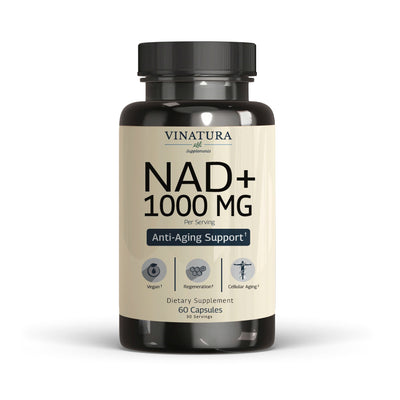
NMN Resveratrol TMG contains 1,000 mg β-NMN, 200 mg TMG (as betaine anhydrous) and 125 mg trans-resveratrol per two-capsule serving. The studies above did not test this product.
Frequently asked questions
Is NMN legal in U.S. dietary supplements? Since FDA's September 2025 decision, which reversed its 2022 position, NMN is no longer excluded from dietary supplements. As a new dietary ingredient it generally requires a premarket notification, and FDA's acknowledgment of one is not a safety finding.
How much NMN did studies use? The most common amount in published trials was 250 mg a day; the highest, 2,000 mg a day, was tested for up to 28 days. These are study amounts, not recommendations: follow your product's label and ask a healthcare professional if you have a medical condition or take medicines.
Is NMN the same as NR or NAD+? No. They are related compounds in the same pathway: cells can make NMN from NR and convert NMN back to NR, and NAD+ is the end product.
References
- Yoshino M, et al. Nicotinamide mononucleotide increases muscle insulin sensitivity in prediabetic women. Science. 2021;372(6547):1224–1229. doi:10.1126/science.abe9985
- Brenner C. Comment on "Nicotinamide mononucleotide increases muscle insulin sensitivity in prediabetic women". Science. 2021;373(6554):eabj1696. doi:10.1126/science.abj1696
- Klein S, et al. Response to comment on "Nicotinamide mononucleotide increases muscle insulin sensitivity in prediabetic women". Science. 2021;373(6554):eabj7375. doi:10.1126/science.abj7375
- ClinicalTrials.gov. NCT04571008: Effect of nicotinamide mononucleotide (NMN) supplementation on organ system biology (Washington University School of Medicine). Results first posted March 11, 2026; record read October 25, 2026. clinicaltrials.gov
- Liao B, et al. Nicotinamide mononucleotide supplementation enhances aerobic capacity in amateur runners: a randomized, double-blind study. J Int Soc Sports Nutr. 2021;18(1):54. doi:10.1186/s12970-021-00442-4
- Igarashi M, et al. Chronic nicotinamide mononucleotide supplementation elevates blood nicotinamide adenine dinucleotide levels and alters muscle function in healthy older men. NPJ Aging. 2022;8(1):5. doi:10.1038/s41514-022-00084-z
- Kim M, et al. Effect of 12-week intake of nicotinamide mononucleotide on sleep quality, fatigue, and physical performance in older Japanese adults: a randomized, double-blind placebo-controlled study. Nutrients. 2022;14(4):755. doi:10.3390/nu14040755
- Okabe K, et al. Oral administration of nicotinamide mononucleotide is safe and efficiently increases blood nicotinamide adenine dinucleotide levels in healthy subjects. Front Nutr. 2022;9:868640. doi:10.3389/fnut.2022.868640
- Huang H. A multicentre, randomised, double blind, parallel design, placebo controlled study to evaluate the efficacy and safety of Uthever (NMN supplement), an orally administered supplementation in middle aged and older adults. Front Aging. 2022;3:851698. doi:10.3389/fragi.2022.851698
- Yi L, et al. The efficacy and safety of β-nicotinamide mononucleotide (NMN) supplementation in healthy middle-aged adults: a randomized, multicenter, double-blind, placebo-controlled, parallel-group, dose-dependent clinical trial. GeroScience. 2023;45(1):29–43. doi:10.1007/s11357-022-00705-1
- Kuerec AH, et al. Towards personalized nicotinamide mononucleotide (NMN) supplementation: nicotinamide adenine dinucleotide (NAD) concentration. Mech Ageing Dev. 2024;218:111917. doi:10.1016/j.mad.2024.111917
- Fukamizu Y, et al. Safety evaluation of β-nicotinamide mononucleotide oral administration in healthy adult men and women. Sci Rep. 2022;12(1):14442. doi:10.1038/s41598-022-18272-y
- Pencina KM, et al. MIB-626, an oral formulation of a microcrystalline unique polymorph of β-nicotinamide mononucleotide, increases circulating nicotinamide adenine dinucleotide and its metabolome in middle-aged and older adults. J Gerontol A Biol Sci Med Sci. 2023;78(1):90–96. doi:10.1093/gerona/glac049
- Pencina KM, et al. Nicotinamide adenine dinucleotide augmentation in overweight or obese middle-aged and older adults: a physiologic study. J Clin Endocrinol Metab. 2023;108(8):1968–1980. doi:10.1210/clinem/dgad027
- Pencina KM, et al. Oral MIB-626 (β nicotinamide mononucleotide) safely raises blood nicotinamide adenine dinucleotide levels in hospitalized patients with COVID-19 and acute kidney injury: a randomized controlled trial. FASEB Bioadv. 2025;7(8):e70011. doi:10.1096/fba.2025-00014
- Chandra MS, et al. Nicotinamide adenine dinucleotide augmentation in diabetic kidney disease: randomized trial study protocol. Kidney Int Rep. 2026;11(10):106700. doi:10.1016/j.ekir.2026.106700
- Akasaka H, et al. Effects of nicotinamide mononucleotide on older patients with diabetes and impaired physical performance: a prospective, placebo-controlled, double-blind study. Geriatr Gerontol Int. 2023;23(1):38–43. doi:10.1111/ggi.14513
- Katayoshi T, et al. Nicotinamide adenine dinucleotide metabolism and arterial stiffness after long-term nicotinamide mononucleotide supplementation: a randomized, double-blind, placebo-controlled trial. Sci Rep. 2023;13(1):2786. doi:10.1038/s41598-023-29787-3
- Morifuji M, et al. Ingestion of β-nicotinamide mononucleotide increased blood NAD levels, maintained walking speed, and improved sleep quality in older adults in a double-blind randomized, placebo-controlled study. GeroScience. 2024;46(5):4671–4688. doi:10.1007/s11357-024-01204-1
- Christen S, et al. The differential impact of three different NAD+ boosters on circulatory NAD and microbial metabolism in humans. Nat Metab. 2026;8(1):62–73. doi:10.1038/s42255-025-01421-8
- Wakabayashi J, et al. Sublingual NMN administration increases early circulating terminal catabolites 2PY and 4PY compared with oral administration in healthy adult men. Sci Rep. 2026;16(1). doi:10.1038/s41598-026-57552-9
- Yang DL, et al. Anti-inflammatory effects of nicotinamide mononucleotide (NMN) in human skeletal muscle after BFR-exercise. J Int Soc Sports Nutr. 2026;23(1):2632284. doi:10.1080/15502783.2026.2632284
- Zhang J, et al. Efficacy of oral nicotinamide mononucleotide supplementation on glucose and lipid metabolism for adults: a systematic review with meta-analysis on randomized controlled trials. Crit Rev Food Sci Nutr. 2025;65(22):4382–4400. doi:10.1080/10408398.2024.2387324
- Chen F, et al. Effects of nicotinamide mononucleotide on glucose and lipid metabolism in adults: a systematic review and meta-analysis of randomised controlled trials. Curr Diab Rep. 2025;25(1):4. doi:10.1007/s11892-024-01557-z
- Prokopidis K, et al. The effect of nicotinamide mononucleotide and riboside on skeletal muscle mass and function: a systematic review and meta-analysis. J Cachexia Sarcopenia Muscle. 2025;16(3):e13799. doi:10.1002/jcsm.13799
- Wang JP, et al. Effects of nicotinamide mononucleotide supplementation on muscle and liver functions among the middle-aged and elderly: a systematic review and meta-analysis of randomized controlled trials. Curr Pharm Biotechnol. 2025;26(13):2141–2152. doi:10.2174/0113892010306242240808094303
- Zhang M, et al. Effects of nicotinamide mononucleotide supplementation on blood pressure: a systematic review and meta-analysis of randomized controlled trials. Nutrients. 2026;18(6):890. doi:10.3390/nu18060890
- Yang W, et al. Safety and metabolism-related outcomes of oral nicotinamide mononucleotide supplementation in adults: a systematic review and meta-analysis. Nutrients. 2026;18(14):2251. doi:10.3390/nu18142251
- Gallagher C, et al. NAD+ supplementation for anti-aging and wellness: a PRISMA-guided systematic review of preclinical and clinical evidence. Ageing Res Rev. 2026;116:103057. doi:10.1016/j.arr.2026.103057
- Song Q, et al. The safety and antiaging effects of nicotinamide mononucleotide in human clinical trials: an update. Adv Nutr. 2023;14(6):1416–1435. doi:10.1016/j.advnut.2023.08.008
- Trętowicz MM, et al. Human whole-blood NAD+ levels do not vary with age or lifestyle interventions. Nat Metab. 2026;8(6):1282–1290. doi:10.1038/s42255-026-01537-5
- He JJ, et al. High level expression of nicotinamide nucleoside kinase from Saccharomyces cerevisiae and its purification and immobilization by one-step method. Front Bioeng Biotechnol. 2023;11:1134152. doi:10.3389/fbioe.2023.1134152
- Hoei CS, et al. Aqueous LC-MS/MS quantification of α-/β-nicotinamide mononucleotide in dietary supplements using a pentabromophenyl column. Anal Chim Acta. 2025;1386:345027. doi:10.1016/j.aca.2025.345027
- Dhuguru J, et al. Defining NAD(P)(H) catabolism. Nutrients. 2023;15(13):3064. doi:10.3390/nu15133064
- Braidy N, Liu Y. NAD+ therapy in age-related degenerative disorders: a benefit/risk analysis. Exp Gerontol. 2020;132:110831. doi:10.1016/j.exger.2020.110831
- Sun WP, et al. Comparison of the effects of nicotinic acid and nicotinamide degradation on plasma betaine and choline levels. Clin Nutr. 2017;36(4):1136–1142. doi:10.1016/j.clnu.2016.07.016
- Sun WP, et al. Excess nicotinamide inhibits methylation-mediated degradation of catecholamines in normotensives and hypertensives. Hypertens Res. 2012;35(2):180–185. doi:10.1038/hr.2011.151
- EFSA Panel on Nutrition, Novel Foods and Food Allergens (NDA), Turck D, et al. Safety of beta-nicotinamide mononucleotide (β-NMN) pursuant to Regulation (EU) 2015/2283 and the bioavailability of nicotinamide from this source in the context of Directive 2002/46/EC. EFSA J. 2026;24(5):e10007. doi:10.2903/j.efsa.2026.10007
- U.S. Food and Drug Administration, Human Foods Program. Response to citizen petition, Docket No. FDA-2023-P-0872 (letter to the Natural Products Association and Alliance for Natural Health USA). September 29, 2025. regulations.gov
- NutraIngredients. FDA reinstates NDI status of NMN with new letters to ingredient players. December 9, 2025. nutraingredients.com
- National Institutes of Health, Office of Dietary Supplements. Niacin: fact sheet for health professionals. Updated November 18, 2022. ods.od.nih.gov
- ClinicalTrials.gov. Completed NMN trials without a journal publication found (records read October 25, 2026): NCT05878119, NCT04664361, NCT04862338, NCT04910061, NCT04571008, NCT05040321, NCT04817111, NCT05305677, NCT05882214. clinicaltrials.gov
Editorial note: This article reviews published research for educational purposes. It does not establish the effects or safety of any specific supplement, including Vinatura products, and is not medical advice. Written by Vinatura Editorial Team. Last reviewed October 2026.
Author
Product Disclaimer
Including an ingredient or study does not evaluate, endorse, or recommend any Vinatura product or any third-party product. Some ingredients discussed may not be used in any Vinatura product.
The content of the articles has not been evaluated by the Food and Drug Administration (FDA) and is not intended to promote or endorse any specific product. Any products sold on this website are not intended to diagnose, treat, cure, or prevent any disease.
Opinions and Endorsements
Any claims, statements, or opinions expressed in the articles are those of the author(s) and do not necessarily reflect the views or opinions of the manufacturers of the dietary supplement products. The products sold on this website are separate from the content of the articles and are not directly endorsed or associated with the information presented here.
Liability Disclaimer
The author(s) of the articles, website, and manufacturers of the dietary supplement products do not assume any liability for any potential consequences arising from the use of the information provided in the articles. Ingredient effects, dosages, and safety vary by individual, formulation, and context; some ingredients interact with medications or may be unsuitable during pregnancy or lactation. It is recommended that individuals consult with a qualified healthcare professional before making any dietary or lifestyle changes, including the use of dietary supplements.
Product Usage
Please refer to the product labels and packaging for specific usage instructions and guidelines for the dietary supplement products sold on this website.
Customer Support
For any concerns or questions regarding the dietary supplement products, please contact our customer support team, who will be more than happy to assist you.


Leave a Comment
Be the first to comment.
What do you think?