

Tongkat Ali: What Research Shows on Testosterone, Stress and Sport
Quick answer. Tongkat ali is the root of Eurycoma longifolia, a Southeast Asian tree, and most human trials have tested one standardized hot-water root extract, a branded ingredient called Physta (also called LJ100). In small trials lasting 2 weeks to 6 months, that extract raised total testosterone in men aged 50 to 70 who started with low levels, but trials in younger or healthy men gave mixed results, and sport trials mostly found no performance benefit. The main limit is that most trials were small and many were run, funded or supplied by the extract's maker; a 2022 meta-analysis found very inconsistent results and signs of publication bias. On safety, short trials reported few side effects, but in 2021 the European Food Safety Authority (EFSA) concluded that the safety of the maker's standardized root extract "has not been established under any condition of use," after DNA-damage findings in lab and rat tests.
What tongkat ali is
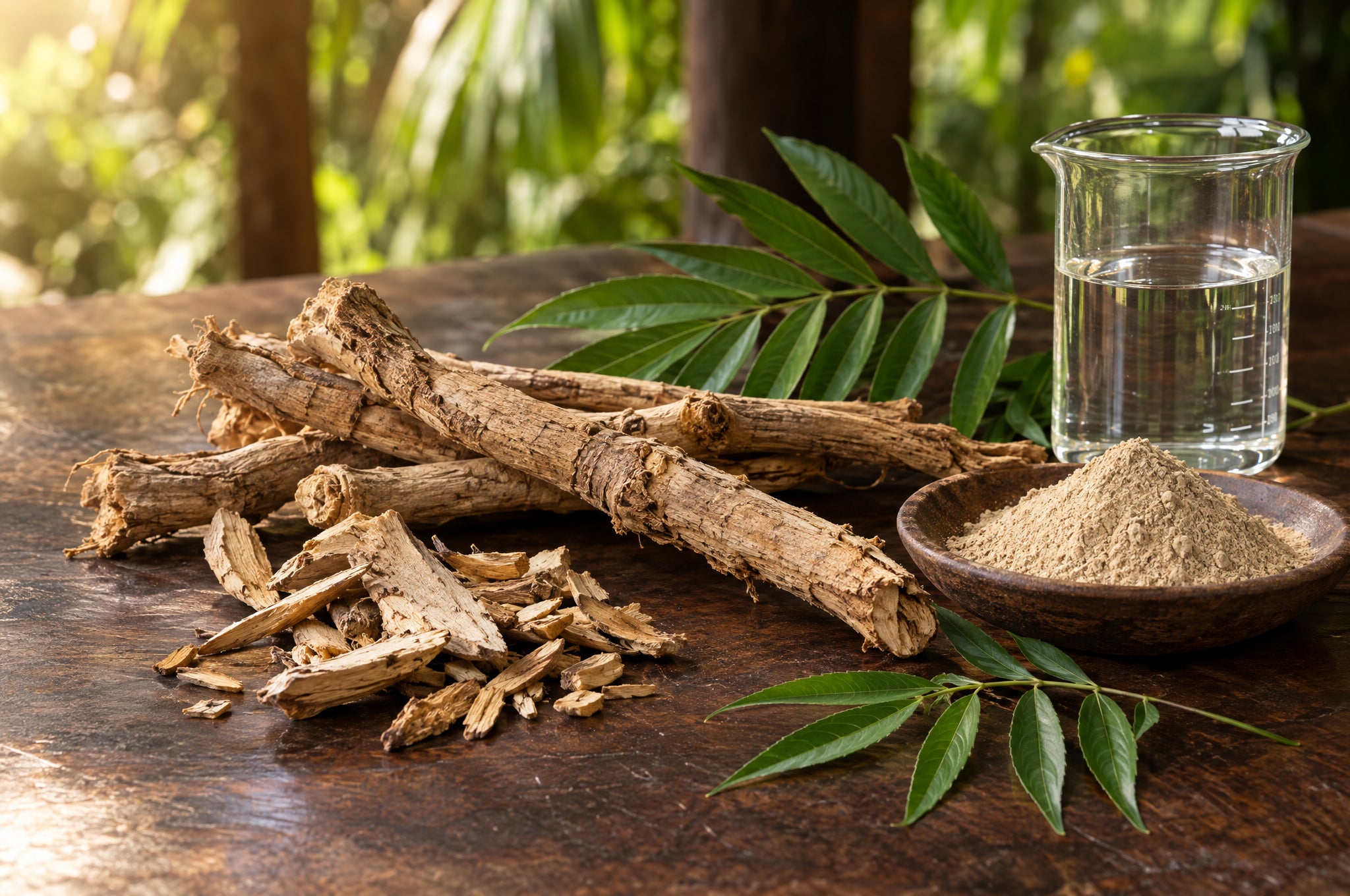
Eurycoma longifolia Jack belongs to the quassia family (Simaroubaceae). It is also called longjack, Malaysian ginseng and, in Indonesia, pasak bumi. The root is the part used. Its best-studied compounds are bitter quassinoids such as eurycomanone, along with alkaloids (canthin-6-ones) and large amounts of glycosaponins, polysaccharides and protein in water extracts.
Forms differ a lot, and results belong to the form tested:
- Standardized hot-water root extract. EFSA describes the extract submitted by its maker as dried root chips extracted with hot water, standardized to 0.8% to 1.5% eurycomanone, 40% to 65% glycosaponins, 30% to 55% polysaccharides and 22% to 45% protein, which matches a Malaysian national standard. Trial papers describe Physta with the same marker ranges; a 2018 trial paper says it is also known as LJ100 in the United States. A 2022 meta-analysis found this one extract in 7 of the 9 studies it reviewed.
- Other extracts. A propranolol interaction study used a water-based extract with about 0.03% eurycomanone, roughly 30 times less than the standardized extract's lower limit. Several trials do not name their product. Labels that state only a ratio (such as "20:1" or "200:1") say nothing about eurycomanone or other marker compounds.
- Raw root powder, coffees and multi-herb blends. We found no controlled trial of plain root powder taken by mouth, and product-testing studies show that some products sold as tongkat ali contain little or none of the plant (see Safety).
What human studies have tested
| Study | Who took part | Form and daily amount | Duration | What was measured | Result |
|---|---|---|---|---|---|
| Hormones and well-being | |||||
| Tambi & Imran 2010, uncontrolled study (Malaysia) | 350 men from couples with unexplained infertility; 75 completed 3 months | Standardized water-soluble root extract, 200 mg | 3 to 9 months | Semen volume, sperm count, motility, shape; pregnancies | All semen measures improved from baseline; 11 partners (14.7%) became pregnant. No placebo group (abstract only) |
| Tambi 2012, uncontrolled study (Malaysia) | 76 men with late-onset hypogonadism | Standardized water-soluble extract, 200 mg | 1 month | Aging Males' Symptoms (AMS) score, serum testosterone | Men with normal testosterone rose from 35.5% to 90.8%; AMS improved. No placebo group (abstract only) |
| Ismail 2012, RCT (Malaysia) | 109 men aged 30 to 55, healthy or with stable chronic conditions | Physta, 300 mg | 12 weeks | Quality of life (SF-36), erectile function (IIEF), sexual health, semen, hormones | Physical functioning and IIEF erectile function improved more than placebo; testosterone did not differ from placebo; no difference from placebo in semen measures (36 men tested), with rises only within small low-baseline subgroups. Funded by the extract's maker; two authors were its employees |
| Henkel 2014, uncontrolled pilot | 13 men and 12 women aged 57 to 72, physically active | Tongkat ali extract, 400 mg | 5 weeks | Hormones, handgrip strength | Total and free testosterone and handgrip strength rose in both sexes. No placebo group (abstract only) |
| Talbott 2013, RCT (U.S.) | 63 moderately stressed adults (32 men, 31 women) | Physta, 200 mg | 4 weeks | Mood (POMS), salivary cortisol and testosterone | Cortisol 16% lower and testosterone 37% higher than placebo; tension, anger and confusion improved; depression, vigor and fatigue did not differ. Funded by the extract's maker |
| George 2018, RCT (U.S.) | 93 moderately stressed adults aged 25 to 65 (86 analyzed) | Physta 50 mg plus a multivitamin | 12 weeks (24 for safety) | Quality of life (SF-12), mood, stress, hormones | No significant difference from placebo in any main outcome or in testosterone; some age subgroups differed |
| Chinnappan 2021, RCT (India) | 105 men aged 50 to 70 with total testosterone below 300 ng/dL | Physta, 100 or 200 mg | 12 weeks | Total and free testosterone, AMS, fatigue, other hormones | 200 mg: total testosterone 200.5 to 225.0 ng/dL vs placebo 183.0 to 177.9 (P<0.001); free testosterone did not differ from placebo; AMS and fatigue scores fell. Funded by the extract's maker; two authors were its employees |
| Chan 2021, RCT (Malaysia) | 32 healthy men, mean age 24 | Extract not named in the abstract, 600 mg | 2 weeks | Reproductive hormones | Testosterone, free testosterone and estradiol favored the extract; LH, FSH and SHBG did not change |
| Leitão 2021, RCT (Brazil) | 45 men, mean age 47, with symptoms of age-related androgen deficiency | Extract not named in the abstract, 200 mg, with or without exercise training | 6 months | Erectile function (IIEF-5), AMS, testosterone | Erectile function improved with both training and extract; largest change with the two combined |
| Leisegang 2022, meta-analysis | 5 RCTs, 232 men | Mostly Physta across the 9 reviewed studies; 2 of the 5 pooled trials were PhD theses | Varied | Total testosterone | Higher than control (SMD 1.35, 95% CI 0.57 to 2.14), very inconsistent (I² 87%), with signs of publication bias; significant in men with low testosterone, not in men with normal levels |
| Kotirum 2015, meta-analysis | 2 RCTs, 139 men | Tongkat ali extracts | 12 weeks | Erectile function (IIEF-5) | No significant difference overall (0.91 points, 95% CI −1.50 to 3.33) |
| Sport and exercise | |||||
| Muhamad 2010, placebo-controlled (Malaysia), as summarized by its authors' 2012 review | 12 recreational male athletes | 150 mg, plus 150 mg before the trial | 7 days | 20-minute running time trial | No difference from placebo in distance or physiological responses |
| Chen 2014, crossover RCT (Malaysia) | 13 male recreational athletes | Physta, 400 mg | 6 weeks per phase | Urinary testosterone:epitestosterone (T:E) ratio, liver and kidney tests | No change in T:E ratio or in liver and kidney tests. One author was affiliated with the company that markets the extract |
| Chen 2019, RCT (Malaysia) | 40 young men (44 enrolled), 4 groups with or without weight training | Product not named, 200 mg | 8 weeks | Isokinetic strength and power, anaerobic power, urinary T:E | Training improved leg power with or without the extract; no extract-only benefit; T:E unchanged. No external funding |
| Zakaria 2023, RCT (Malaysia) | 18 elite rugby sevens players aged 19 to 25 | 400 mg, capsules made by the extract's maker | 7 days before a muscle-damaging workout | Jump performance, soreness, creatine kinase, salivary hormones | No difference from placebo in any measure |
What the findings suggest
Testosterone in men with low levels. The strongest single trial enrolled 105 men aged 50 to 70 with total testosterone below 300 ng/dL. After 12 weeks of 200 mg Physta, the average rose by about 25 ng/dL while the placebo group fell by about 5 ng/dL. The average stayed below 300 ng/dL, and free testosterone, the unbound fraction, did not differ from placebo. The pooled analysis agrees that the rise is clearer in men who start low, and a 2024 review of 52 "testosterone booster" studies, 3 on tongkat ali, rated it "possibly effective" for late-onset hypogonadism and healthy men. Strength of evidence: low to moderate, for one extract, over 12 weeks or less.
Testosterone in younger or healthy men. Results conflict. A 2-week trial in men in their 20s reported higher testosterone, but a 12-week trial in men aged 30 to 55 found no difference from placebo, and the pooled estimate for men with normal levels was not significant. Strength: low.
Stress and mood. One 4-week trial of 63 stressed adults found lower salivary cortisol, higher salivary testosterone and better scores on 3 of 6 mood scales. A larger 12-week trial, using 50 mg plus a multivitamin, found no difference from placebo on mood or stress. Strength: low, and the positive trial has not been repeated with the same dose.
Sexual function questionnaires. One trial found a small rise in erectile function scores in men who all had no or mild dysfunction at the start, and a 6-month Brazilian trial reported the largest gain with exercise training plus extract. A 2015 meta-analysis of two trials found no significant overall effect, though men with lower starting scores improved in a subgroup analysis. Strength: low.
Sperm. The only semen data come from an uncontrolled study in which 75 of 350 men completed 3 months, and from one RCT that found no difference from placebo, only within-group rises in small subgroups. Without a placebo group, natural variation between semen samples cannot be separated from any effect. Strength: very low. A placebo-controlled Indonesian trial of a different extract on sperm is registered, but we found no published results.
Sport. Three controlled studies in athletes or young men found no performance benefit from the extract alone. Two earlier cycling studies, as summarized in a 2012 review, also found none, though they used a drink supplying less than 1 mg of tongkat ali. The 2021 trial in older men with low testosterone did report greater muscle strength than placebo at 200 mg, a different population. Strength: low for athletes, but the null results are consistent. In two trials, the extract did not change the urinary T:E ratio that anti-doping tests use.
Where the evidence is limited or conflicting
- One extract, one maker. Physta appears in most trials, and in at least 5 of the trials in our table the paper states that the extract's maker funded the study, employed co-authors or made the capsules. We could not read funding statements for several others; the 2019 trial reported no external funding.
- Small and short. No placebo-controlled trial in our table enrolled more than 109 people, and only one tested effects over 6 months.
- Uncontrolled studies. The infertility and hypogonadism studies had no placebo group.
- Different measures. Trials measured testosterone in blood or saliva and reported total or free testosterone. A rise in total testosterone without a difference from placebo in free testosterone, as in the 2021 trial, is hard to interpret.
- Animal and lab work. Claims about raising sperm production, blocking estrogen conversion or releasing testosterone from its binding protein come mainly from rat and cell studies, not from tests in people.
Safety
This section is brief. Our doctor-reviewed tongkat ali article covers traditional uses and common questions.
In trials. Trials of up to 6 months reported few side effects. In the 2021 trial, 3 men in each extract group had mild stomach symptoms and one had itching; there were no serious adverse events. Two trials found no changes in liver or kidney tests. Trials of this size cannot detect rare harms.
EFSA's 2021 opinion. The company that makes Physta applied to sell its hot-water root extract, with matching specifications, in the European Union as a novel food at up to 200 mg a day. EFSA's nutrition panel found that, although several other tests were negative, the extract damaged chromosomes in a test-tube study of human cells and caused DNA damage in the stomach and duodenum of rats at 2,000 mg per kilogram of body weight. It concluded that the extract "has the potential to induce DNA damage" and that its safety "has not been established under any condition of use." These are lab and animal findings, not observed harms in people, but they concern the type of extract used in most trials.
Liver and heart case reports. NIH's LiverTox database rates tongkat ali "D," a possible rare cause of clinically apparent liver injury, citing a 2024 report of a 47-year-old man who developed jaundice soon after starting a product containing tongkat ali and improved after stopping it. LiverTox notes that possible unacknowledged anabolic steroid use weakens the evidence in that case. A 2025 case report described new atrial flutter, an abnormal heart rhythm, in a 71-year-old man after he started tongkat ali; the author judged the link probable, not proven.
Medicines. In 14 healthy young men, a single 200 mg dose of a water-based extract lowered blood levels of the blood-pressure drug propranolol by 29% and its peak level by 42%; its effects on the body did not change in these healthy men. We found no other controlled interaction studies in people. Ask a pharmacist before combining it with prescription medicines.
Contamination and adulteration. In Malaysian studies of 100 products each, 36% of tongkat ali products (2004) and 26% of a second set (2006) exceeded Malaysia's 0.5 ppm mercury limit, and in a 2003 survey of 100 herbal products, 8 products, all sold as tongkat ali, exceeded Malaysia's lead limit. EFSA's three batches of the standardized extract had lead below 0.10 mg/kg and mercury below 0.01 mg/kg. DNA testing of 11 tongkat ali products bought in Malaysian shops found 4 authentic and 3 containing other plant species, and only 5 of 8 products bought in an Austrian study contained detectable tongkat ali compounds. A 2014 screening study flagged 2 of 10 commercial products, both bought online, as likely containing a sildenafil analogue. In a general warning that does not name tongkat ali, the FDA says tainted sexual enhancement products "pose a serious health risk" and "are sometimes falsely advertised as dietary supplements."
Pregnancy and other groups. A PubMed search returned no safety study in pregnant or breastfeeding women. In a Malaysian survey of 447 pregnant women, tongkat ali herbal coffee use was associated with high blood pressure in pregnancy; that is an association, not proof of cause. We found no official upper limit.
What research does not establish
- That tongkat ali in general raises testosterone; results belong mainly to one standardized water extract at 100 to 400 mg a day, in men who started with low levels.
- That any rise in testosterone seen in trials improves health, fertility or sexual function in a lasting way.
- That tongkat ali improves strength, endurance or recovery in athletes.
- That it is safe for long-term use, given EFSA's 2021 conclusion and the lack of trials longer than 6 months.
- That tongkat ali combined with other herbs, such as Fadogia agrestis, has been tested in people. We found no such trial.
How we reviewed the evidence
On November 16, 2026, we searched PubMed for randomized trials of tongkat ali or Eurycoma longifolia (17 records, all screened), for human studies of any design (125 records; we screened all titles and read abstracts of the human studies), for sperm, sport, contamination and adulteration studies (57 records), for 2023 to 2026 studies (9), pregnancy (5) and retractions (none found). We searched ClinicalTrials.gov (6 records). We read the full texts of 9 papers, including the funding statements of the 2012, 2013, 2019 and 2021 trials and the 2022 meta-analysis, and abstracts of the rest. We read EFSA's 2021 opinion, the LiverTox entry and FDA's page on tainted sexual enhancement products. We included human trials, meta-analyses and case reports, used animal and lab studies only for toxicology, and excluded multi-ingredient products except where noted. None of the cited papers is retracted. Vinatura did not run any trials of tongkat ali.
Vinatura Research Perspective
We asked four questions of each study: which extract (plant part, solvent and marker compounds), how much a day, in whom, and who funded or supplied it. Sorted that way, "tongkat ali research" is mostly research on one hot-water root extract, often with the maker's funding or staff. An extract from the same maker, with matching specifications, is the one EFSA judged not shown to be safe. We also noticed that the most striking figures, such as 90.8% of men reaching normal testosterone or 14.7% pregnancies, come from studies with no placebo group. In the best controlled trial, average testosterone in men with low levels rose by about 25 ng/dL and stayed below 300 ng/dL, and free testosterone did not differ from placebo.
Our assessment: low- to moderate-certainty evidence that one standardized extract modestly raises total testosterone over 12 weeks in older men who start with low levels; low-certainty, conflicting evidence for healthy and younger men, stress and sexual function; very low-certainty evidence for sperm; and consistent, low-certainty evidence of no benefit for sport performance. Independent trials of at least 6 months, with more than 100 men per group, measured free testosterone and outcomes that matter to people, and published genotoxicity follow-up studies addressing EFSA's concerns, would change this assessment.
Where this ingredient appears in Vinatura products
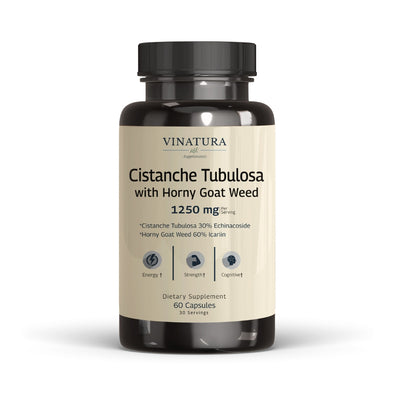
Cistanche Tubulosa Horny Goat Weed 1250mg lists 200 mg tongkat ali (Eurycoma longifolia) root extract per 2-capsule serving, with 750 mg cistanche stem extract and 500 mg horny goat weed leaf extract. Tongkat Ali Fadogia Agrestis 1200mg, currently out of stock, lists 500 mg tongkat ali root extract per serving with Fadogia agrestis and amino acids; our article on Fadogia agrestis explains that it has no published human trials. Neither page specifies the extraction method or the eurycomanone content that trials reported. The studies above did not test these products, and none tested these combinations.
Frequently asked questions
Is Physta the same as any "tongkat ali extract"? No. Physta is one hot-water root extract with set levels of eurycomanone, glycosaponins and polysaccharides. Other extracts can differ greatly, and some products contain little of the plant.
Does tongkat ali raise testosterone? In one 12-week trial in men aged 50 to 70 with low testosterone, a standardized extract raised total testosterone modestly. Results in younger or healthy men are mixed. This does not show that tongkat ali treats low testosterone.
How much did studies use? Most trials used 100 to 400 mg a day of a standardized water extract; the range across all trials was 50 to 600 mg. These are study amounts, not recommendations. Follow your product label and ask a healthcare professional.
References
- Tambi MI, Imran MK. Eurycoma longifolia Jack in managing idiopathic male infertility. Asian J Androl. 2010;12(3):376-380. doi:10.1038/aja.2010.7
- Tambi MI, Imran MK, Henkel RR. Standardised water-soluble extract of Eurycoma longifolia, Tongkat ali, as testosterone booster for managing men with late-onset hypogonadism? Andrologia. 2012;44(Suppl 1):226-230. doi:10.1111/j.1439-0272.2011.01168.x
- Ismail SB, et al. Randomized clinical trial on the use of PHYSTA freeze-dried water extract of Eurycoma longifolia for the improvement of quality of life and sexual well-being in men. Evid Based Complement Alternat Med. 2012;2012:429268. doi:10.1155/2012/429268
- Henkel RR, et al. Tongkat Ali as a potential herbal supplement for physically active male and female seniors—a pilot study. Phytother Res. 2014;28(4):544-550. doi:10.1002/ptr.5017
- Talbott SM, et al. Effect of Tongkat Ali on stress hormones and psychological mood state in moderately stressed subjects. J Int Soc Sports Nutr. 2013;10(1):28. doi:10.1186/1550-2783-10-28
- George A, et al. Efficacy and safety of Eurycoma longifolia (Physta) water extract plus multivitamins on quality of life, mood and stress: a randomized placebo-controlled and parallel study. Food Nutr Res. 2018;62. doi:10.29219/fnr.v62.1374
- Chinnappan SM, et al. Effect of Eurycoma longifolia standardised aqueous root extract–Physta on testosterone levels and quality of life in ageing male subjects: a randomised, double-blind, placebo-controlled multicentre study. Food Nutr Res. 2021;65:5647. doi:10.29219/fnr.v65.5647
- Chan KQ, et al. The effect of Eurycoma longifolia on the regulation of reproductive hormones in young males. Andrologia. 2021;53(4):e14001. doi:10.1111/and.14001
- Leitão AE, et al. A 6-month, double-blind, placebo-controlled, randomized trial to evaluate the effect of Eurycoma longifolia (Tongkat Ali) and concurrent training on erectile function and testosterone levels in androgen deficiency of aging males (ADAM). Maturitas. 2021;145:78-85. doi:10.1016/j.maturitas.2020.12.002
- Leisegang K, et al. Eurycoma longifolia (Jack) improves serum total testosterone in men: a systematic review and meta-analysis of clinical trials. Medicina (Kaunas). 2022;58(8):1047. doi:10.3390/medicina58081047
- Kotirum S, Ismail SB, Chaiyakunapruk N. Efficacy of Tongkat Ali (Eurycoma longifolia) on erectile function improvement: systematic review and meta-analysis of randomized controlled trials. Complement Ther Med. 2015;23(5):693-698. doi:10.1016/j.ctim.2015.07.009
- Morgado A, et al. Do "testosterone boosters" really increase serum total testosterone? A systematic review. Int J Impot Res. 2024;36(4):348-364. doi:10.1038/s41443-023-00763-9
- Chen CK, Muhamad AS, Ooi FK. Herbs in exercise and sports. J Physiol Anthropol. 2012;31(1):4. doi:10.1186/1880-6805-31-4
- Chen CK, et al. Supplementation of Eurycoma longifolia Jack extract for 6 weeks does not affect urinary testosterone: epitestosterone ratio, liver and renal functions in male recreational athletes. Int J Prev Med. 2014;5(6):728-733. PubMed 25013692
- Chen CK, et al. Effects of Eurycoma longifolia Jack supplementation combined with resistance training on isokinetic muscular strength and power, anaerobic power, and urinary testosterone: epitestosterone ratio in young males. Int J Prev Med. 2019;10:118. doi:10.4103/ijpvm.IJPVM_404_17
- Zakaria AZ, et al. Effects of Eurycoma longifolia Jack supplementation on eccentric leg press exercise-induced muscle damage in rugby players. Biol Sport. 2023;40(3):691-697. doi:10.5114/biolsport.2023.119290
- Salman SA, et al. Modification of propranolol's bioavailability by Eurycoma longifolia water-based extract. J Clin Pharm Ther. 2010;35(6):691-696. doi:10.1111/j.1365-2710.2009.01147.x
- Kaliounji A, et al. A rare case of Tongkat Ali-induced liver injury: a case report. Cureus. 2024;16(3):e56639. doi:10.7759/cureus.56639
- Ali M. Tongkat Ali-induced atrial flutter: a probable case. Cureus. 2025;17(9):e92024. doi:10.7759/cureus.92024
- Ang HH, Lee EL, Cheang HS. Determination of mercury by cold vapor atomic absorption spectrophotometer in Tongkat Ali preparations obtained in Malaysia. Int J Toxicol. 2004;23(1):65-71. doi:10.1080/10915810490269654
- Ang HH, Lee KL. Contamination of mercury in tongkat Ali hitam herbal preparations. Food Chem Toxicol. 2006;44(8):1245-1250. doi:10.1016/j.fct.2006.01.014
- Ang HH, Lee EL, Matsumoto K. Analysis of lead content in herbal preparations in Malaysia. Hum Exp Toxicol. 2003;22(8):445-451. doi:10.1191/0960327103ht382oa
- Abubakar BM, et al. Assessing product adulteration of Eurycoma longifolia (Tongkat Ali) herbal medicinal product using DNA barcoding and HPLC analysis. Pharm Biol. 2018;56(1):368-377. doi:10.1080/13880209.2018.1479869
- Mutschlechner B, et al. Development of a selective HPLC-DAD/ELSD method for the qualitative and quantitative assessment of commercially available Eurycoma longifolia products and plant extracts. Fitoterapia. 2018;124:188-192. doi:10.1016/j.fitote.2017.11.015
- Said MM, et al. Rapid detection of sildenafil analogue in Eurycoma longifolia products using a new two-tier procedure of the near infrared (NIR) spectra database. Food Chem. 2014;158:296-301. doi:10.1016/j.foodchem.2014.02.125
- Yusof J, Mahdy ZA, Noor RM. Use of complementary and alternative medicine in pregnancy and its impact on obstetric outcome. Complement Ther Clin Pract. 2016;25:155-163. doi:10.1016/j.ctcp.2016.09.005
- EFSA Panel on Nutrition, Novel Foods and Food Allergens (NDA). Safety of Eurycoma longifolia (Tongkat Ali) root extract as a novel food pursuant to Regulation (EU) 2015/2283. EFSA J. 2021;19(12):e06937. doi:10.2903/j.efsa.2021.6937
- National Institutes of Health, LiverTox. Tongkat Ali. Last updated October 18, 2024. ncbi.nlm.nih.gov
- U.S. Food and Drug Administration. Tainted Sexual Enhancement Products. Accessed November 16, 2026. fda.gov
- ClinicalTrials.gov. Search of the intervention field for Eurycoma longifolia, tongkat ali, Physta and LJ100. Accessed November 16, 2026. clinicaltrials.gov
Editorial note: This article reviews published research for educational purposes. It does not establish the effects or safety of any specific supplement, including Vinatura products, and is not medical advice. Written by Vinatura Editorial Team. Last reviewed November 2026.
Author
Product Disclaimer
Including an ingredient or study does not evaluate, endorse, or recommend any Vinatura product or any third-party product. Some ingredients discussed may not be used in any Vinatura product.
The content of the articles has not been evaluated by the Food and Drug Administration (FDA) and is not intended to promote or endorse any specific product. Any products sold on this website are not intended to diagnose, treat, cure, or prevent any disease.
Opinions and Endorsements
Any claims, statements, or opinions expressed in the articles are those of the author(s) and do not necessarily reflect the views or opinions of the manufacturers of the dietary supplement products. The products sold on this website are separate from the content of the articles and are not directly endorsed or associated with the information presented here.
Liability Disclaimer
The author(s) of the articles, website, and manufacturers of the dietary supplement products do not assume any liability for any potential consequences arising from the use of the information provided in the articles. Ingredient effects, dosages, and safety vary by individual, formulation, and context; some ingredients interact with medications or may be unsuitable during pregnancy or lactation. It is recommended that individuals consult with a qualified healthcare professional before making any dietary or lifestyle changes, including the use of dietary supplements.
Product Usage
Please refer to the product labels and packaging for specific usage instructions and guidelines for the dietary supplement products sold on this website.
Customer Support
For any concerns or questions regarding the dietary supplement products, please contact our customer support team, who will be more than happy to assist you.


Leave a Comment
Be the first to comment.
What do you think?