

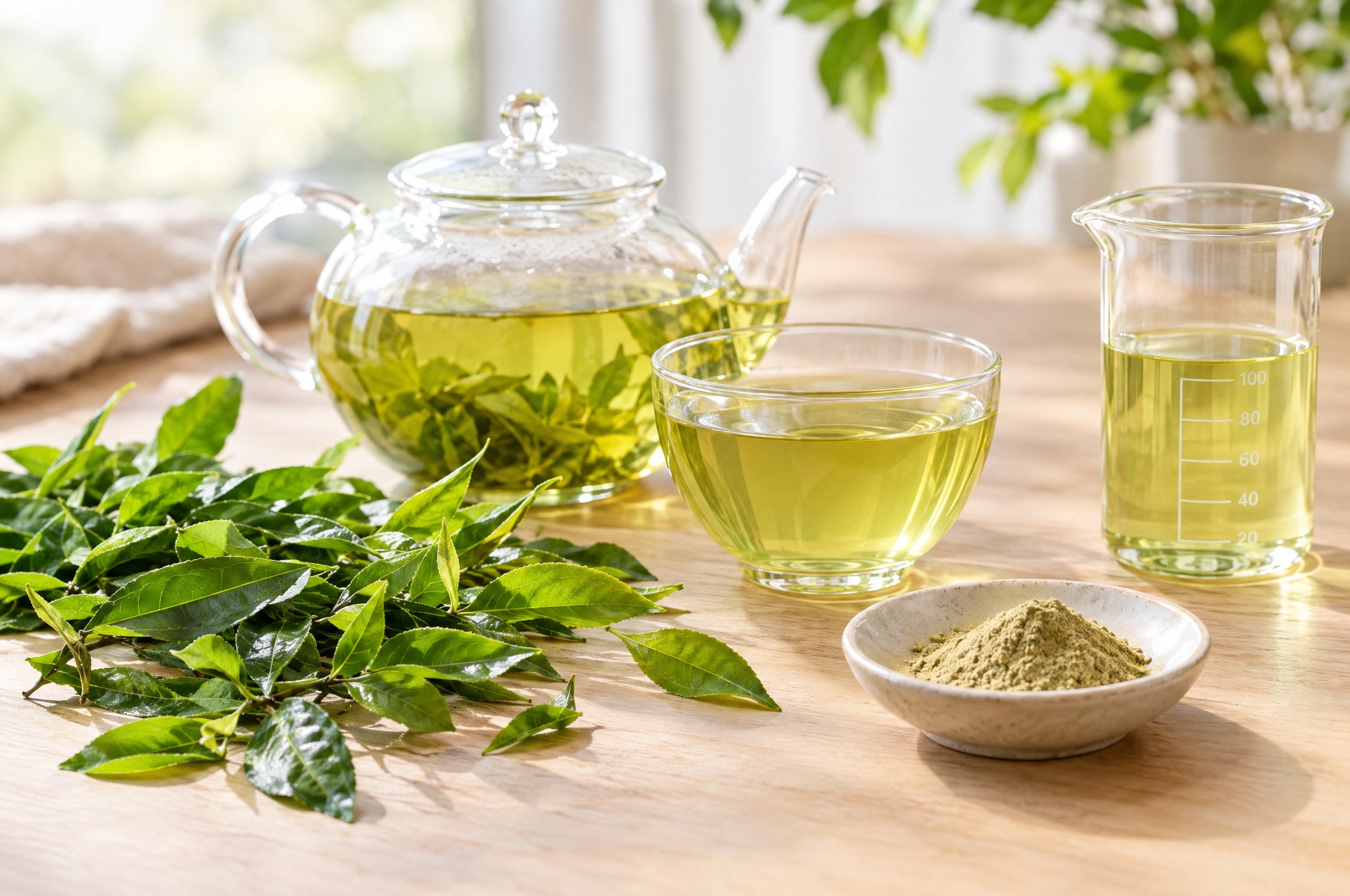
Green Tea Extract and EGCG: What Research Shows on Weight and Liver
Quick answer. Green tea extract is a concentrate of the catechins in tea leaves (Camellia sinensis), and EGCG (epigallocatechin gallate) is the most abundant of them. In weight trials, a Cochrane review found that green tea preparations produced a small, statistically non-significant weight loss in overweight adults, too small to matter clinically, and a year-long U.S. trial of a decaffeinated extract supplying 843 mg EGCG a day found no change in body weight. That same trial showed the clearest safety signal: 6.7% of women taking the extract had a rise in the liver enzyme ALT, compared with 0.7% on placebo. The European Food Safety Authority (EFSA) linked intakes of 800 mg EGCG a day or more from supplements to liver enzyme rises and could not name a safe dose, and since December 2022 the European Union has limited extracts to less than 800 mg EGCG per daily portion with warnings, including not to take them on an empty stomach.
What green tea extract and EGCG are
Green, black and oolong teas all come from the leaves of Camellia sinensis. For green tea, the leaves are steamed or heated soon after picking, which limits oxidation and keeps catechins high; black tea is fermented, which converts most catechins into other compounds (theaflavins and thearubigins). The main green tea catechins are EGCG, epigallocatechin (EGC), epicatechin gallate (ECG) and epicatechin (EC). EGCG usually makes up 50% to 75% of the total, according to the Minnesota Green Tea Trial report.
Extracts differ. A green tea extract may be made with water or with alcohol, may or may not be decaffeinated, and is often standardized to a percentage of "polyphenols" or "EGCG." The U.S. Pharmacopeia (USP) review notes that catechin profiles vary considerably with manufacturing. Results from one extract at one dose should not be assumed for another.
How much comes from tea. EFSA estimated that adults in the EU who drink green tea take in 90 to 300 mg EGCG a day on average, and up to 866 mg for high consumers. It estimated that supplements supply 5 to 1,000 mg EGCG a day.
What human studies have tested
| Study | Who took part | Form and daily amount | Duration | What was measured | Result |
|---|---|---|---|---|---|
| Body weight | |||||
| Jurgens 2012, Cochrane review | 15 weight-loss and 3 weight-maintenance RCTs; 1,945 overweight or obese adults completed | Green tea preparations, various | 12–13 weeks | Weight, BMI, waist | Outside Japan (6 trials, 532 people): −0.04 kg (95% CI −0.5 to 0.4). Japan (8 trials, 1,030 people): −0.2 to −3.5 kg, too different to pool. No effect on weight maintenance |
| Hursel 2009, meta-analysis | 11 articles | Catechins or EGCG–caffeine mixtures | Varied | Weight loss and maintenance | −1.31 kg overall; smaller with high habitual caffeine intake and in white than in Asian participants (neither difference significant alone) |
| Phung 2010, meta-analysis | 15 RCTs, 1,243 people | Catechins with or without caffeine | Varied | BMI, weight, waist | With caffeine vs caffeine alone: −1.38 kg; vs caffeine-free control: −0.44 kg. Catechins without caffeine: no benefit on any measure |
| Nagao 2007, RCT (Japan) | 240 adults with abdominal obesity (analyzed) | Green tea drink with 583 mg vs 96 mg catechins | 12 weeks | Weight, body fat, visceral fat | Larger decreases with the high-catechin drink. The lead author was based at a company's food research laboratory |
| Chen 2016, RCT (Taiwan) | 102 women with central obesity | Extract supplying 856.8 mg EGCG | 12 weeks | Weight, waist, lipids, hormones | Weight in the extract group fell from 76.8 to 75.7 kg (P=0.025, within-group); no side effects reported |
| Dostal 2016, MGTT substudy (U.S.) | 237 overweight or obese postmenopausal women | Decaffeinated extract, 843 mg EGCG | 12 months | Weight, BMI, waist, energy intake | No change in weight, BMI or waist vs placebo |
| Dostal 2016, MGTT DXA substudy | 121 overweight or obese postmenopausal women | Same | 12 months | Body fat by DXA scan | Fat mass −0.30 vs −0.12 kg (P=0.40); no overall difference. Gynoid and tissue fat % fell more on extract as baseline BMI rose (interaction P=0.02 and 0.04) |
| Gholami 2024, meta-analysis | 10 RCTs, overweight or obese adults | Green tea plus exercise vs exercise alone | Varied | Weight, BMI, fat | Small effect on weight (SMD −0.30; −0.53 to −0.07); authors call the added benefit "quite minimal" |
| Liver and safety | |||||
| Dostal 2015, MGTT (U.S.) | 1,075 postmenopausal women aged 50–70 | Decaffeinated extract, 1,315 mg catechins incl. 843 mg EGCG, in 2 doses with meals | 12 months | Adverse events, monthly then periodic ALT | ALT rise in 6.7% vs 0.7% (P<0.001); ALT-related serious events in 1.3% of extract users; nausea 10.2% vs 4.8% |
| Yu 2017, MGTT liver analysis | 1,021 women with normal baseline liver tests | Same | 12 months | ALT, AST | ALT rose 5.4 U/L on average in the extract arm, significantly more than on placebo; moderate or worse abnormality in 5.1%, odds ratio 7.0 (2.4–20.3); ALT rose again on rechallenge |
| Samavat 2017, MGTT | 932 women who completed | Same | 12 months | Mammographic density (primary goal) | No change overall; a drop only in women aged 50–55 |
| Interactions | |||||
| Misaka 2014, crossover RCT | 10 healthy volunteers | Brewed green tea, 700 mL a day, then nadolol 30 mg | 14 days | Nadolol blood levels, blood pressure | Nadolol peak level −85.3% and exposure (AUC) −85.0%; its blood pressure effect was reduced |
| Alemdaroglu 2008, crossover RCT | Healthy volunteers | Folic acid 0.4 or 5 mg with green tea made from extract (0.3 g/250 mL) | Single doses, 8-hour sampling | Serum folate | At 0.4 mg, peak folate −39.2% and AUC −26.6% vs water |
| Samman 2001, isotope absorption study | 10 young women | Green tea extract added to a test meal | 4 test meals | Nonheme iron absorption | Absorption fell from 12.1% to 8.9% (P<0.01) |
What the findings suggest
Body weight. The Cochrane review, which included only trials of at least 12 weeks, found an average loss of 0.04 kg outside Japan, with a confidence interval spanning zero, and called the effect too small to be clinically important. Larger effects came from unpooled Japanese trials and from catechin–caffeine combinations. A 2010 meta-analysis found no benefit from catechins without caffeine. A 2025 meta-analysis reported an average weight difference of −0.74 kg, and a 2024 analysis of exercise trials judged the added effect of green tea "quite minimal." The longest single trial of a caffeine-free extract, the Minnesota Green Tea Trial (MGTT), found no change in weight, waist or body fat over 12 months. Strength: moderate evidence of no meaningful effect for most people; low evidence of a small effect from catechin–caffeine drinks in Japanese trials.
Liver enzymes. The MGTT is the largest placebo-controlled safety trial of a high-dose extract we found. Most ALT rises were mild (Grade 1), appeared within the first 4 months in 26 of 36 affected women, and resolved after stopping. In 12 women, ALT rose again when they restarted, which points to the extract as the cause. EFSA reviewed 38 intervention studies and concluded that 800 mg EGCG a day or more taken as a supplement raised transaminases compared with control. Strength: high, for a rise in a liver blood test at about 800 mg EGCG a day or more.
Other outcomes. The MGTT's main goal, a change in breast density on mammograms, was not met overall. A 2026 meta-analysis found a non-significant drop in C-reactive protein, an inflammation marker, with green tea extract (low certainty). We did not review cancer, heart or brain outcomes.
Where the evidence is limited or conflicting
- Same dose, different results. A Taiwanese trial of 856.8 mg EGCG a day for 12 weeks reported no side effects, while the MGTT, at 843 mg a day, found ALT rises in 6.7% of women. The MGTT checked ALT at least monthly for its first 6 months, ran about four times as long and enrolled about 10 times as many people, so it could detect what a smaller, shorter trial would miss.
- Who was studied. The MGTT enrolled postmenopausal women, 97.8% of them white, and excluded people with hepatitis B or C, raised liver enzymes, or 7 or more alcoholic drinks a week. Its ALT effect appeared larger in women with obesity, a borderline finding.
- Who made the product. In the MGTT, NIH-supported researchers ran the trial; the extract came from an ingredient company and was encapsulated and supplied by a supplement manufacturer. In the Japanese drink trial, the lead author was based at a company's food research laboratory.
- Equivalence to drinking tea. Two MGTT papers describe the daily dose as about four and about five 8-ounce cups of brewed green tea. EFSA judged traditional tea infusions generally safe at reported intakes but said concentrated extracts cannot be presumed safe the same way.
Safety
Liver injury. NIH's LiverTox database gives green tea a likelihood score of "A," a well-established cause of clinically apparent liver injury; the cases it describes involve extracts and supplements. Injury usually appears 1 to 6 months after starting, with a hepatocellular (liver-cell) pattern. Most people recover after stopping; fatal acute liver failure has been described. Drinking green tea has not been linked to liver injury, LiverTox says, although a few similar cases followed tea infusions. A 2020 USP expert review assessed 35 published cases involving single-ingredient extract products; experts from the U.S. Drug-Induced Liver Injury Network judged 29 of them probably, highly likely or definitely caused by the extract. Reported intakes ranged from 140 mg to about 1,000 mg EGCG a day, and 21 of the 35 people were using the extract for weight loss. Two authors were USP employees, and several expert-panel members disclosed work for supplement or ingredient companies, including makers of green tea extracts.
Who may be more susceptible. LiverTox describes a close link between green tea liver injury and an immune gene variant, HLA-B*35:01, and NCCIH says 5% to 15% of Americans carry it. A secondary MGTT analysis linked larger ALT rises to a variant in UGT1A4, a gene for an enzyme that processes catechins.
Fasting versus food. The USP review describes a human study in which an 800 mg single dose of a defined catechin extract taken fasting produced free EGCG peak levels more than five times those seen with food, and another in which total exposure was 3.9 times higher without food. In fasted dogs, high-dose catechins caused severe liver damage and deaths, and the USP review reports that the FDA then did not allow further fasting studies of that extract in people. MGTT participants took capsules with meals. In 2019, USP added a cautionary label statement to its monograph for powdered decaffeinated green tea extract.
Regulators. EFSA's 2018 opinion concluded that "it was not possible to identify an EGCG dose from green tea extracts that could be considered safe." Commission Regulation (EU) 2022/2340, in force since December 21, 2022, limits foods with these extracts, including supplements, to less than 800 mg EGCG per daily portion. Labels must state the EGCG content per portion and warn against use by pregnant or breastfeeding women and children under 18, on an empty stomach, or on the same day as other green tea products. Water-based extracts comparable to traditional tea infusions are excluded. Our milk thistle review covers another botanical tested in liver trials.
Common side effects. NCCIH lists nausea, constipation, abdominal discomfort and higher blood pressure with extracts. In the MGTT, nausea and skin reactions were more common on the extract.
Medicines and nutrients. NCCIH warns that high green tea doses may lower blood levels of the beta-blocker nadolol, that green tea extract can reduce levels of atorvastatin, and that an NCCIH-funded study found an interaction with raloxifene, an osteoporosis drug. Green tea extract added to a meal lowered nonheme iron absorption, and green tea taken with folic acid lowered blood folate levels in healthy volunteers. Extracts that are not decaffeinated also contain caffeine. Ask a pharmacist before combining green tea extract with any prescription medicine.
Pregnancy. The EU requires a warning against use in pregnancy and breastfeeding, and NCCIH advises keeping caffeine moderate. Folate evidence is mixed: among 254 pregnant women in Tokyo, high green or oolong tea intake was associated with lower serum folate, but a 2022 meta-analysis of observational studies found no significant rise in neural tube defects with tea drinking (odds ratio 1.37; 95% CI 0.96 to 1.95). In the lab, EGCG blocks dihydrofolate reductase, an enzyme in folate metabolism. We found no trial of extracts in pregnancy.
What research does not establish
- That green tea extract or EGCG produces meaningful weight loss; the best evidence shows little or none.
- That any EGCG dose from supplements is safe for everyone; EFSA could not identify one, and cases have been reported well below 800 mg a day.
- That results from catechin–caffeine drinks apply to decaffeinated capsules, or that one extract's results apply to another.
- That green tea extract is safe in pregnancy, breastfeeding, childhood or liver disease.
How we reviewed the evidence
On November 16, 2026, we searched PubMed for meta-analyses of green tea, catechins or EGCG and body weight (54 records; 8 recent abstracts screened, plus 3 earlier meta-analyses found by citation), all Minnesota Green Tea Trial reports (13 records), and studies on folate, iron, nadolol and pregnancy. We searched ClinicalTrials.gov (387 records naming green tea extract, EGCG or green tea catechins). We read the EFSA 2018 opinion, the LiverTox green tea entry, NCCIH's green tea page, USDA's flavonoid database and the EU regulation. We read full texts of three MGTT papers, the USP review and the EFSA opinion; the Hursel, Phung, Nagao and Chen papers were read as abstracts. We included human randomized trials, meta-analyses, case reviews and observational studies, and used lab and animal studies only for mechanisms. None of the cited papers is retracted. Vinatura did not run any trials of green tea extract.
Vinatura Research Perspective
We asked four questions of each study: which form (brewed tea, catechin drink, or extract capsule, with or without caffeine), how much EGCG a day, taken fasting or with food, and in whom. The larger weight losses in meta-analyses come from short trials in Japan and from catechins combined with caffeine; caffeine-free catechins showed no benefit, and the longest trial of a decaffeinated extract found no weight change at all. That same trial, at 843 mg EGCG a day with meals, produced the clearest liver signal in the literature. We also noticed that the EU limit of "less than 800 mg" is a regulatory cap, not a safe dose; EFSA said it could not identify one, and published cases start at 140 mg a day.
Our assessment: moderate evidence that green tea extract has little or no clinically meaningful effect on body weight; high evidence that about 800 mg EGCG a day raises liver enzymes in a minority of users; consistent case evidence of rare, sometimes severe liver injury, with genetic susceptibility; and low evidence on safety in pregnancy. A dose-ranging, independently funded trial of at least 12 months, comparing fasting and fed intake below 400 mg EGCG a day, testing for HLA-B*35:01, and reporting EGCG content measured in the product, would change this assessment.
Where this ingredient appears in Vinatura products
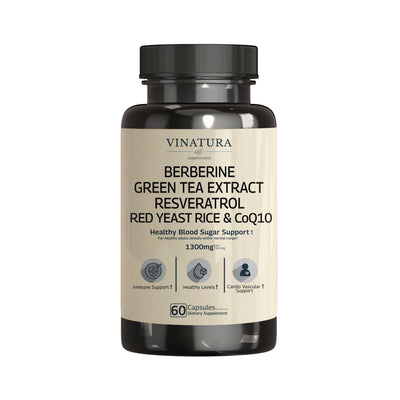
Duckweed Powder Superfood & EGCG lists 2.5 g duckweed (Wolffia globosa) and 2.5 g green tea extract (Camellia sinensis) per 5 g serving; the page does not state the extract's catechin or EGCG content. Our duckweed review covers the other main ingredient. Berberine Green Tea Extract Resveratrol Red Yeast Rice Co-Q10 1300mg lists 100 mg green tea extract standardized to 95% polyphenols and 45% EGCG per serving, taken as 2 capsules daily, with 500 mg berberine HCl, resveratrol, red yeast rice, coenzyme Q10 and other ingredients. The studies above did not test these products, and none tested these combinations.
Frequently asked questions
Which foods are high in EGCG? Tea is the main source. In USDA's flavonoid database, the brewed green teas listed range from about 20 to 68 mg EGCG per 100 g depending on type (bottled ready-to-drink green tea about 4 mg), brewed oolong about 34 mg and brewed black tea about 9 mg. Carob flour lists about 109 mg per 100 g, pecans 2.3 mg and hazelnuts about 1 mg; the fruits we checked list under 2 mg.
Is drinking green tea the same as taking the extract? Not for safety. EFSA considers traditionally prepared tea generally safe at usual intakes, and LiverTox notes that drinking green tea has not been linked to liver injury, while concentrated extracts are a known, if rare, cause of it.
How much EGCG did studies use? Weight and safety trials in our table used roughly 580 to 860 mg of catechins or EGCG a day for 12 weeks to 12 months. These are study amounts, not recommendations; follow your product label and ask a healthcare professional, especially if you take medicines.
What are signs of a liver problem? LiverTox cases describe nausea, abdominal pain, fatigue and yellowing of the skin or eyes (jaundice). Stop the product and see a doctor if these appear.
References
- Jurgens TM, et al. Green tea for weight loss and weight maintenance in overweight or obese adults. Cochrane Database Syst Rev. 2012;12(12):CD008650. doi:10.1002/14651858.CD008650.pub2
- Hursel R, Viechtbauer W, Westerterp-Plantenga MS. The effects of green tea on weight loss and weight maintenance: a meta-analysis. Int J Obes (Lond). 2009;33(9):956-961. doi:10.1038/ijo.2009.135
- Phung OJ, et al. Effect of green tea catechins with or without caffeine on anthropometric measures: a systematic review and meta-analysis. Am J Clin Nutr. 2010;91(1):73-81. doi:10.3945/ajcn.2009.28157
- Nagao T, Hase T, Tokimitsu I. A green tea extract high in catechins reduces body fat and cardiovascular risks in humans. Obesity (Silver Spring). 2007;15(6):1473-1483. doi:10.1038/oby.2007.176
- Chen IJ, et al. Therapeutic effect of high-dose green tea extract on weight reduction: a randomized, double-blind, placebo-controlled clinical trial. Clin Nutr. 2016;35(3):592-599. doi:10.1016/j.clnu.2015.05.003
- Dostal AM, et al. Green tea extract and catechol-O-methyltransferase genotype modify fasting serum insulin and plasma adiponectin concentrations in a randomized controlled trial of overweight and obese postmenopausal women. J Nutr. 2016;146(1):38-45. doi:10.3945/jn.115.222414
- Dostal AM, et al. Long-term supplementation of green tea extract does not modify adiposity or bone mineral density in a randomized trial of overweight and obese postmenopausal women. J Nutr. 2016;146(2):256-264. doi:10.3945/jn.115.219238
- Gholami F, et al. Does green tea catechin enhance weight-loss effect of exercise training in overweight and obese individuals? A systematic review and meta-analysis of randomized trials. J Int Soc Sports Nutr. 2024;21(1):2411029. doi:10.1080/15502783.2024.2411029
- Dehzad MJ, et al. Effects of green tea supplementation on obesity indices and adipokines in adults: a grade-assessed systematic review and dose-response meta-analysis of randomised controlled trials. Int J Food Sci Nutr. 2025;76(4):340-369. doi:10.1080/09637486.2025.2496400
- Nichele S, Prates LM, Busetto L. Effects of bioactive compound supplementation on insulin resistance and systemic inflammation in overweight and obese adults: a systematic review and meta-analysis of randomized controlled trials. Nutrients. 2026;18(21):3638. doi:10.3390/nu18213638
- Dostal AM, et al. The safety of green tea extract supplementation in postmenopausal women at risk for breast cancer: results of the Minnesota Green Tea Trial. Food Chem Toxicol. 2015;83:26-35. doi:10.1016/j.fct.2015.05.019
- Yu Z, et al. Effect of green tea supplements on liver enzyme elevation: results from a randomized intervention study in the United States. Cancer Prev Res (Phila). 2017;10(10):571-579. doi:10.1158/1940-6207.CAPR-17-0160
- Samavat H, et al. A randomized controlled trial of green tea extract supplementation and mammographic density in postmenopausal women at increased risk of breast cancer. Cancer Prev Res (Phila). 2017;10(12):710-718. doi:10.1158/1940-6207.CAPR-17-0187
- Acosta L, et al. Hepatotoxicity with high-dose green tea extract: effect of catechol-O-methyltransferase and uridine 5'-diphospho-glucuronosyltransferase 1A4 genotypes. J Diet Suppl. 2023;20(6):850-869. doi:10.1080/19390211.2022.2128501
- Oketch-Rabah HA, et al. United States Pharmacopeia (USP) comprehensive review of the hepatotoxicity of green tea extracts. Toxicol Rep. 2020;7:386-402. doi:10.1016/j.toxrep.2020.02.008
- EFSA Panel on Food Additives and Nutrient Sources added to Food (ANS), Younes M, et al. Scientific opinion on the safety of green tea catechins. EFSA J. 2018;16(4):e05239. doi:10.2903/j.efsa.2018.5239
- Misaka S, et al. Green tea ingestion greatly reduces plasma concentrations of nadolol in healthy subjects. Clin Pharmacol Ther. 2014;95(4):432-438. doi:10.1038/clpt.2013.241
- Alemdaroglu NC, et al. Influence of green and black tea on folic acid pharmacokinetics in healthy volunteers: potential risk of diminished folic acid bioavailability. Biopharm Drug Dispos. 2008;29(6):335-348. doi:10.1002/bdd.617
- Samman S, et al. Green tea or rosemary extract added to foods reduces nonheme-iron absorption. Am J Clin Nutr. 2001;73(3):607-612. doi:10.1093/ajcn/73.3.607
- Shiraishi M, et al. Association between the serum folate levels and tea consumption during pregnancy. Biosci Trends. 2010;4(5):225-230. PubMed 21068474
- Yan K, et al. Tea consumption during the periconceptional period does not significantly increase the prevalence of neural tube defects: a systematic review and dose-response meta-analysis. Nutr Res. 2022;102:13-22. doi:10.1016/j.nutres.2022.02.009
- Navarro-Perán E, et al. Effects of folate cycle disruption by the green tea polyphenol epigallocatechin-3-gallate. Int J Biochem Cell Biol. 2007;39(12):2215-2225. doi:10.1016/j.biocel.2007.06.005
- National Institutes of Health, LiverTox. Green Tea. Last updated November 20, 2020. ncbi.nlm.nih.gov
- National Center for Complementary and Integrative Health. Green Tea. Last updated February 2025. nccih.nih.gov
- European Commission. Commission Regulation (EU) 2022/2340 of 30 November 2022 amending Annex III to Regulation (EC) No 1925/2006 as regards green tea extracts containing (-)-epigallocatechin-3-gallate. OJ L 310, 1.12.2022, p. 7. eur-lex.europa.eu
- U.S. Department of Agriculture, Agricultural Research Service. USDA Database for the Flavonoid Content of Selected Foods, Release 3.2. November 2015. ars.usda.gov
Editorial note: This article reviews published research for educational purposes. It does not establish the effects or safety of any specific supplement, including Vinatura products, and is not medical advice. Written by Vinatura Editorial Team. Last reviewed November 2026.
Author
Product Disclaimer
Including an ingredient or study does not evaluate, endorse, or recommend any Vinatura product or any third-party product. Some ingredients discussed may not be used in any Vinatura product.
The content of the articles has not been evaluated by the Food and Drug Administration (FDA) and is not intended to promote or endorse any specific product. Any products sold on this website are not intended to diagnose, treat, cure, or prevent any disease.
Opinions and Endorsements
Any claims, statements, or opinions expressed in the articles are those of the author(s) and do not necessarily reflect the views or opinions of the manufacturers of the dietary supplement products. The products sold on this website are separate from the content of the articles and are not directly endorsed or associated with the information presented here.
Liability Disclaimer
The author(s) of the articles, website, and manufacturers of the dietary supplement products do not assume any liability for any potential consequences arising from the use of the information provided in the articles. Ingredient effects, dosages, and safety vary by individual, formulation, and context; some ingredients interact with medications or may be unsuitable during pregnancy or lactation. It is recommended that individuals consult with a qualified healthcare professional before making any dietary or lifestyle changes, including the use of dietary supplements.
Product Usage
Please refer to the product labels and packaging for specific usage instructions and guidelines for the dietary supplement products sold on this website.
Customer Support
For any concerns or questions regarding the dietary supplement products, please contact our customer support team, who will be more than happy to assist you.


Leave a Comment
Be the first to comment.
What do you think?