

Pumpkin Seed, Seed Oil and Extract: What Human Studies Show
Quick answer. Pumpkin seed comes from Cucurbita pepo and is eaten as a food, pressed into an oil and made into concentrated extracts; results for one form do not automatically apply to the others. The largest human trial, GRANU, gave 1,431 men with urinary symptoms from an enlarged prostate either whole seed, an extract or placebo for a year: the seed group had more responders than placebo, although the trial could not formally confirm it, and the extract group did not; a 2022 company-funded pooled analysis found only a small advantage for the extract. Trials of hair, blood pressure, bladder symptoms and sleep are small, short or uncontrolled. The tapeworm reputation rests on old reports and one non-randomized study that combined the seeds with areca nut, a known carcinogen. The seeds are a good food source of magnesium and zinc and are generally well tolerated, but allergy, including anaphylaxis, has been reported.
What pumpkin seed is
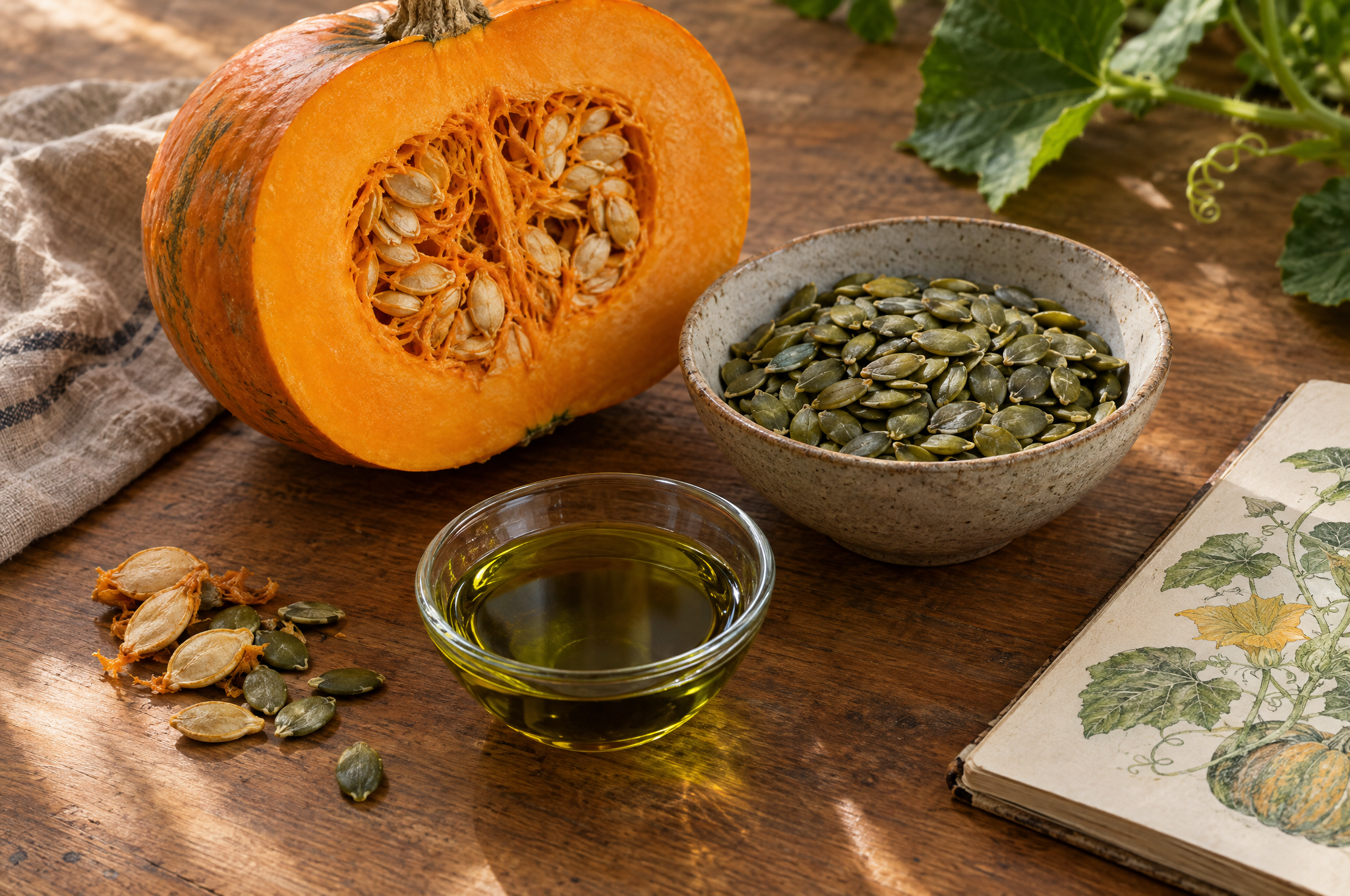
The European Medicines Agency (EMA) defines the herbal substance as "whole, ripe and dried seeds" of Cucurbita pepo. Its assessment report notes that the seeds are about 50% fatty oil, mostly linoleic and oleic acids, and that the "putative" active compounds are plant sterols (Δ7- and Δ5-sterols). The seeds also contain cucurbitine, an unusual amino acid, at 0.18% to 0.66%, which researchers have studied for effects on worms.
Studies use four main forms:
- Whole seed, the food form. GRANU used 10 g a day of purified seed from a medicinal pumpkin variety, sold in Germany as a registered herbal medicine.
- Pumpkin seed oil, pressed from the seed.
- Ethanol extracts, either a "soft extract" from the whole seed or an oil-free water-ethanol extract from pressed seed cake. These concentrate different compounds, and one study's authors cautioned that results "cannot be extrapolated" between extracts.
- Related species. One Japanese bladder study used oil from Cucurbita maxima, a different squash.
EMA's 2012 monograph accepts pumpkin seed only as a traditional herbal medicine "for the relief of lower urinary tract symptoms related to benign prostatic hyperplasia or related to an overactive bladder, after serious conditions have been excluded by a medical doctor." That status rests on long-standing use, not on proof from clinical trials. In 2021 EMA's herbal committee reviewed newer literature and "agreed not to revise the monograph."
As food, the seed is nutrient-dense. The NIH Office of Dietary Supplements lists 1 ounce of roasted pumpkin seeds at 156 mg of magnesium (37% of the Daily Value) and 2.2 mg of zinc (20% of the Daily Value).
What human studies have tested
| Study | Who took part | Form and daily amount | Duration | What was measured | Result |
|---|---|---|---|---|---|
| Vahlensieck et al., 2015 (GRANU; randomized; extract vs placebo double-blind, seed vs placebo open; Germany) | 1,431 men aged 50 to 80 with moderate urinary symptoms from an enlarged prostate (BPH) | Purified seed from a medicinal cultivar, 5 g twice daily, or soft extract capsules 500 mg twice daily, vs placebo capsules | 12 months | Responders: International Prostate Symptom Score (IPSS) down 5 or more points | Seed: 58.5% responders vs 47.8% with placebo (47.3% in the abstract), called only "descriptively significant." Extract: 46.3%, no difference. Adverse events in 19.1% overall, similar across groups. Sponsored by GlaxoSmithKline Consumer Healthcare |
| Vahlensieck et al., 2022 (pooled analysis of GRANU and Bach 2000) | 1,389 men in the intention-to-treat set | Soft extract 500 mg twice daily vs placebo | 12 months | IPSS response and change | Response 54% vs 51%; odds ratio about 1.2, with a confidence interval that included 1. IPSS change 0.7 points better with extract. Funded by Omega Pharma, which employed one author |
| Bach 2000, as summarized by EMA (double-blind, placebo-controlled, 65 centers) | 476 men with early-stage BPH | 500 mg extract capsules, 1 to 2 a day (the 2022 analysis gives 500 mg twice daily) | 12 months | IPSS | IPSS fell 6.7 points vs 5.5 with placebo, a significant difference. We could not read the primary paper |
| Hong et al., 2009 (described as randomized, double-blind, placebo-controlled; Korea) | 62 men with BPH enrolled, 47 completed; mean age 53 | Pumpkin seed oil 320 mg, saw palmetto oil 320 mg, both, or placebo | 12 months | IPSS, urine flow, PSA, prostate size | IPSS fell from baseline in all active groups and urine flow rose with the oil, but no measure differed between groups at any time point; prostate size did not change |
| Zerafatjou et al., 2021 (randomized, single-blind; Iran) | 73 men with BPH aged 50 or older | Pumpkin seed oil 360 mg twice daily vs tamsulosin 0.4 mg | 3 months | IPSS, quality of life, urine flow | Both groups improved; IPSS fell more with tamsulosin (P=0.020 at 3 months). No side effects reported with the oil. Registered retrospectively |
| Leibbrand et al., 2019 (open-label, no control group; Germany) | 60 men with BPH symptoms | Oil-free water-ethanol seed extract, one 500 mg tablet at bedtime | 12 weeks | IPSS, nightly urination, leftover urine | IPSS fell 30.1%; nighttime urination fell by 0.56 trips; leftover urine fell from 84 to 63 mL. Authors included staff of the extract's producer and the tablet supplier |
| Theil et al., 2022 (observational, no control group; Germany) | 130 men with moderate BPH symptoms; 83 analyzed at 12 months | Soft extract 500 mg twice daily | Up to 24 months | IPSS, sexual function | IPSS fell 4.7 points at 12 months; sexual function scores did not worsen. 64% still taking it at 12 months. Two authors worked for Omega Pharma |
| Nishimura et al., 2014 (open-label, no control group; Japan) | 45 adults with overactive bladder symptoms (25 men, 20 women) | Cucurbita maxima seed oil, 10 g | 12 weeks | Overactive Bladder Symptom Score | Scores fell from baseline. The authors developed the oil product; one listed a food company affiliation |
| Cho et al., 2014 (randomized, double-blind, placebo-controlled; Korea) | 76 men with mild to moderate male-pattern hair loss | Commercial capsules giving 400 mg pumpkin seed oil a day; a later review notes the product also contained other ingredients | 24 weeks | Hair counts, photos, self-ratings | Hair count rose 40% vs 10% with placebo; hair thickness did not differ. Funded by the capsule supplier |
| Gossell-Williams et al., 2011 (randomized, double-blind pilot; Jamaica) | 35 postmenopausal women | Pumpkin seed oil 2 g vs wheat germ oil | 12 weeks | Lipids, blood pressure, menopause symptoms | HDL cholesterol rose (0.92 to 1.07 mmol/L) and diastolic pressure fell (81.1 to 75.7 mmHg) within the oil group |
| Wong et al., 2019 (randomized, placebo-controlled; U.S.) | 23 postmenopausal women with elevated blood pressure | Pumpkin seed oil 3 g | 6 weeks | Blood pressure, arterial stiffness, heart rate variability | Systolic pressure and wave reflection fell after the oil, not after placebo; stiffness and heart rate variability did not change |
| Hudson et al., 2005 (randomized, double-blind, placebo-controlled; Canada) | 57 adults with chronic insomnia (49 finished) | De-oiled gourd seed with glucose vs pharmaceutical tryptophan with carbohydrate vs carbohydrate alone | 3 weeks | Sleep measures | Both tryptophan sources improved sleep measures; carbohydrate alone did not. First author listed a private company affiliation |
| Li et al., 2012 (community study, not randomized; China) | 115 people with suspected tapeworm infection; small comparison groups | Pumpkin seeds plus areca nut extract; seeds alone (12 confirmed cases); areca alone (11) | Hours after treatment | Whole tapeworm expelled | Combination: 40 of 45 confirmed cases expelled intact worms (mean time about 2 hours). Seeds alone: 9 of 12, about 14 hours. Areca alone: 7 of 11. Nausea and dizziness in about 46% with the combination |
What the findings suggest
Urinary symptoms in men with an enlarged prostate. This is the best-studied use, and the results depend on the form. In GRANU, whole seed beat placebo, but the authors wrote that the finding needs a confirmatory study before it can justify a recommendation. The extract arm of the same trial did not beat placebo. When a company-funded analysis pooled GRANU with an older positive trial of the soft extract, the difference in responders was 3 percentage points and not statistically significant; symptom scores were 0.7 points better, a small difference. Oil trials are small: in one, no measure differed from placebo, and another found the oil less effective than tamsulosin, a standard prescription drug. Uncontrolled studies report drops of about 5 points, but placebo alone lowered IPSS by 5.5 points in the Bach trial, as summarized by EMA. Evidence strength: low to moderate for a small effect of whole seed, low for extracts and oil. Our saw palmetto and pumpkin seed oil comparison covers the combination question.
Overactive bladder. The only single-ingredient study used Cucurbita maxima oil, had no control group and tested a product its authors developed. Evidence strength: very low.
Hair. One placebo-controlled trial in 76 men found more hairs per scalp area after 24 weeks but no change in thickness. The capsules were a commercial product that, according to a 2021 dermatology review, contained other ingredients besides the oil, and the trial was funded by the capsule supplier. Evidence strength: low.
Blood pressure and cholesterol. Two small trials in postmenopausal women, with 35 and 23 participants, reported lower blood pressure, and one reported higher HDL. Their results were reported mainly as changes within groups. Evidence strength: low to very low.
Sleep. The "tryptophan for sleep" idea traces to one 3-week trial that gave the seed powder with glucose, added to help tryptophan reach the brain, so it does not test pumpkin seeds as a snack. Evidence strength: very low.
Where the evidence is limited or conflicting
- Same trial, different answers. GRANU's two active arms disagreed. Whole seed did better than extract, which could reflect a whole-seed effect, chance, or the seed arm being unblinded.
- Who funded the work. GRANU was sponsored by GlaxoSmithKline Consumer Healthcare. The 2022 pooled analysis was funded by Omega Pharma; one author was its employee, one a consultant, and the GRANU lead author received support from the company for GRANU-related work. Industry links also appear in the hair, bladder, observational and oil-free extract studies.
- Combination products. A 1990 trial of a pumpkin seed and saw palmetto product and a 2014 trial of pumpkin seed with soy germ extract, in which the placebo group also improved, cannot isolate pumpkin seed's effect.
- The tapeworm history. EMA records that pumpkin seeds "were used as anthelmintic, taeniacide remedy," and a pharmacy reference cited by EMA describes them as "formerly" used to expel tapeworms. EMA did not adopt any worm-related use. PubMed lists 1956 reports from China and Poland, without abstracts, that we could not read. The best modern human study combined the seeds with areca nut, which the International Agency for Research on Cancer classifies as "carcinogenic to humans (Group 1)." Animal work does not show effects in people: an ethanol seed extract reduced worm eggs and adult worms in infected mice, and in 30 sheep, 200 g of pumpkin seed cake a day for 7 days was followed by 52.9% fewer worm eggs in feces versus an 8.7% rise in controls. Our clove review discusses the clove arm of that sheep study.
- Registries. On November 5, 2026, a ClinicalTrials.gov intervention search returned 40 records. A U.S. single-group pilot of pumpkin seed oil extract in 40 women with overactive bladder was completed in September 2026 with no results posted, as were two U.S. blood pressure trials in women (2015 and 2017).
What buyers believe, and what the research shows
Our team's March 2026 market research on liquid wormwood, black walnut and clove products noted that pumpkin seed is well known in online parasite-cleanse communities, and that some buyers see it as making a formula more complete. These are beliefs, not evidence.
Belief: "Pumpkin seed is a traditional tapeworm remedy." Partly true as history. The seeds contain cucurbitine, and EMA confirms the traditional worm use, but EMA granted traditional status only for urinary symptoms. The human evidence is one non-randomized community study in China, in which seeds alone helped 9 of 12 confirmed carriers expel worms, and the main regimen paired the seeds with a carcinogenic nut. We found no study of pumpkin seed in a modern supplement against any parasite in people. If you think you have a parasitic infection, see a doctor for testing and treatment.
Belief: "Adding pumpkin seed gives a wormwood, black walnut and clove formula more complete coverage." In ClinicalTrials.gov, Wiley full-text and web searches on November 5, 2026, we found no study of pumpkin seed combined with these herbs, and none comparing formulas with and without it.
Safety
In trials. GRANU, with 12 months of whole seed or extract, reported the products were "well tolerated." EMA's monograph lists "mild gastrointestinal complaints" at a common frequency of 4%. A large open study of 2,245 patients, as summarized by EMA, recorded 11 cases of mild digestive effects and one allergic skin reaction; 96% had no side effects. In the hair trial, one person per group reported itching and one oil user mild stomach discomfort.
Allergy. EMA lists hypersensitivity to pumpkin seed as its only contraindication. A 2023 case report describes an 11-year-old boy with repeated anaphylaxis after eating or touching pumpkin seeds, who also reacted to watermelon and poppy seeds but tolerated pumpkin flesh. People with seed allergies should ask an allergist first.
Medicines. EMA lists no reported interactions. We found no human interaction studies, so the absence of reports is not proof of safety.
Who should be careful. EMA does not recommend medicinal pumpkin seed for people under 18 or in pregnancy, because urinary symptoms in these groups need medical supervision, and says safety of pumpkin extracts in pregnancy and breastfeeding "has not been established." EMA notes no concerns about malformations from eating the seeds or the oil. EMA found no reliable data on genotoxicity, carcinogenicity or reproductive toxicity of pumpkin seed preparations. EMA advises seeing a doctor if symptoms worsen or if fever, spasms, blood in the urine, painful urination or urinary retention occur.
Upper limits. No official upper limit exists for pumpkin seed. The adult upper limit for magnesium listed by NIH, 350 mg a day, covers only magnesium from supplements and medicines, not food.
What research does not establish
- That pumpkin seed oil or extracts work as well as prescription drugs for prostate-related urinary symptoms.
- That pumpkin seed products reduce prostate size.
- That pumpkin seed removes tapeworms or other parasites in people when used without areca nut, or in any modern supplement.
- That pumpkin seeds improve sleep, hair or blood pressure in the general population.
- That pumpkin seed is safe in pregnancy or in children as a medicine, or with specific medicines.
How we reviewed the evidence
On November 5, 2026, we looked for human trials of pumpkin seed, seed oil and seed extracts. PubMed's keyword search failed that day, so we reached PubMed records through related-article links, known citations and web searches, and read the records of about 75 articles found this way. We read the full texts of GRANU, the 2022 pooled analysis and the Hong, Leibbrand, Theil, Nishimura and Cho trials, and abstracts of the rest. We read EMA's monograph, assessment report and 2021 addendum, the NIH fact sheets on magnesium and zinc, and the IARC areca nut evaluation, and searched ClinicalTrials.gov and the Wiley full-text database. We included human studies of pumpkin seed forms, used animal and lab studies only to explain the parasite history, and excluded topical uses, flowers and squash flesh. None of the cited studies is marked retracted in PubMed. Vinatura did not run any trials.
Vinatura Research Perspective
We asked four questions of each study: which form (seed, oil, soft extract or oil-free extract), how much, which species, and in whom. The one large trial supports whole seed at 10 g a day for urinary symptoms in men with an enlarged prostate, a food-sized amount, though of a medicinal seed variety. The extract tested in the same trial did not beat placebo, and the oil trials for urinary symptoms used 320 to 720 mg a day, roughly one-tenth to one-quarter of the 3 to 4 g a day in EMA's traditional dosing. The overactive bladder study often cited for pumpkin seed tested a different species. Industry links run through much of the literature: a consumer-health company sponsored GRANU, a pharmaceutical company funded the pooled analysis, and the hair and oil-free extract studies list support or authors from product suppliers.
The parasite claim shows the widest gap between online language and the evidence. The human data are one non-randomized study in which the seeds worked alongside areca nut. Products that list pumpkin seed inside an herbal blend without an amount, including our own liquid, cannot be compared with the 10 g of seed used in GRANU.
Our assessment: low- to moderate-certainty evidence for a small benefit of whole pumpkin seed on prostate-related urinary symptoms; low-certainty evidence for extracts and oil; low to very low certainty for hair, blood pressure, bladder symptoms and sleep; and only very low-certainty human evidence for parasite claims, from one small non-randomized study built mainly around an areca nut combination. An independent, placebo-controlled trial of a defined extract or oil at EMA doses for at least 12 months, published results from the completed U.S. bladder pilot, or a controlled trial with stool testing for any anti-parasite claim would change this assessment.
Where this ingredient appears in Vinatura products
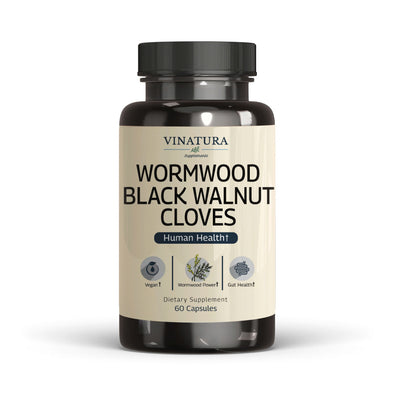
Wormwood Black Walnut Cloves Liquid lists pumpkin seed (Cucurbita pepo) among the ingredients of each 1 mL (20-drop) serving, with wormwood (Artemisia absinthium), black walnut (Juglans nigra), cloves (Syzygium aromaticum) and papaya leaf (Carica papaya). The page does not state the amount of each herb or the form of pumpkin seed used. The studies above did not test this product, and none tested pumpkin seed in this combination.
Frequently asked questions
Is pumpkin seed oil the same as pumpkin seed? No. The oil is the fatty part of the seed; extracts concentrate other compounds; whole seed contains both plus protein, fiber and minerals.
How much did studies use? Whole seed at 10 g a day, extracts at 500 to 1,000 mg a day, and Cucurbita pepo oil at 320 mg to 3 g a day (10 g in the Cucurbita maxima study). These are study amounts, not recommendations. Follow your product label and ask a healthcare professional.
Are pumpkin seeds a good source of magnesium and zinc? Yes. One ounce of roasted seeds provides about 37% of the Daily Value for magnesium and 20% for zinc.
References
- Vahlensieck W, et al. Effects of pumpkin seed in men with lower urinary tract symptoms due to benign prostatic hyperplasia in the one-year, randomized, placebo-controlled GRANU study. Urol Int. 2015;94(3):286–295. doi:10.1159/000362903
- Vahlensieck W, Heim S, Patz B, Sahin K. Beneficial effects of pumpkin seed soft extract on lower urinary tract symptoms and quality of life in men with benign prostatic hyperplasia: a meta-analysis of two randomized, placebo-controlled trials over 12 months. Clin Phytosci. 2022;8:13. doi:10.1186/s40816-022-00345-0
- Hong H, Kim CS, Maeng S. Effects of pumpkin seed oil and saw palmetto oil in Korean men with symptomatic benign prostatic hyperplasia. Nutr Res Pract. 2009;3(4):323–327. doi:10.4162/nrp.2009.3.4.323
- Zerafatjou N, et al. Pumpkin seed oil (Cucurbita pepo) versus tamsulosin for benign prostatic hyperplasia symptom relief: a single-blind randomized clinical trial. BMC Urol. 2021;21(1):147. doi:10.1186/s12894-021-00910-8
- Leibbrand M, et al. Effects of an oil-free hydroethanolic pumpkin seed extract on symptom frequency and severity in men with benign prostatic hyperplasia: a pilot study in humans. J Med Food. 2019;22(6):551–559. doi:10.1089/jmf.2018.0106
- Theil G, et al. Extract from Cucurbita pepo improves BPH symptoms without affecting sexual function: a 24-month noninterventional study. World J Urol. 2022;40(7):1769–1775. doi:10.1007/s00345-022-04036-w
- Carbin BE, Larsson B, Lindahl O. Treatment of benign prostatic hyperplasia with phytosterols. Br J Urol. 1990;66(6):639–641. doi:10.1111/j.1464-410x.1990.tb07199.x
- Nishimura M, et al. Pumpkin seed oil extracted from Cucurbita maxima improves urinary disorder in human overactive bladder. J Tradit Complement Med. 2014;4(1):72–74. doi:10.4103/2225-4110.124355
- Shim B, et al. A randomized double-blind placebo-controlled clinical trial of a product containing pumpkin seed extract and soy germ extract to improve overactive bladder-related voiding dysfunction and quality of life. J Funct Foods. 2014;8:111–117. doi:10.1016/j.jff.2014.03.010
- Cho YH, et al. Effect of pumpkin seed oil on hair growth in men with androgenetic alopecia: a randomized, double-blind, placebo-controlled trial. Evid Based Complement Alternat Med. 2014;2014:549721. doi:10.1155/2014/549721
- Adelman MJ, Bedford LM, Potts GA. Clinical efficacy of popular oral hair growth supplement ingredients. Int J Dermatol. 2021;60(10):1199–1210. doi:10.1111/ijd.15344
- Gossell-Williams M, et al. Improvement in HDL cholesterol in postmenopausal women supplemented with pumpkin seed oil: pilot study. Climacteric. 2011;14(5):558–564. doi:10.3109/13697137.2011.563882
- Wong A, et al. The effects of pumpkin seed oil supplementation on arterial hemodynamics, stiffness and cardiac autonomic function in postmenopausal women. Complement Ther Clin Pract. 2019;37:23–26. doi:10.1016/j.ctcp.2019.08.003
- Hudson C, et al. Protein source tryptophan versus pharmaceutical grade tryptophan as an efficacious treatment for chronic insomnia. Nutr Neurosci. 2005;8(2):121–127. doi:10.1080/10284150500069561
- Li T, et al. Usefulness of pumpkin seeds combined with areca nut extract in community-based treatment of human taeniasis in northwest Sichuan Province, China. Acta Trop. 2012;124(2):152–157. doi:10.1016/j.actatropica.2012.08.002
- Feng LC. The combined use of pumpkin seed and areca nut in the treatment of tapeworm infections. Chin Med J. 1956;74(1):17–36. PubMed 13316981
- Grzybek M, et al. Evaluation of anthelmintic activity and composition of pumpkin (Cucurbita pepo L.) seed extracts—in vitro and in vivo studies. Int J Mol Sci. 2016;17(9):1456. doi:10.3390/ijms17091456
- Ježek J, et al. The effect of pumpkin seed cake and ground cloves (Syzygium aromaticum) supplementation on gastrointestinal nematode egg shedding in sheep. Parasite. 2021;28:78. doi:10.1051/parasite/2021076
- Guler T, et al. Recurrent anaphylaxis with watermelon and pumpkin seeds in a boy tolerant to their pulps. Pediatr Allergy Immunol Pulmonol. 2023;36(3):122–124. doi:10.1089/ped.2023.0026
- European Medicines Agency, Committee on Herbal Medicinal Products. Community herbal monograph on Cucurbita pepo L., semen (EMA/HMPC/136024/2010). Adopted November 20, 2012. ema.europa.eu
- European Medicines Agency, Committee on Herbal Medicinal Products. Assessment report on Cucurbita pepo L., semen (EMA/HMPC/136022/2010). November 20, 2012. ema.europa.eu
- European Medicines Agency, Committee on Herbal Medicinal Products. Addendum to the assessment report on Cucurbita pepo L., semen (EMA/HMPC/367273/2021). Adopted November 24, 2021. ema.europa.eu
- National Institutes of Health, Office of Dietary Supplements. Magnesium: fact sheet for health professionals. Updated January 6, 2026. ods.od.nih.gov
- National Institutes of Health, Office of Dietary Supplements. Zinc: fact sheet for health professionals. Updated January 6, 2026. ods.od.nih.gov
- International Agency for Research on Cancer. Betel-quid and areca-nut chewing and some areca-nut-derived nitrosamines. IARC Monographs Volume 85. 2004. inchem.org
- ClinicalTrials.gov. Search of the intervention field for pumpkin seed, Cucurbita pepo and pumpkin seed oil; records NCT06944392, NCT02119429, NCT02727036, NCT03716960. Accessed November 5, 2026. clinicaltrials.gov
Editorial note: This article reviews published research for educational purposes. It does not establish the effects or safety of any specific supplement, including Vinatura products, and is not medical advice. Written by Vinatura Editorial Team. Last reviewed November 2026.
Author
Product Disclaimer
Including an ingredient or study does not evaluate, endorse, or recommend any Vinatura product or any third-party product. Some ingredients discussed may not be used in any Vinatura product.
The content of the articles has not been evaluated by the Food and Drug Administration (FDA) and is not intended to promote or endorse any specific product. Any products sold on this website are not intended to diagnose, treat, cure, or prevent any disease.
Opinions and Endorsements
Any claims, statements, or opinions expressed in the articles are those of the author(s) and do not necessarily reflect the views or opinions of the manufacturers of the dietary supplement products. The products sold on this website are separate from the content of the articles and are not directly endorsed or associated with the information presented here.
Liability Disclaimer
The author(s) of the articles, website, and manufacturers of the dietary supplement products do not assume any liability for any potential consequences arising from the use of the information provided in the articles. Ingredient effects, dosages, and safety vary by individual, formulation, and context; some ingredients interact with medications or may be unsuitable during pregnancy or lactation. It is recommended that individuals consult with a qualified healthcare professional before making any dietary or lifestyle changes, including the use of dietary supplements.
Product Usage
Please refer to the product labels and packaging for specific usage instructions and guidelines for the dietary supplement products sold on this website.
Customer Support
For any concerns or questions regarding the dietary supplement products, please contact our customer support team, who will be more than happy to assist you.



Leave a Comment
Be the first to comment.
What do you think?