

Resveratrol: What Human Trials Show, and Where They Fall Short
Quick answer. Resveratrol is a plant compound found in small amounts in grapes, red wine and some berries and roots. Trials of 10 mg to 5 g a day are mixed: careful insulin-sensitivity studies found no change, meta-analyses report small drops in blood pressure, cholesterol or C-reactive protein in some groups, mostly on low-certainty evidence, and exercise trials in older adults point in opposite directions. The body absorbs it well but converts most of it quickly, so little free resveratrol reaches the blood. Gut symptoms appear at 1 g a day or more, a high-dose myeloma trial was stopped for kidney failure, resveratrol can change how some medicines are processed, and the European Food Safety Authority (EFSA) judged 150 mg a day safe for adults.
What resveratrol is
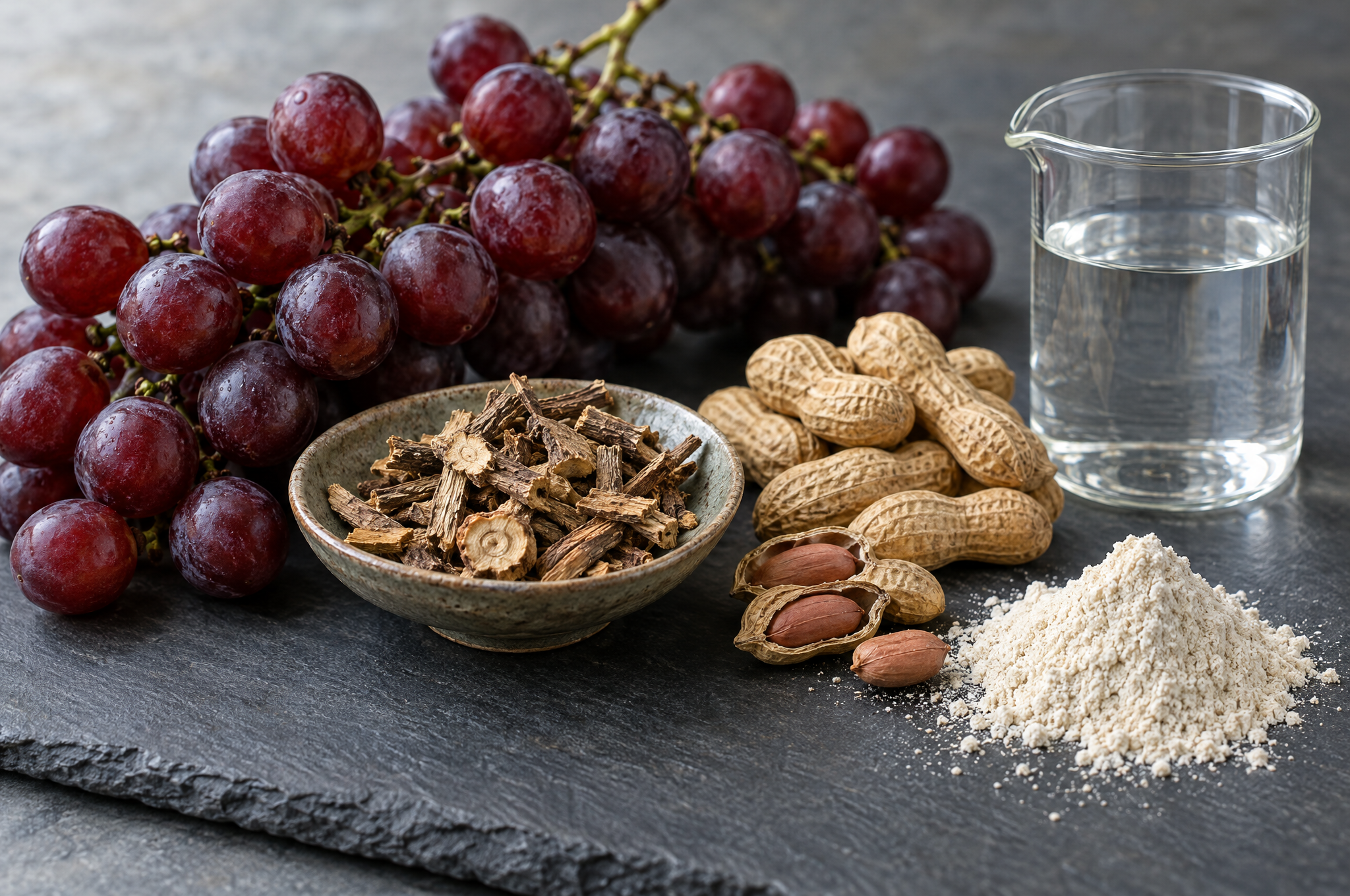
Resveratrol is a plant polyphenol of the stilbene family. It occurs in grapes, red wine, chocolate and certain berries and roots, but in small amounts: one trial report cites an average of 1.9 mg per liter of red wine. Supplements usually name the trans form and may name a plant source, such as Polygonum cuspidatum (Japanese knotweed) root, or be synthetic, as in the product EFSA assessed in 2016. Some trials used a micronized (finely milled) form, SRT501, developed to improve absorption.
Absorption and blood levels. In six volunteers given a 25 mg dose of labeled resveratrol, at least 70% was absorbed, but only traces of unchanged resveratrol (under 5 ng/mL) appeared in blood; the rest circulated as sulfate and glucuronide metabolites. A single 5 g dose produced a peak of 539 ng/mL, and metabolite exposure was up to 23 times higher than that of resveratrol itself. A 2025 meta-analysis of studies in healthy adults (25 to 5,000 mg) found that free resveratrol in blood rose in line with dose; two of its authors listed an industry affiliation. In cancer patients, the micronized form gave plasma levels 3.6 times higher than published values for the same dose of standard resveratrol.
The sirtuin idea. Lab work suggested resveratrol activates SIRT1, an enzyme that needs NAD+. A Pfizer team reported in 2010 that this apparent activation depended on a fluorescent tag used in the test; a 2013 study from David Sinclair's laboratory reported activation with certain natural substrates. In people, a 2025 meta-analysis of 11 randomized trials found no significant change in SIRT1 gene expression, protein or blood levels.
What human studies have tested
| Study | Who took part | Form and daily amount | Duration | What was measured | Result |
|---|---|---|---|---|---|
| Timmers et al., 2011 (randomized, double-blind crossover; Netherlands) | 11 healthy obese men | 150 mg (resVida, provided by DSM Nutritional Products; one co-author listed a DSM affiliation) | 30 days | Energy use, muscle and liver markers, blood tests | Lower systolic blood pressure, glucose, triglycerides and liver fat; HOMA insulin-resistance index improved |
| Yoshino et al., 2012 (randomized, double-blind; U.S.) | 29 nonobese postmenopausal women with normal glucose tolerance (15 resveratrol, 14 placebo) | 75 mg (resVida, provided by DSM, which also part-funded the trial; one author was a DSM employee) | 12 weeks | Insulin sensitivity (clamp), body composition, lipids, inflammation | No change in any outcome or in muscle and fat targets such as SIRT1 |
| Poulsen et al., 2013 (randomized, double-blind; Denmark; investigator-initiated) | 24 obese men (12 per group) | 1,500 mg (500 mg 3 times) | 4 weeks | Insulin sensitivity (clamp), blood pressure, fat, inflammation | No effect on any outcome |
| de Ligt et al., 2020 (randomized, double-blind; Netherlands) | 41 overweight adults aged 40 to 70 (completers) | 150 mg | 6 months | Insulin sensitivity (main outcome), liver fat, blood pressure | Insulin sensitivity unchanged; HbA1c lower after resveratrol (35.8 vs 37.6 mmol/mol); other outcomes unchanged |
| Kjær et al., 2017 (randomized, double-blind; Denmark) | 74 men with metabolic syndrome (66 completed) | 150 mg or 1,000 mg vs placebo | 16 weeks | hs-CRP and other inflammation markers, glucose, lipids, liver fat | No benefit; 1,000 mg raised total and LDL cholesterol and fructosamine |
| Bo et al., 2016 (randomized, double-blind; Italy) | 192 adults with type 2 diabetes | 40 mg or 500 mg vs placebo | 6 months | CRP (main outcome), glucose, HbA1c, lipids, uric acid | No significant change; total cholesterol and triglycerides rose slightly at 500 mg |
| Abdollahi et al., 2019 (randomized, double-blind; Iran) | 71 overweight adults with type 2 diabetes | 1,000 mg micronized | 8 weeks | Glucose, lipids, body measures | Fasting glucose −7.97 mg/dL and HDL +3.62 mg/dL vs placebo; body measures unchanged |
| Pollack et al., 2017 (randomized, double-blind crossover; U.S.) | 30 older adults with impaired glucose tolerance | 2 to 3 g | 6 weeks each | Insulin sensitivity, vascular function, muscle genes | No change in glucose, insulin, blood pressure or lipids; a vascular function index improved |
| Gliemann et al., 2013 (randomized, double-blind; Denmark) | 27 inactive men around age 65, all doing high-intensity training | 250 mg trans-resveratrol vs placebo | 8 weeks | Fitness, blood pressure, lipids | Fitness (VO2max) rose 45% more with placebo; blood pressure fell only with placebo; training's gains in LDL and triglycerides were lost with resveratrol |
| Alway et al., 2017 (randomized, double-blind; U.S.) | 30 adults aged 65 to 80, all exercising | 500 mg vs placebo | 12 weeks | Muscle mitochondria, strength and fatigue, cardiovascular risk | No added cardiovascular benefit; fatigue resistance, knee strength and power, and muscle fiber size improved more than with exercise alone |
| Harper et al., 2021 (randomized pilot; U.S.) | 60 adults around age 72 with physical limitations, all exercising | 0, 500 or 1,000 mg | 12 weeks | Safety, feasibility, physical function | Side effects similar across groups; six-minute walk improved within the 500 and 1,000 mg groups; not a formal efficacy test |
| McDermott et al., 2017 (RESTORE; randomized, double-blind; U.S.) | 66 adults aged 65 or older with peripheral artery disease | 125 mg or 500 mg vs placebo | 6 months | Six-minute walk (main outcome), treadmill walking | No consistent improvement in walking at either dose |
| Huhn et al., 2018 (randomized, double-blind; Germany) | 60 adults aged 60 to 79 | 200 mg | 26 weeks | Verbal memory (main outcome), brain imaging | No effect on verbal memory; a nonsignificant trend for pattern memory |
| Thaung Zaw et al., 2021 (randomized, double-blind crossover; Australia) | 125 postmenopausal women aged 45 to 85 | 75 mg twice daily | 12 months each arm (24 months) | Overall cognition (main outcome), brain blood flow, metabolic markers | Cognition score 33% better on resveratrol (small effect, d = 0.17); brain blood flow and insulin resistance improved |
| Turner et al., 2015 (randomized, double-blind, phase 2; U.S.; NIH-funded) | 119 people with mild to moderate Alzheimer disease | 500 mg rising to 1,000 mg twice daily | 52 weeks | Amyloid biomarkers, brain MRI | Some biomarkers declined less than with placebo; brain volume loss was greater with resveratrol; nausea, diarrhea and weight loss most common |
| Popat et al., 2013 (phase 2, no placebo group; two authors employed by the SRT501 maker) | 24 people with relapsed multiple myeloma | SRT501 (micronized) 5 g, with bortezomib added if the disease progressed | Up to 12 cycles | Response, safety | Minimal response; 5 cases of kidney failure led to early termination |
| Jeyaraman et al., 2020 (Cochrane review) | 3 randomized trials, 50 adults with type 2 diabetes | 10, 150 or 1,000 mg | 4 to 5 weeks | HbA1c, fasting glucose, insulin resistance | No clear effect (HbA1c +0.1%; very low certainty); no trial reported long-term outcomes |
| Zeraattalab-Motlagh et al., 2021 (umbrella review of meta-analyses) | 1,476 people with type 2 diabetes, 727 with metabolic syndrome, 271 with fatty liver disease | Various | Various | Cardiometabolic risk factors | Effects mostly trivial or low certainty; short-term HbA1c −1.05% (moderate certainty, 6 trials) |
| Sun et al., 2026 (umbrella review of 45 systematic reviews) | Varied | Various | Various | 68 health outcomes | Rated high certainty: waist −0.80 cm; total cholesterol −0.19 mmol/L in overweight adults; systolic −7.97 and diastolic −3.55 mmHg in type 2 diabetes |
| Fogacci et al., 2019 (meta-analysis) | 17 randomized trials | Various | Various | Blood pressure | No significant overall effect (systolic −2.5 mmHg; 95% CI −5.5 to 0.6); significant in trials using 300 mg a day or more and in people with diabetes |
| Sahebkar et al., 2015 (meta-analysis) | 10 randomized trials | Various | Various | CRP, lipids, glucose, blood pressure | No effect on CRP, LDL, triglycerides, glucose or blood pressure; HDL slightly lower (−4.18 mg/dL) |
| Gorabi et al., 2021 (meta-analysis) | 35 randomized trials | Various | Various | CRP and hs-CRP | CRP −0.31 mg/L and hs-CRP −0.40 mg/L; larger with 10 weeks or more |
What the findings suggest
Blood sugar and insulin. Trials that measured insulin sensitivity found no change at 75 mg or 1,500 mg (clamp tests) or 150 mg for six months, and a positive 2011 trial in 11 men was not reproduced at ten times the dose. In type 2 diabetes, a Cochrane review found too little evidence to judge, a 192-person, six-month trial was null, and some smaller trials, such as an 8-week trial at 1,000 mg, reported lower fasting glucose. An umbrella review rated most effects trivial or low certainty, except a short-term HbA1c drop of about 1 percentage point. Evidence strength: inconsistent and mostly low.
Blood pressure. Pooled trials show no significant overall effect, but subgroups using 300 mg a day or more, or with diabetes, showed drops. A 2026 umbrella review rated the drop in type 2 diabetes high certainty; a 2021 umbrella review of overlapping data rated most outcomes low certainty. Evidence strength: possible benefit in type 2 diabetes, unclear elsewhere.
Cholesterol and inflammation. A 2015 meta-analysis of 10 trials found no effect on CRP or LDL, while a 2022 dose-response meta-analysis found lower total cholesterol (−10.28 mg/dL) and LDL (−5.69 mg/dL), and a 2021 analysis of 35 trials found CRP about 0.3 mg/L lower. Two longer trials found cholesterol rises at 500 and 1,000 mg. Evidence strength: conflicting; effects, if real, are small.
Blood vessels and the brain. A 2022 meta-analysis of 17 studies found flow-mediated dilation, a measure of artery function, 1.43 percentage points higher. Memory results split: a 2018 meta-analysis of 10 trials found 3 positive, 2 mixed and 5 null; a 24-month trial in postmenopausal women found a small improvement, and a 26-week trial in older adults did not. In Alzheimer disease, brain volume loss was greater with resveratrol; the authors said further studies are needed to interpret the biomarker changes. Evidence strength: low for memory; modest for artery function.
Exercise. In 27 older men doing high-intensity training, 250 mg a day blunted gains in fitness, blood pressure and blood lipids, and a companion analysis found it blunted training-related drops in muscle markers of oxidative stress and inflammation. In contrast, in 30 adults aged 65 to 80, 500 mg with 12 weeks of exercise improved muscle strength and fatigue resistance more than exercise alone, though not cardiovascular risk. Evidence strength: small, conflicting trials.
Where the evidence is limited or conflicting
- Small, short trials of blood markers. Most trials in our table enrolled fewer than 100 people and measured blood tests, not heart attacks, diabetes, dementia or survival. In an observational study of 783 older Italians, resveratrol from the diet, measured in urine, was not linked to death rates, inflammation, heart disease or cancer over 9 years.
- No clear dose pattern. Trials range from 10 mg to 5 g a day, and some positive results at 150 mg were not seen at 1,500 mg.
- Product suppliers. DSM Nutritional Products provided its resveratrol ingredient, resVida, for two metabolic trials and had an author on both; it also part-funded the Yoshino trial. Two authors of the myeloma trial worked for the company that made SRT501.
- Retracted research. In 2012, Retraction Watch reported that a University of Connecticut investigation found resveratrol heart researcher Dipak Das responsible for 145 counts of data fabrication and falsification, which Das disputed. On November 5, 2026, PubMed listed 9 retracted resveratrol papers co-authored by Das (eight animal studies and one review) and 69 retracted papers with resveratrol in the title, including one 2022 trial in Alzheimer disease. None of the studies we cite is among them.
- Registered trials. On November 5, 2026, ClinicalTrials.gov listed 238 studies naming resveratrol as an intervention, 26 of them recruiting, active or not yet started, many testing gels, mouthwashes or multi-ingredient products. They include a trial of 500 mg a day with strength training in adults aged 60 and over.
What buyers say, and what the research shows
Our team analyzed 1,256 public Amazon reviews of 11 NMN or nicotinamide riboside products, most of them combined with resveratrol (one Vinatura product and 10 others), collected in September 2026. Reviews show what buyers believe, not what a product caused. A theme counts as common on a product when it made up at least 10% of weighted mentions in its positive or critical reviews.
Belief: resveratrol is better taken together with NMN. Praise for getting resveratrol with NMN or TMG in one product was a common positive theme on 5 of the 10 other products. We found no published or registered human trial that tested NMN and resveratrol together. The pairing rests on the disputed lab idea that resveratrol activates SIRT1, and pooled human trials showed no significant SIRT1 change. Our NMN review covers the NMN trials.
Belief: these combination formulas can cause joint pain or gout. Three critical reviews, on 2 of the 11 products, described joint pain or gout; all were formulas with NMN, TMG and resveratrol. In a 6-month trial of 192 people with type 2 diabetes, uric acid, the compound behind gout, did not change at 40 or 500 mg of resveratrol a day. We found no trial or case report linking resveratrol to gout. Three reviews cannot show cause, and this article does not review NMN or TMG; new joint pain is a reason to see a doctor.
Safety
Side effects in trials. In 40 healthy volunteers taking 0.5 to 5 g a day for 29 days, the 2.5 and 5 g doses caused mild to moderate gut symptoms. EFSA noted diarrhea and other gut symptoms in four uncontrolled studies at 1 g a day or more. In the Alzheimer trial (up to 2 g a day), nausea, diarrhea and weight loss were most common. Most trials lasted months, not years.
Kidneys. In the myeloma trial of micronized resveratrol at 5 g a day, nausea affected 79% and diarrhea 71%, and 5 of 24 patients developed kidney failure, so the trial was stopped. The authors noted that myeloma often damages the kidneys, some patients had raised creatinine at the start, and vomiting and dehydration may have contributed. People with kidney disease should ask their doctor first.
Medicines. In 42 healthy volunteers, 1 g a day for 4 weeks reduced the activity of the drug-processing enzymes CYP3A4, CYP2D6 and CYP2C9 and increased CYP1A2. EFSA said a resveratrol metabolite may interact with medicines processed mainly by CYP2C9. Lab studies show effects on platelets, and the authors of the 2025 absorption meta-analysis raised a possible added effect with blood thinners, but we found no human study of resveratrol with an anticoagulant or antiplatelet drug. Tell your doctor or pharmacist if you take it with any medicine.
Limits. EFSA concluded in 2016 that synthetic trans-resveratrol at 150 mg a day is safe for adults, and the EU authorized it in food supplements up to that amount, for adults only, with a label stating that people using medicines should take it only under medical supervision. Trials in our table did not include pregnant or breastfeeding women or children.
What research does not establish
- That resveratrol slows aging or extends life in people.
- That it prevents or treats diabetes, heart disease or dementia.
- That combining it with NMN or TMG adds any benefit.
- That better-absorbed forms or higher doses work better.
- That doses above 150 mg a day are safe over years.
How we reviewed the evidence
On November 5, 2026, we searched PubMed for randomized trials with resveratrol in the title (219 records; all titles screened) and meta-analyses (85 records; all screened). We then ran targeted searches (absorption, drug enzymes, platelets, gout, NMN combinations, retractions) and checked ClinicalTrials.gov. We included randomized trials, meta-analyses, absorption and interaction studies and one observational study; we used lab studies only to explain mechanisms and excluded skin, mouth-rinse and multi-ingredient products. We read full texts or full-text passages of six papers, abstracts of the rest, and EFSA and EU documents. Vinatura did not run any trials.
Vinatura Research Perspective
We asked of each study which form was used (standard, micronized or synthetic), how much a day, in whom, for how long, and whether the outcome was a lab value or something people notice. First, typical label amounts sit at the low end of the research. The combination products in our review sample listed 125 to 600 mg where they stated an amount, and Vinatura's product lists 125 mg. The only trial we found at 125 mg, six months in 66 older adults with peripheral artery disease, found no consistent improvement in walking. Positive 150 mg results came from an 11-man, 30-day crossover trial and a 24-month trial in postmenopausal women, while 150 mg trials of six months and 16 weeks were null. Subgroup analyses linked blood pressure and CRP drops to 300 and 500 mg a day or more. Second, the form engineered for better absorption is the one tied to the most serious safety signal, kidney failure in myeloma patients, although that signal is confounded by the disease. Third, a common reason buyers give, pairing resveratrol with NMN, has no human trial behind it. The retracted Das papers were animal studies and a review, so they do not change the human trial record.
Our assessment: evidence is inconsistent and mostly low certainty for blood sugar, cholesterol and inflammation; possibly favorable for blood pressure in type 2 diabetes; low for memory; and conflicting for exercise, where one small trial found blunted training gains and another found added muscle gains. Safety looks acceptable at 150 mg a day in short trials; gut symptoms and drug interactions become relevant at 1 g or more. A large, independently funded trial of a year or more at label-range doses with outcomes people feel, results from the registered strength-training trial, and any human trial of resveratrol with NMN would change this assessment.
Where this ingredient appears in Vinatura products
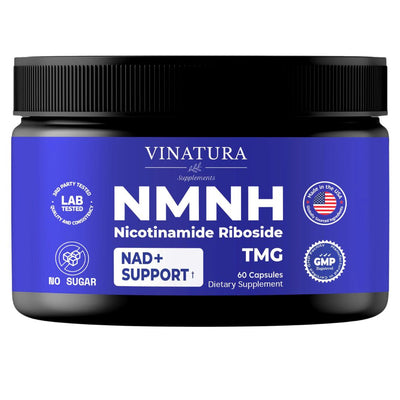
NMN Resveratrol TMG lists 125 mg of trans-resveratrol from Polygonum cuspidatum root per 2-capsule serving, with 1,000 mg NMN and 200 mg TMG. The studies above did not test this product, and none tested resveratrol combined with NMN or TMG.
Frequently asked questions
Can I get trial amounts from red wine? No. One trial estimated that its 75 mg daily dose equaled about 8 liters of red wine a day.
How much did studies use? Trials used 10 mg to 5 g a day; many metabolic trials used 150 mg to 1,500 mg. These are study amounts, not recommendations. Follow your product label and ask a healthcare professional, especially if you take medicines or have kidney disease.
Is it safe to take with medicines? At 1 g a day it changed several drug-processing enzymes, and EU labels tell people using medicines to take it only under medical supervision. Ask your pharmacist first.
References
- Walle T, et al. High absorption but very low bioavailability of oral resveratrol in humans. Drug Metab Dispos. 2004;32(12):1377–1382. doi:10.1124/dmd.104.000885
- Boocock DJ, et al. Phase I dose escalation pharmacokinetic study in healthy volunteers of resveratrol, a potential cancer chemopreventive agent. Cancer Epidemiol Biomarkers Prev. 2007;16(6):1246–1252. doi:10.1158/1055-9965.EPI-07-0022
- Brown VA, et al. Repeat dose study of the cancer chemopreventive agent resveratrol in healthy volunteers: safety, pharmacokinetics, and effect on the insulin-like growth factor axis. Cancer Res. 2010;70(22):9003–9011. doi:10.1158/0008-5472.CAN-10-2364
- Howells LM, et al. Phase I randomized, double-blind pilot study of micronized resveratrol (SRT501) in patients with hepatic metastases—safety, pharmacokinetics, and pharmacodynamics. Cancer Prev Res (Phila). 2011;4(9):1419–1425. doi:10.1158/1940-6207.CAPR-11-0148
- Szymkowiak I, et al. Resveratrol bioavailability after oral administration: a meta-analysis of clinical trial data. Phytother Res. 2025;39(1):453–464. doi:10.1002/ptr.8379
- Pacholec M, et al. SRT1720, SRT2183, SRT1460, and resveratrol are not direct activators of SIRT1. J Biol Chem. 2010;285(11):8340–8351. doi:10.1074/jbc.M109.088682
- Hubbard BP, et al. Evidence for a common mechanism of SIRT1 regulation by allosteric activators. Science. 2013;339(6124):1216–1219. doi:10.1126/science.1231097
- Mansouri F, et al. Impact of resveratrol supplementation on human sirtuin 1: a GRADE-assessed systematic review and dose-response meta-analysis of randomized controlled trials. J Acad Nutr Diet. 2025;125(9):1299–1314.e1. doi:10.1016/j.jand.2025.03.011
- Timmers S, et al. Calorie restriction-like effects of 30 days of resveratrol supplementation on energy metabolism and metabolic profile in obese humans. Cell Metab. 2011;14(5):612–622. doi:10.1016/j.cmet.2011.10.002
- Yoshino J, et al. Resveratrol supplementation does not improve metabolic function in nonobese women with normal glucose tolerance. Cell Metab. 2012;16(5):658–664. doi:10.1016/j.cmet.2012.09.015
- Poulsen MM, et al. High-dose resveratrol supplementation in obese men: an investigator-initiated, randomized, placebo-controlled clinical trial of substrate metabolism, insulin sensitivity, and body composition. Diabetes. 2013;62(4):1186–1195. doi:10.2337/db12-0975
- de Ligt M, et al. No effect of resveratrol supplementation after 6 months on insulin sensitivity in overweight adults: a randomized trial. Am J Clin Nutr. 2020;112(4):1029–1038. doi:10.1093/ajcn/nqaa125
- Kjær TN, et al. No beneficial effects of resveratrol on the metabolic syndrome: a randomized placebo-controlled clinical trial. J Clin Endocrinol Metab. 2017;102(5):1642–1651. doi:10.1210/jc.2016-2160
- Bo S, et al. Six months of resveratrol supplementation has no measurable effect in type 2 diabetic patients. A randomized, double blind, placebo-controlled trial. Pharmacol Res. 2016;111:896–905. doi:10.1016/j.phrs.2016.08.010
- Abdollahi S, et al. The effect of resveratrol supplementation on cardio-metabolic risk factors in patients with type 2 diabetes: a randomized, double-blind controlled trial. Phytother Res. 2019;33(12):3153–3162. doi:10.1002/ptr.6487
- Pollack RM, et al. Resveratrol improves vascular function and mitochondrial number but not glucose metabolism in older adults. J Gerontol A Biol Sci Med Sci. 2017;72(12):1703–1709. doi:10.1093/gerona/glx041
- Jeyaraman MM, et al. Resveratrol for adults with type 2 diabetes mellitus. Cochrane Database Syst Rev. 2020;1(1):CD011919. doi:10.1002/14651858.CD011919.pub2
- Zeraattalab-Motlagh S, Jayedi A, Shab-Bidar S. The effects of resveratrol supplementation in patients with type 2 diabetes, metabolic syndrome, and nonalcoholic fatty liver disease: an umbrella review of meta-analyses of randomized controlled trials. Am J Clin Nutr. 2021;114(5):1675–1685. doi:10.1093/ajcn/nqab250
- Sun JN, et al. Effects of resveratrol supplementation on multiple health outcomes: an umbrella review of systematic reviews and meta-analyses of randomized controlled trials. Nutr J. 2026;25(1). doi:10.1186/s12937-026-01319-5
- Fogacci F, et al. Effect of resveratrol on blood pressure: a systematic review and meta-analysis of randomized, controlled, clinical trials. Crit Rev Food Sci Nutr. 2019;59(10):1605–1618. doi:10.1080/10408398.2017.1422480
- Sahebkar A, et al. Lack of efficacy of resveratrol on C-reactive protein and selected cardiovascular risk factors—results from a systematic review and meta-analysis of randomized controlled trials. Int J Cardiol. 2015;189:47–55. doi:10.1016/j.ijcard.2015.04.008
- Cao X, et al. The effect of resveratrol on blood lipid profile: a dose-response meta-analysis of randomized controlled trials. Nutrients. 2022;14(18):3755. doi:10.3390/nu14183755
- Gorabi AM, et al. Effect of resveratrol on C-reactive protein: an updated meta-analysis of randomized controlled trials. Phytother Res. 2021;35(12):6754–6767. doi:10.1002/ptr.7262
- Mohammadipoor N, et al. Resveratrol supplementation efficiently improves endothelial health: a systematic review and meta-analysis of randomized controlled trials. Phytother Res. 2022;36(9):3529–3539. doi:10.1002/ptr.7562
- Marx W, et al. Effect of resveratrol supplementation on cognitive performance and mood in adults: a systematic literature review and meta-analysis of randomized controlled trials. Nutr Rev. 2018;76(6):432–443. doi:10.1093/nutrit/nuy010
- Huhn S, et al. Effects of resveratrol on memory performance, hippocampus connectivity and microstructure in older adults – a randomized controlled trial. Neuroimage. 2018;174:177–190. doi:10.1016/j.neuroimage.2018.03.023
- Thaung Zaw JJ, Howe PR, Wong RH. Long-term effects of resveratrol on cognition, cerebrovascular function and cardio-metabolic markers in postmenopausal women: a 24-month randomised, double-blind, placebo-controlled, crossover study. Clin Nutr. 2021;40(3):820–829. doi:10.1016/j.clnu.2020.08.025
- Turner RS, et al. A randomized, double-blind, placebo-controlled trial of resveratrol for Alzheimer disease. Neurology. 2015;85(16):1383–1391. doi:10.1212/WNL.0000000000002035
- Gliemann L, et al. Resveratrol blunts the positive effects of exercise training on cardiovascular health in aged men. J Physiol. 2013;591(20):5047–5059. doi:10.1113/jphysiol.2013.258061
- Olesen J, et al. Exercise training, but not resveratrol, improves metabolic and inflammatory status in skeletal muscle of aged men. J Physiol. 2014;592(8):1873–1886. doi:10.1113/jphysiol.2013.270256
- Alway SE, et al. Resveratrol enhances exercise-induced cellular and functional adaptations of skeletal muscle in older men and women. J Gerontol A Biol Sci Med Sci. 2017;72(12):1595–1606. doi:10.1093/gerona/glx089
- McDermott MM, et al. Effect of resveratrol on walking performance in older people with peripheral artery disease: the RESTORE randomized clinical trial. JAMA Cardiol. 2017;2(8):902–907. doi:10.1001/jamacardio.2017.0538
- Harper SA, et al. Resveratrol and exercise combined to treat functional limitations in late life: a pilot randomized controlled trial. Exp Gerontol. 2021;143:111111. doi:10.1016/j.exger.2020.111111
- Popat R, et al. A phase 2 study of SRT501 (resveratrol) with bortezomib for patients with relapsed and or refractory multiple myeloma. Br J Haematol. 2013;160(5):714–717. doi:10.1111/bjh.12154
- Chow HH, et al. Resveratrol modulates drug- and carcinogen-metabolizing enzymes in a healthy volunteer study. Cancer Prev Res (Phila). 2010;3(9):1168–1175. doi:10.1158/1940-6207.CAPR-09-0155
- Semba RD, et al. Resveratrol levels and all-cause mortality in older community-dwelling adults. JAMA Intern Med. 2014;174(7):1077–1084. doi:10.1001/jamainternmed.2014.1582
- European Food Safety Authority, Panel on Dietetic Products, Nutrition and Allergies. Safety of synthetic trans-resveratrol as a novel food pursuant to Regulation (EC) No 258/97. EFSA Journal. 2016;14(1):4368. doi:10.2903/j.efsa.2016.4368
- European Commission. Commission Implementing Decision (EU) 2016/1190 of 19 July 2016 authorising the placing on the market of trans-resveratrol as a novel food ingredient under Regulation (EC) No 258/97. legislation.gov.uk
- Retraction Watch. UConn resveratrol researcher Dipak Das fingered in sweeping misconduct case. January 11, 2012. retractionwatch.com
- ClinicalTrials.gov. Resveratrol-mediated Changes in Extracellular Vesicle microRNA Cargo as a Novel Contributor to Resistance Training-induced Skeletal Muscle Adaptations in Older Adults, NCT06585865. Accessed November 5, 2026. clinicaltrials.gov Editorial note: This article reviews published research for educational purposes. It does not establish the effects or safety of any specific supplement, including Vinatura products, and is not medical advice. Written by Vinatura Editorial Team. Last reviewed November 2026.
Author
Product Disclaimer
Including an ingredient or study does not evaluate, endorse, or recommend any Vinatura product or any third-party product. Some ingredients discussed may not be used in any Vinatura product.
The content of the articles has not been evaluated by the Food and Drug Administration (FDA) and is not intended to promote or endorse any specific product. Any products sold on this website are not intended to diagnose, treat, cure, or prevent any disease.
Opinions and Endorsements
Any claims, statements, or opinions expressed in the articles are those of the author(s) and do not necessarily reflect the views or opinions of the manufacturers of the dietary supplement products. The products sold on this website are separate from the content of the articles and are not directly endorsed or associated with the information presented here.
Liability Disclaimer
The author(s) of the articles, website, and manufacturers of the dietary supplement products do not assume any liability for any potential consequences arising from the use of the information provided in the articles. Ingredient effects, dosages, and safety vary by individual, formulation, and context; some ingredients interact with medications or may be unsuitable during pregnancy or lactation. It is recommended that individuals consult with a qualified healthcare professional before making any dietary or lifestyle changes, including the use of dietary supplements.
Product Usage
Please refer to the product labels and packaging for specific usage instructions and guidelines for the dietary supplement products sold on this website.
Customer Support
For any concerns or questions regarding the dietary supplement products, please contact our customer support team, who will be more than happy to assist you.


Leave a Comment
Be the first to comment.
What do you think?